Showing posts with label God. Show all posts

Thursday, 23 July 2026

Picking blackberries

Yesterday, I picked blackberries for the first time this year and there will be further occasions as the fruits ripen. This foraging is always something I look forward to and I’ve often thought about why I enjoy the activity so much. 


My first memory of brambling comes from childhood, just as in the paintings above by Elizabeth Adela Forbes [(1912) Blackberry Gathering oil on canvas (84x100cm) Walker Art Gallery, Liverpool] and Walter Bonner Gash [(1905/15) Two Girls Picking Blackberries oil on board (18x24cm) Alfred East Art Gallery, Kettering], The hanging branches in the work by Gash are a reminder of the ability of brambles to “strike back” and I was careful when reaching for those really juicy-looking berries that were just beyond my reach, for fear of over-balancing and becoming “entrapped” by thorns. Of course, there will always be scratches and my grandfather had the excellent idea of taking a walking stick with him when we ambled along lanes, so that fruit-bearing branches could be pulled down to allow much easier capture by us children. I don’t carry a walking stick now, but I respect the defence mechanism of the plant – the thorns being also a means of allowing the plant to climb and to extend its growth laterally. They are good at competition. 

Those childhood adventures stick in the mind and their joy is described by Seamus Heaney in his poem “Blackberry Picking”: 

“Late August, given heavy rain and sun

For a full week, the blackberries would ripen.

At first, just one, a glossy purple clot

Among others, red, green, hard as a knot.

You ate that first one and its flesh was sweet

Like thickened wine: summer's blood was in it

Leaving stains upon the tongue and lust for

Picking. Then red ones inked up and that hunger

Sent us out with milk cans, pea tins, jam-pots

Where briars scratched and wet grass bleached our boots.

Round hayfields, cornfields and potato-drills

We trekked and picked until the cans were full…” 

One of the pleasures of picking blackberries for me is that I am able to linger alone in nature and take a close look at what is around me. From when I was young, I always preferred being on my own; not, I hope, because I am anti-social, more that it was a form of escape from difficult times [1]. In that, I unknowingly copied Jean-Jacques Rousseau, and possibly for similar reasons. Russell Goulbourne writes in his Introduction to Reveries of the Solitary Walker [2]: 

“From the demands of corrupt society Rousseau turns to the world of nature. Walking alone in nature guarantees and even intensifies his sense of self.. ..His happiness comes in part from his being at one with nature, which was a refuge for Rousseau from the anxieties of life, providing him with relative solitude and a rich source of distractions, both of which offer him peace of mind.” 

I empathise with that statement and there’s an added dimension. Brought up as a Christian, I had some belief that everything was created by God and that country walks gave ample opportunities to see His work. The developing atheism of my early teenage years coincided with my learning much more about nature and showing that there was something deeply impressive in the way that different organisms had evolved to be successful in a range of habitats. In that sense, nature replaced God, inducing an equal sense of wonder, making solitary walks a form of “worship” that was never boring. 

Of course, brambles are part of the overall wonder, although that is putting it a bit grandly, as I’m collecting their berries (an excess built-in to the plant’s biology) to then make jelly or crumbles. Bramble jelly is a way of preserving the essence of the fruit for winter months and beyond, and spreading the jelly thickly on toast on a cold day always brings back memories of summer collecting days. 


That blackberries have been harvested as food for centuries has resulted in folklore, examples being provided by Steve Roud [3]: 

“The most widespread belief about blackberries is that the Devil ruins them on a certain date each year. A few other miscellaneous beliefs have been noted, including several medicinal uses. The only one that seems to have been at all widely known is that horses, cats. and babies are often not well when the blackberries are ripe.” 

This negative view of blackberries comes through in Sylvia Plath’s poem “Blackberrying”, perhaps reflecting the pressures of her life: 

“Nobody in the lane, and nothing, nothing but blackberries,   
Blackberries on either side, though on the right mainly,
A blackberry alley, going down in hooks, and a sea
Somewhere at the end of it, heaving. Blackberries
Big as the ball of my thumb, and dumb as eyes
Ebon in the hedges, fat
With blue-red juices. These they squander on my fingers.
I had not asked for such a blood sisterhood; ….” 

Quite different in tone to Seamus Heaney’s poem and both are different again to my own, rather complex, feelings in going out to pick blackberries. 

[1] Roger S Wotton (2020) Walking with Gosse Kindle Edition

[2] Jean-Jacques Rousseau (in 2011 translation by Russell Goulbourne) Reveries of the Solitary Walker. Oxford, Oxford University Press

[3] Steve Roud (2006) The Penguin Guide to the Superstitions of Britain and Ireland. London, Penguin Books


Tuesday, 1 March 2022

Visits to the coffee shop

Twice a week, I enjoy having a flat white at my local coffee shop, choosing a time (about 11.00) when there are not too many people about and there is thus a choice of tables. My ritual is the same each time: order the coffee, collect it, settle at a table, and then read the paper that I have bought from the M&S shop that is next door to my habitual haunt. I take my time over the coffee (unless it gets busy and I need to give up my table, unlike the “home office” customers) and then walk back home. Nine times out of ten I feel better than when I arrived at the shop and I can’t really explain why. It’s not because of the stimulus of caffeine, although that may play a small part, but more about making me feel part of a bigger world; something about which psychiatrists would have their own comments to make. I also enjoy coffee with friends, but my solo visits have a quite different quality, suiting my mildly autistic nature.

Sometimes, a piece in the newspaper has a special appeal and that happened this morning when I read the review by Ellen Peirson-Hagger of Sheila Heti’s book Pure Colour in the "i" newspaper for 25th February 2022. It contained a paragraph that really made me think (both the review and the paragraph are shown below).


The question that was posed touched a nerve ending and I started to ask myself why I am moved deeply by some works of art – I guess that is something we all do, but I can only speak from my own experience.

When I’m in the right mood, I can be so moved by some pieces of music that I almost feel shaken. Something very deep within me is getting touched and I can easily see how this could be interpreted as “the breath of God”. What is this feeling? I don’t know the answer, but the effect is profound. Does it help to know that the composers that most affect me in this way are Elgar, Vaughan Williams and Sibelius? All three wrote music that was evocative of places that I know and where I have been “at one” with both Nature and Landscape. Of course, it is easy to say that my feelings are those of a Romantic and that it is all very emotional, but that doesn’t explain why I am that way. It feels like an attempt to find “light at the end of a tunnel”.

Other arts also affect me, but not to such a profound emotional level, although some paintings I return to stare at every time I visit galleries on repeat visits. It might be works by Turner or by Murillo, and there is no consistency of subject matter, just something that draws me. Turner I find fascinating, because he was seeking to portray something about the essence of Nature: Murillo because there is no artist better at conveying human tenderness. Like my reaction to certain pieces of music, the feelings can be (inadequately) described, but they cannot be shared.

It leaves me with the question of whether what I feel is similar to what others feel and whether that deep feeling causes them to believe in God. It’s interesting what can come from reading one’s paper in the local coffee shop.


Wednesday, 13 June 2018

The isolation of a Creationist


The Creationist W Welch believed that many planets throughout the Universe are colonised by intelligent beings and that they lived on cool parts of our sun [1]. Philip Henry Gosse, also a Creationist, thought differently [2]:

I venture to suggest that not only the Planets and Satellites of this system, but the Sun itself,- nay, the millions of Suns, that, to our eyes are but specks in space,- (yet each one, perhaps, with its system of planets and satellites) are none of them habitable as yet, but are being prepared by God for habitation; each in succession to be got ready for Colonization from Earth by Adam’s race. That God is, we may say, furnishing his great House of many mansions, of which one small apartment alone is occupied.

If I be asked how living, breathing human bodies can possibly be transferred from world to world, I reply, I have no conception, how. But if man himself has invented means of travelling across oceans; of floating in the air; of living for hours under water; of conversing audibly across hundreds of miles; of conveying written messages thousands of miles in a minute,- I am quite sure the Omnipotent God will find no difficulty in conveying men through stellar space, when He pleases.

Certainly a contrast in views, with one writer letting his imagination run wild and the other taking a much more measured approach, believing colonisation would be from the Earth, the site of God’s initial Creation.

In addition to their consideration of the colonisation of planets, Welch and Gosse both published theories about the origin of the Earth: Welch in his book Religiosa Philosophia [3] and Gosse in Omphalos: an attempt to untie the geological knot [4]. Both men felt that their theories did not contradict the account in Genesis in the Bible, that they held to be sacrosanct. 

Welch suggested that some part of the water from the firmament formed a large globular mass from which particles condensed and then sedimented to form a solid core [3]. Over thirty years later, Gosse also tackled the conflict between the then contemporary knowledge of geology and the Biblical account of Creation with his theory of prochronism: the act of Creation included rock strata, and their associated fossils, that thus bore evidence of “life before time”.

Little is known about Welch, but Henry Gosse was a very well-known figure in the world of Natural History and I have a great admiration for his descriptive and observational powers, his industry and his skills as an illustrator. Until recently, I have steered away from his religious books, as I feel little empathy with his rigid beliefs.


Given the publication of Darwin’s On the Origin of Species two years after Omphalos, and the extraordinary effect that Darwin’s book had, it is remarkable that Gosse held so firmly to his theory. This is what he wrote in The Mysteries of God about scientific thought in the Nineteenth Century:

The vast accession made to the knowledge of natural things, during the past century, by the observations of innumerable students, and by the conclusions deduced therefrom, has been, by the Arch Enemy, turned into a most potent weapon against the faith, used with marvellous skill for insidiously discrediting, first, and then arrogantly denying, the teachings of Holy Scripture.

It is startling to mark how fatally successful have been his tactics. A very large number of professed Christians,- perhaps even the majority of such as are competent to think about the matter,- are, more or less, tainted with the prevalent unbelief; conscious of, at least, a lurking suspicion that some of the Bible statements are not absolutely trustworthy; but must be, if not rejected, explained away, in some non-natural exegesis. Even in those who read Papers, or deliver Lectures, professedly to defend Revelation against sceptical Science, this unworthy trimming is sometimes painfully manifest.. .. Various subterfuges and shifts are used to evade the verbal accuracy of the Sacred Word; needless concessions here, and admissions there, allow the truth of God to pass by default. One makes a distinction between the veracity of different parts, ignoring, or denying its integral unity. There is often an underlying assumption that, at whatever cost, the teachings of the Bible must be subject to the accepted conclusions of Science: and, in general, the tone of the Lecturer is one of frowning severity toward the simple believer, and of tolerant sympathy toward the scientific infidel.

I sympathise with Gosse’s position on deciding what is, and what is not, factual in accounts in the Bible and it is something that must be difficult for many contemporary Christians. Not for Gosse though. He was unbending in his belief in the literal truth of the Bible and preached this to the small group of fellow believers he led in St Marychurch in Torquay. The Mysteries of God is based on his sermons, but it was not well received, even by fellow members of the Brethren and it had few reviews [5]. In the book, Gosse again propounds the theory of prochronism, stating that it had not been refuted in the 27 years since the publication of Omphalos. Unfortunately, this was probably because no-one bothered much about Gosse’s ideas, especially as he rarely ventured far in the later part of his life (he died in 1888). He spent much time at “Sandhurst”, his home in St Marychurch (see below – picture from [6]), save for many visits to the shore, the local countryside, and to the Brethren chapel he founded.


Another characteristic shared by Gosse and some contemporary Christian Creationists, is their ability to see Satan (the “Arch Enemy”) everywhere – as is so clear in the passage quoted above. Henry’s son, Edmund, found this, and the religious fervour that drove it, unbearable, as we know from his well-known book Father and Son. In it, Edmund wrote [7]:

He who was so tender-hearted that he could not bear to witness the pain and distress of any person, however disagreeable or undeserving, was quite acquiescent in believing that God would punish human beings, in millions, for ever, for a purely intellectual error of comprehension. My Father’s inconsistencies of perception seem to me to have been the result of a curious irregularity of equipment. Taking for granted, as he did, the absolute integrity of the Scriptures, and applying to them his trained scientific spirit, he contrived to stifle, with a deplorable success, alike the function of the imagination, the sense of moral justice, and his own deep and instinctive tenderness of heart.

Isn’t that sad?


[2] Philip Henry Gosse (1884) The Mysteries of God: A series of expositions of Holy Scripture. London, Hodder and Stoughton.

[3] W Welch (1821) Religiosa Philosophia. Plymouth, W. Byers.

[4] Philip Henry Gosse (1857) Omphalos: an attempt to untie the geological knot. London, John Van Voorst.

[5] Ann Thwaite (2002) Glimpses of the Wonderful: The Life of Philip Henry Gosse 1810-1888. London, Faber and Faber.

[6] R.B.Freeman and Douglas Wertheimer (1980) Philip Henry Gosse: A Bibliography. Folkestone, Wm Dawson & Sons.

[7] Edmund Gosse (1907) Father and Son: A study of two temperaments. London, William Heinemann.


Wednesday, 5 October 2016

Walking with Gosse – almost...


My annual "Coming up for Air" trip to Torbay [1] was in September this year. Fortunately, the weather was good, so I walked along the coast to re-visit places that were so important to me when I was growing up. Returning home to land-locked Hertfordshire, I then read what Philip Henry Gosse wrote in Land and Sea [2] about the parts of the Torbay shore that I had strolled through, and this made me appreciate Gosse's wonderful enthusiasm even more than usual.

I began by walking along the beach at Paignton and followed the strand line, always an interesting place to a Natural Historian. Unfortunately, there was little to see on this occasion and it was quite different to the strand line after a storm, when masses of algae are washed up. Like Gosse, I had always enjoyed exploring this evidence of the marine world of the bay, particular treasures being blue-rayed limpets attached to straps of brown algae, now torn from their anchorage. Of all the organisms I saw, I don't know why these limpets so appealed to me, but they are certainly attractive to the human eye (see below). 


In Land and Sea, Gosse describes their appearance:

The shell is of unimpeachable symmetry, polish, and delicacy; it is of a translucent horn-colour, and its summit is marked with three fine lines of the most brilliantly-gemmeous azure.

Not all the creatures washed up are so obviously attractive and, even fifty years ago, there was also much evidence of human pollution, with tar balls and pieces of net being common. Flotsam and jetsam are a rich source of natural materials, like wood, to the avid beachcomber, but there is now much more plastic refuse on beaches, as we continue to regard the sea as a convenient dumping place. I am impressed that artists like Jo Sayer can turn these plastic objects into attractive works of art that tell stories about what we are doing to Nature [4].

After the sands, I walked over Roundham Head and then on to Goodrington Sands (the sequence is shown in order in the photographs below; a route that Gosse walked in the opposite direction [2]). There was no promenade at Goodrington in the mid-nineteenth century and, while I took the promenade walk and cliff path on this visit, as a boy I preferred to scramble over the rocks when the tide was low, just as Gosse would have done.


 Gosse has a vivid description of some fisherman he encountered on Goodrington Sands:

..away across the heavy sands, in which we sink at every step, away obliquely to the left, where another bold headland, Roundham Head, breaks the sweep of the bay, and for the present shuts out Torquay from our view.

There is our working ground, at the foot of those red cliffs. We diverge a little from a straight line, and approach the edge of the sands, in order to see what those two men are so busy about, as they trudge along the water-line with stooping backs and downward gaze. Oh! they are fishermen taking solens, or razor-fish, as they call them. Each carries a light, narrow, but deep spade in his hand, and, as he marks a little jet of clear water that spirts upward from a small hole in the sand, he rapidly thrusts in his instrument, and adroitly jerks out his prey.. .. The man scarcely deigns it a glance, thinks nought of its curious structure, cares only for the halfpence it will bring him in the fish-market, jerks it into his basket, and watches for the next jet of water with which the frightened and retiring mollusc shall betray its place of retreat.

Razor clams (see below) are still a prized delicacy and they are certainly very effective at burrowing. Being a Natural Historian, Gosse was fascinated by this, but, as he pointed out, the clams were merely a commodity to the fisherman.


It was not only the wonders of Natural History that inspired Gosse, but the knowledge that all he saw was evidence of God. To him [2]:

..the inimitable, unapproachable, incomprehensible impress of Deity is there. Augustine says, "The soul bending over the things Thou hast made, and passing on to Thee who hast made them, there finds its refreshment and true strength."

Thus would I desire to contemplate the works of God, as bringing to my sense ever-fresh proofs of His all-pervading care, of His wondrous skill and wisdom, of His glorious majesty and power. Above all, they are the productions of the august Word: it is not that they were made by One who is infinitely great, but far removed from me, so that I can only reverently admire Him at an immeasurable distance. No; they are productions of the mind and hand of the Word (John i 3)..

..Yet let me not be mistaken. The study of the creatures could never teach me this. Notwithstanding all that they eloquently declare of the eternal power and Godhead of the Creator, they are ominously mute when I ask them how He will deal with me, a sinner.

All this comes as no surprise to those that know Henry Gosse's work and life. However, my appreciation of him does not extend to the religious views that made him such a devout Creationist. I find it baffling, and it is one of the reasons why I have never read any of Gosse's books on religious themes (listed in [3]). I admire his work in Natural History and enjoy his company in my imagination during my nostalgic visits to Torbay, but why did he have such a need to proselytise? Was he trying to convince himself?


[2] Philip Henry Gosse (1865) Land and Sea. London, James Nisbet & Co.

[3] R. B. Freeman and Douglas Wertheimer (1980) Philip Henry Gosse: A Bibliography. Folkestone, Wm. Dawson & Sons.


Monday, 20 April 2015

Cosmology, theistic force and human imagination


I was drawn to a headline in The Independent newspaper: "'Dark matter' not as dark as first thought: Scientists find it interacts with forces other than just gravity" [1]. The scientists referred to in the article were a team of 23 headed by Richard Massey, and their findings were published in the Monthly Notices of the Royal Astronomical Society [2]. Although I have little understanding of astrophysics, I was interested in the closing sentence of their Conclusions section where, having described their findings of the "possible stripping or deceleration of dark matter associated with the infalling galaxies [in the 10kpc core of Abell 3827]", they write:

Detailed hydrodynamical simulations of galaxy infall, incorporating dark matter physics beyond the standard model, are needed to predict its behaviour within a cluster environment, and to more accurately interpret high-precision observations.

I take this to mean that our interpretation of dark matter needs to be re-examined; so what is our current view of this matter and what is a 10kpc core? As a kpc (kiloparsec) is approximately 3.26 light years, the core of the infalling galaxies observed by Massey et al. (and shown below in an illustration from the BBC [3]) is over 300,000,000,000,000,000 km across, if my arithmetic is correct. It is in this minute part of the Universe that the new observations have been made; dark matter making up, in total, about 27% of the material in space, with everything that we can observe (planets, stars, galaxies, etc.) making up less than 5% of the total. The rest is dark energy [4]. 


To define dark energy, I quote from the NASA site [4]:

We know how much dark energy there is because we know how it affects the Universe's expansion. Other than that it is a complete mystery.

Do we have a better understanding of dark matter? Again, a quote from the NASA site is helpful:

We are much more certain what dark matter is not than we are what it is. First, it is dark, meaning that it is not in the form of stars and planets that we see.. ..Second, it is not in the form of dark clouds of normal matter, matter made up of particles called baryons. We know this because we would be able to detect baryonic clouds by their absorption of radiation passing through them. Third, dark matter is not antimatter, because we do not see the unique gamma rays that are produced when antimatter annihilates with matter.

We can therefore conclude that the Universe is vast and beyond any scale that we can comprehend and that it is made up of a fraction of matter that we can measure. The rest is explained by our powers of imagination and the predictions made by experts in mathematics and physics.

Recently, I took a course in Cosmology to try and get an understanding of what we know about the Universe and its origins. The course was taught well, but I found myself hopelessly lost with the scales involved and with the levels of imagination required. Our existing knowledge has been gained from Earth-bound observations and, recently, those from satellites and devices that record signals over mind-boggling distances. All the interpretation of these observations has necessarily been Earth-bound and based on human analytical skills, aided by the high-powered computers we have devised. Given the scale of the Universe, these tools seem inadequate, but it is a human characteristic that we feel we can eventually explain all that is currently unexplained.

During the Cosmology course, I also thought about another model that seems equally plausible – that everything was designed by a theistic force. Just as I was overwhelmed by the study of the Universe from Earth, so I was overwhelmed by the idea that a God that created the Universe chose an infinitesimally small planet on which to locate humans that were then given unique powers of reasoning and the belief that, given time, they could understand everything. It is tempting to accept that the idea of such a theistic force is, in turn, a result of human imagination. 

Will we ever understand the Universe? Almost certainly not without the development of a "better" mathematics (of which our wonderfully powerful mathematics is a subset), but now I'm veering off into science fiction.


[2] Richard Massey + 22 authors (2015) The behaviour of dark matter associated with four bright cluster galaxies in the 10kpc core of Abell 3827. Monthly Notices of the Royal Astronomical Society 449:3393-3406.


Thursday, 22 November 2012

Looking at gulls – evidence of a God, or not?


                                                                                                                      [Image from thepokerbird.com]


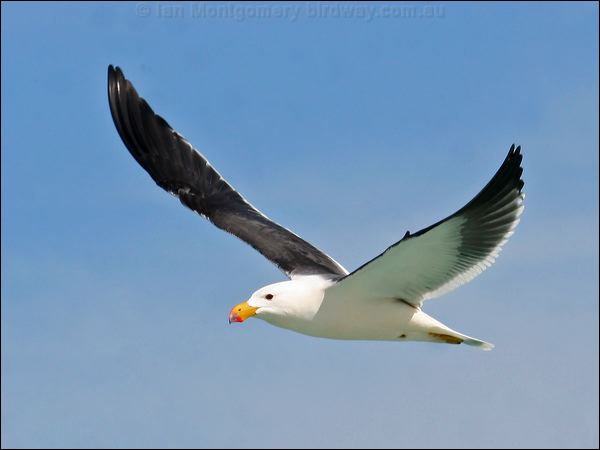
Take a look at this picture of a gull. What comes to mind? Being “bombed” with faecal matter while walking along a promenade at the seaside, or putting up with loud and raucous calling when gulls squabble over discarded refuse? Or perhaps one is taken by its elegant colour scheme?

As I spent several years teaching animal locomotion, what I see in the picture is a near-perfect flying machine. The wings are aerofoils and, as long as air flows over them in gliding flight, they generate lift. This is because the wings have a convex upper surface and a slightly concave under side, so air has to travel faster over the upper surface causing a lower pressure. The gull is thus “sucked” upwards – just like aircraft wings operate, although birds were first in having this feature by quite a few years. Of course, the wings are also used in flapping flight, requiring powerful muscles, especially those used to depress the wing. When sufficient airspeed has been achieved, the gull propels itself using oscillations of the outer part of the wing, while holding the inner section relatively still, so that its aerofoil section is used efficiently. Explaining oscillation would require me to go into too much detail for this blog and, for that matter, so would explaining the mechanism of flapping flight.

Then there’s the shape of the body. The picture shows that the gull has a near-perfect streamlined shape thanks to its covering of feathers – but feathers of a different type to those of the outer part of the wing. The profile feathers allow the smooth flow of air over the body, so that turbulence behind the gull is very much reduced. This, in turn, reduces drag and thus conserves energy needed for propulsion. It means that the tail feathers can be used to deflect air and function as a rudder; and note the position of the feet – tucked up to ensure the smooth air flow is not badly disrupted. Profile feathers also create the shape of the wing and feathers of a third type down ensure that the gull’s high body temperature is maintained by acting as efficient insulators.

I could go on and on like this – and did during lectures but no-one can look at a gull without thinking that it is extraordinarily well adapted to moving through the air. For those who believe in Creation, all the features of the gull (and I’ve only mentioned a few here) are evidence of the power of God. For those who believe in evolution, there is the puzzle of how all the small stages that occurred in the transformation of a scaled reptile into the gull came about through mutations in genes. For atheists, it is a matter of chance; for theists, a result of something designed, just as for believers in Creation. Both theists and atheists are swept up in a sense of wonder at what they see. So, now comes a question. Is this sense of wonder identical in those that believe in a God and those that do not? If the answer is “yes” doesn’t that invalidate the argument of those, like Henry Gosse, who use such feelings as evidence of their God? Does anyone out there have any views on this?