Showing posts with label Chalk Streams. Show all posts

Friday, 14 May 2021

Underwater flowers


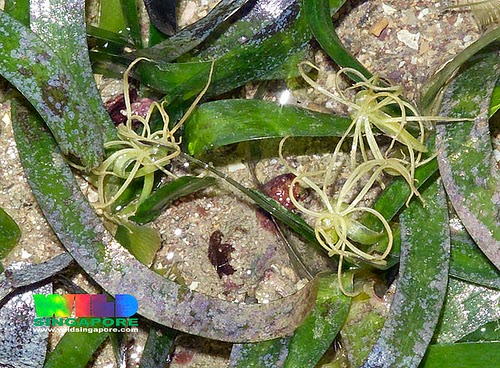
Flowering plants (angiosperms) began to dominate the Earth’s vegetation about 100 million years ago and, while other, more primitive, plants continue to be abundant, the present diversity of angiosperms is remarkable. When thinking of flowering plants, our minds may turn to beautiful garden borders, meadows and occasional clumps of flowers in woods and verges. Yet flowering plants have also invaded water bodies; although this is really a re-invasion as land plant evolved from distant aquatic ancestors.

Anyone visiting a stream draining from chalk strata is impressed by the amount of vegetation growing over its bed and invading from the margins. There are many microscopic algae that are only visible under a microscope, but two common flowering plants often dominate: water cress and water crowfoot. Of the two, water cress grows into the stream from the banks and can extend right across narrow channels, a habit that has been exploited in the development of commercial cress beds fed by water from chalk streams. The bulk of the plant remains above the water surface and this contrasts with water crowfoot, where plants grow in dense stands, rooted into the bed of the stream and affecting its flow pattern. Water crowfoot is a relative of the buttercup and its flowers are very similar in structure, although they are white, rather than yellow, in colour. It is only during flowering that we see water crowfoot above the water surface, although stands can become so dense that, at times of low flow in summer, they may be exposed to the air. They are well adapted to life in flowing water. The drag on the mass of leaves is counteracted by an effective rhizome and root system that ensures anchorage on the stream bed and the plants engineer the stream around them. Stands provide an obstruction to flow that creates channels of faster-moving water between plants and this serves not only to keep the substratum clear of sediment, but the growing leaves are also unaffected by deposition and can thus photosynthesise efficiently. In contrast, the base of the plant is an area of sediment build-up and this includes much organic matter [1] that serves as a source of nutrients - another way in which the plants engineer their habitat to their advantage.

Although water cress and water crowfoot are both aquatic plants, with the former fitting the definition less easily than the latter, seagrasses are truly aquatic. As their name suggests, these plants are marine, spending the whole of their life cycle under water. Seagrasses have a world-wide distribution and are perhaps most commonly associated with tropical seas and, especially, reefs, where the water is clear and there is good light penetration to the substratum, allowing efficient photosynthesis. Nutrients needed for growth taken up by roots and stored in rhizomes that also serve to stabilise soft sediments. Interestingly, seagrasses are more closely related to lilies and ginger than to grasses [2] and their colonisation of soft sediments results in large meadows when conditions for their growth are favourable. These are then grazed upon by many animals and they also form shelter for many others organisms and a substratum for yet more.

Seagrasses are also found commonly in shallow temperate seas that have sufficient transparency to allow the plants to grow. As I grew up by the sea in Torbay, and had a love of Natural History, I knew about seagrasses, but had no idea that there were meadows of the plants so close to some of my collecting spots. Neither did I know that seagrasses were flowering plants. Like many, I thought that seaweeds alone were the dominant marine plants around coasts.

Two of my favourite places to visit in Torbay were Elbury [Elberry] Cove and the rocks below Corbyn’s Head, where I spent time collecting marine creatures for aquarium tanks. [3] Both locations now have interesting and informative signs (see below) describing the importance and susceptibility to damage by boats etc. of the seagrass meadows just offshore. It is likely that Zostera is one of the seagrasses and Henry Gosse mentions this plant when describing the results of dredging a little further up the coast:

Now we have made our offing, and can look well into Teignmouth Harbour, the bluff point of the Ness some four miles distant, scarcely definable now against the land. We pull down sails, set her head for the Orestone Rock [just off Torbay], and drift with the tide. The dredge is hove overboard, paying out some forty fathoms of line, for we have about twelve or fourteen fathoms’ water here, with a nice rough, rubbly bottom, over which, as we hold the line in hand, we feel the iron lip of the dredge grate and rumble, without catches or jumps. Now and then, for a brief space, it goes smoothly, and the hand feels nothing; that is when a patch of sand is crossed, or a bed of zostera, or close-growing sea-weeds, each a good variation for yielding. [4]

As Gosse was a devout Creationist, the presence of flowering plants in soft sediments around marine coasts would be another example of the extraordinary events of the six days in which all living things - and all fossil ones - came into existence. [5] To those of us who cannot share such a view, the presence of flowering seagrasses underwater is another example of the extraordinary powers of evolution.

In terrestrial habitats the fertilisation of ova by pollen is aided by insects, wind or other agents and there have been extraordinary adaptations to ensure that fertilisation is achieved - by evolving nectar and/or scent to attract insects, by evolving elaborate colour patterns that are attractive, by producing pollen in enormous quantities, etc. - yet flowers are retained by seagrasses where neither insects or wind can be involved in pollination. Seagrass plants bear both male and female flowers and the pollen from male flowers is released into the water and thus wafts around the plants. The use of water for fertilisation is, of course, extremely common in many marine organisms, including seaweeds and many animals, and that makes underwater flowers seem less unlikely than on first consideration. Natural History is full of such discoveries and one is always learning something new. That’s the satisfaction of it - that, and the sense of wonder at just what can evolve over millions of years and millions of generations. 

[1] Cotton, J.A., Wharton, G., Bass, J.A.B., Heppell, C.M. and Wotton, R.S. (2006) Plant-water-sediment interactions in lowland permeable streams: investigating the effect of seasonal changes in vegetation cover on flow patterns and sediment accumulation. Geomorphology 77: 320-324.

[2] http://www.seagrasswatch.org/seagrass.html

[3] Roger S Wotton (2020) Walking With Gosse: Natural History, Creation and Religious Conflicts. e-book.

[4] Philip Henry Gosse (1865) A Year at the Shore. London, Alexander Strahan.

[5] Philip Henry Gosse (1857) Omphalos: an attempt to untie the geological knot. London, John Van Voorst.


Friday, 5 December 2014

Beautiful streams and rivers - good places to discharge sewage?


I have always enjoyed walking along river banks. While torrential rivers are awesome, especially when they are flooded after snow melt or very heavy rains, there is a special quality of calmness that comes from strolling through the meadows that border tranquil chalk streams. I am fortunate in living near one of the most attractive of these streams, the River Chess, which is fed by water from springs connected to reservoirs of clear water in the underlying chalk strata.

                 Picture from River Chess Association Facebook Page [1]

Chalk streams are rare worldwide, although there are a fair few of them in England, and they are of such importance that a report, The State of England’s Chalk Streams,  has been prepared by WWF-UK [2].  On page 39 of the report, I found this:

“RIVER CHESS

In 2014, high groundwater levels overwhelmed Thames Water’s Chesham Sewage Treatment Works, and for four months (February to June 2014) raw sewage mixed with groundwater continuously entered the river. The impact of this pollution is not fully known but the River Chess Association volunteers have observed dead fish, significant amounts of sewage fungus and fewer riverfly downstream of the sewage outfall pipe. They have also had to cancel school trips and planned river restoration works due to risks to human health. While the water company has few choices in the circumstances in order to prevent sewage flooding homes, the problem is a result of years of underinvestment. Even in normal conditions, the plant is working close to capacity and the slightest stress can cause failures.”

I am sure that Thames Water did not intend to release untreated sewage into the River Chess, but they must prefer this to the consequences of passing it on to land or into property (although treated sewage is applied to land as a fertiliser [3]). There are two good reasons for this. Firstly, the pollution is not as visible as it would be on land and, secondly, flowing water carries the discharges away from the site of input and this conveniently spreads the impact.

The microbial community of all natural water bodies has evolved to convert solid and dissolved organic matter into nutrients that support both the growth of microbes and also that of plants. Inputs may be in the form of leaves that fall into the river; in situ vegetation after die-back; animal bodies; natural waste products in both solid and dissolved form; etc. Adding sewage provides a burden, but the natural community utilises this input and the effects are moderated as a result. Of course, if the effluent contains heavy metals or other conservative pollutants, there are more serious problems and an excess of nutrients can cause changes in oxygen tension, although this is mediated by the water being aerated as it flows downstream. The shallow nature of chalk streams helps in this regard, but it also means that settlement to, and within, the substratum and trapping on in-stream vegetation is also enhanced. There can also be local choking with “sewage fungus” (below), as seen on the River Chess, this being a complex community of filamentous bacteria with fungi and other bacteria, all bound with sticky exudates produced by these organisms. “Sewage fungus” is colonised by populations of protozoans and invertebrates and remains for some time after the input of pollution, with a corresponding clogging and shading effect on the rest of the community of organisms in the stream or river. However, the water bodies do recover.


It is interesting that the transformation of organic matter by microbes in running waters is replicated in the methods used by the water industry to clean effluent, with some sewage treatment plants using trickling filters and others activated sludge tanks. Before these treatments, effluent from the sewerage system is screened and then passed into settlement tanks to allow larger particles to fall out and form sediment. Organically-rich water is then treated by one of the two methods. It may either be passed through rotating radial pipes to the surface of a trickling filter formed of a thick bed of porous material (below left), or it will be passed into tanks that are aerated, or stirred, vigorously (below right) and then seeded with microbial floc from a previous activated sludge treatment. In the trickling filter, the cleaning agents are bacteria and fungi that grow in biofilms over the surface of the substratum and also though the pores it contains, just as they do over, and within, the substratum of streams and rivers. The microbial community in the beds grows vigorously and the whole system risks becoming clogged, but this is averted by abundant single-celled organisms and invertebrates that graze over the accumulated biofilm and therefore stimulate the production of new, freshly adsorptive surfaces. In contrast, the growth of bacteria (it is mainly bacteria) in the aerated/stirred activated sludge tanks results in the formation of flocs and other aggregates in the water column that are bound by the exudates of bacteria and these sediment to allow removal. It is these flocs, together with the bacteria themselves, which remove organic matter in both fine particulate and dissolved form. This is a process that occurs naturally in streams and rivers (although at a much less intense scale), especially where there is turbulence or the inclusion of large numbers of bubbles [4] It is the biological community that does the work of cleaning the incoming effluent and water engineers design the most effective plant to optimise biological activity - until something goes wrong.


So, where does the effluent come from? Understandably, we show a lot of interest in what we eat and drink, the various methods of food preparation, and the delights of flavours and textures. However, we all know that the material entering our digestive system becomes transformed and passes from our bodies on a regular basis. Although solid wastes were once the subject of attention [5], the topic of excretion is now forbidden in polite company, except among the parents of infants. Fortunately, houses and work places in advanced civilisations have water closets that mean we do not have to face the unmentionable for more than a few minutes each day. 

Being terrestrial animals, humans have always considered water as an ideal dumping ground, as material thrown into the sea, into lakes, or into rivers quickly disappears from sight and smell. The first settlers by the River Chess disposed of waste products downstream, while taking clean water from the river upstream from their settlements. That continues to happen today, but on a much larger scale, with clean water for drinking (and for all the other uses of drinking water - watering gardens, cleaning cars, etc.) being taken from the reservoirs in the chalk, while wastes (from water closets, but also sinks and drains in the town of Chesham) are passed through the sewage works before cleaner water goes back to the river. That is what is meant to happen, but recent events, based on a lack of foresight and investment, has sent us back to more primitive times.

The river will recover, but why do we take this for granted and why do we compromise the future of something so pleasing aesthetically? The simple answer is that we don’t care, or don’t care enough, and I include myself in that apathy. Human interests will always exceed those of the environment, even if that environment is one as beautiful and precious as the River Chess. Come on Thames Water, take the lead and make the investment in Nature. After all, you depend on living communities to treat effluent and they work for you for free.


[4] Roger S Wotton and Terence M Preston (2005) Surface films - areas of water bodies that are often overlooked. BioScience 55: 137-145.


Monday, 29 September 2014

Underwater flowers


Flowering plants (angiosperms) began to dominate the Earth’s vegetation about 100 million years ago and, while other, more primitive, plants continue to be abundant, the present diversity of angiosperms is remarkable. When thinking of flowering plants, our minds may turn to beautiful garden borders, meadows and occasional clumps of flowers in woods and verges. Yet angiosperms have also invaded water bodies; although this is really a re-invasion, as land plant evolved from distant aquatic ancestors.

Anyone visiting a stream draining from chalk strata is impressed by the amount of vegetation growing over its bed and invading from the margins. There are many microscopic algae that are only visible under a microscope, but two common flowering plants often dominate: water cress and water crowfoot. Of the two, water cress grows into the stream from the banks and can extend right across narrow channels, a habit that has been exploited in the development of commercial cress beds fed by water from chalk streams. The bulk of the plant remains above the water surface and this contrasts with water crowfoot, where plants grow in dense stands, rooted into the bed of the stream and affecting its flow pattern. Water crowfoot is a relative of the buttercup and its flowers are very similar in structure, although they are white, rather than yellow, in colour (see below). It is only during flowering that we see water crowfoot above the water surface, although stands can become so dense that, at times of low flow in summer, they may be exposed to the air. They are well adapted to life in flowing water. The drag on the mass of leaves is counteracted by an effective rhizome and root system that ensures anchorage on the stream bed and the plants engineer the stream around them. Stands provide an obstruction to flow that creates channels of faster-moving water between plants and this serves not only to keep the substratum clear of sediment, but the growing leaves are also unaffected by deposition and can thus photosynthesise efficiently. In contrast, the base of the plant is an area of sediment build-up and this includes much organic matter [1] that serves as a source of nutrients - another way in which the plants engineer their habitat to their advantage.


Although water cress and water crowfoot are both aquatic plants, with the former fitting the definition less easily than the latter, seagrasses are truly aquatic. As their name suggests, these plants are marine, spending the whole of their life cycle under water. Seagrasses have a world-wide distribution and are perhaps most commonly associated with tropical seas and, especially, reefs, where the water is clear and there is good light penetration to the substratum, allowing efficient photosynthesis. Nutrients needed for growth are taken up by roots and stored in rhizomes that also serve to stabilise soft sediments. Interestingly, seagrasses are more closely related to lilies and ginger than to grasses [2] and their colonisation of soft sediments results in large "grassy" meadows when conditions for their growth are favourable. These are then grazed upon by many animals and they also form shelter for many other organisms and a substratum for yet more.


Seagrasses are also found commonly in shallow temperate seas that have sufficient transparency to allow the plants to grow. As I grew up by the sea in Torbay, and had a love of Natural History, I knew about seagrasses, but had no idea that there were meadows of the plants so close to some of my collecting spots. Nor did I know that seagrasses were flowering plants. Like many, I thought that seaweeds alone were the dominant large marine plants around coasts.

Two of my favourite places to visit in Torbay were Elbury [Elberry] Cove and the rocks below Corbyn’s Head, where I spent time collecting marine creatures to keep in aquarium tanks. [3] Both locations now have interesting and informative signs (see below) describing the importance and susceptibility to damage by boats etc. of the seagrass meadows just offshore.


It is likely that Zostera is one of the seagrasses and Henry Gosse mentions this plant when describing the results of dredging a little further up the coast:

Now we have made our offing, and can look well into Teignmouth Harbour, the bluff point of the Ness some four miles distant, scarcely definable now against the land. We pull down sails, set her head for the Orestone Rock [just off Torbay], and drift with the tide. The dredge is hove overboard, paying out some forty fathoms of line, for we have about twelve or fourteen fathoms’ water here, with a nice rough, rubbly bottom, over which, as we hold the line in hand, we feel the iron lip of the dredge grate and rumble, without catches or jumps. Now and then, for a brief space, it goes smoothly, and the hand feels nothing; that is when a patch of sand is crossed, or a bed of zostera, or close-growing sea-weeds, each a good variation for yielding. [4]

As Gosse was a devout Creationist, the presence of flowering plants in soft sediments around marine coasts would be another example of the extraordinary events of the six days in which all living things - and all fossil ones - came into existence. [5] To those of us who cannot share such a view, the presence of flowering seagrasses under water is another example of the extraordinary powers of evolution.

In terrestrial habitats, the fertilisation of ova by pollen is aided by insects, wind or other agents and there are a diverse range of adaptations to ensure that fertilisation is achieved - by evolving nectar and/or scent to attract insects, by evolving elaborate colour patterns that are attractive, by producing pollen in enormous quantities, etc. - yet flowers are retained by seagrasses where neither insects or wind can be involved in pollination. Seagrass plants bear both male and female flowers and the pollen from male flowers is released into the water and thus wafts around the plants. The use of water for fertilisation is, of course, extremely common in many marine organisms, including seaweeds and many animals, and that makes underwater flowers seem less unlikely than on first consideration. Natural History is full of such discoveries and one is always learning something new. That’s the satisfaction of it - that, and the sense of wonder at just what can evolve over millions of years and millions of generations. 


[1] Cotton, J.A., Wharton, G., Bass, J.A.B., Heppell, C.M. and Wotton, R.S. (2006) Plant-water-sediment interactions in lowland permeable streams: investigating the effect of seasonal changes in vegetation cover on flow patterns and sediment accumulation. Geomorphology 77: 320-324.


[3] Roger S Wotton (2012) Walking With Gosse: Natural History, Creation and Religious Conflicts. e-book.

[4] Philip Henry Gosse (1865) A Year at the Shore. London, Alexander Strahan.

[5] Philip Henry Gosse (1857) Omphalos: an attempt to untie the geological knot. London, John Van Voorst.