Showing posts with label Romantic. Show all posts

Thursday, 26 November 2020

The walk to Elbury Cove


When I started blogging, I never imagined that I would achieve the milestone of 250 posts. What started as publicity for “Walking with Gosse” (the blog taking its title from the sub-title of the book [1]) has grown to encompass wider fields related to many aspects of Nature, Creation and Religious Conflicts. To celebrate the 250, I would like to describe a walk, part of the South West Coast Path, that has always meant a great deal to me and with which I associate many memories, both distant and recent. I was raised in Torbay and the coastal landscape of the bay inspired me in important ways. It was where I could escape from things that troubled me and it instilled in me a Romantic approach to life that replaced the religion of my upbringing.


The walk began at Paignton Harbour (above), where I loved to spend time watching the tide and the boats. and, from there, I followed the coast to the beaches at Goodrington, the location of the well-known Gosse family outing in 1887 [1]. The path then led uphill, past Saltern Cove (where I sometimes sat to ineffectually revise chemistry, among other subjects), and onwards to the next sandy beach at Broadsands (all shown in the sequence of images below).


My destination was Elbury Cove, but not as far as the shingle beach that seemed so different to the golden sands more typical of the bay. It was the limestone outcrops that I liked and I walked out to be close to the sea, listening to it lapping against the shore and looking down in the hope of seeing fish. In summer, I would stretch out on the smooth rocks and, in other seasons, become fascinated by the way waves crashed in. From the outcrops, I could look across to the cove and see Lord Churston’s bathhouse that allowed his lordship the chance to go sea bathing [2]. Set against the dark woods, and adjacent to the steep shingle beach, the bathhouse ruin would have appealed to landscape painters, especially those in the Romantic tradition and the view certainly appealed to me. All this is seen in the following images:


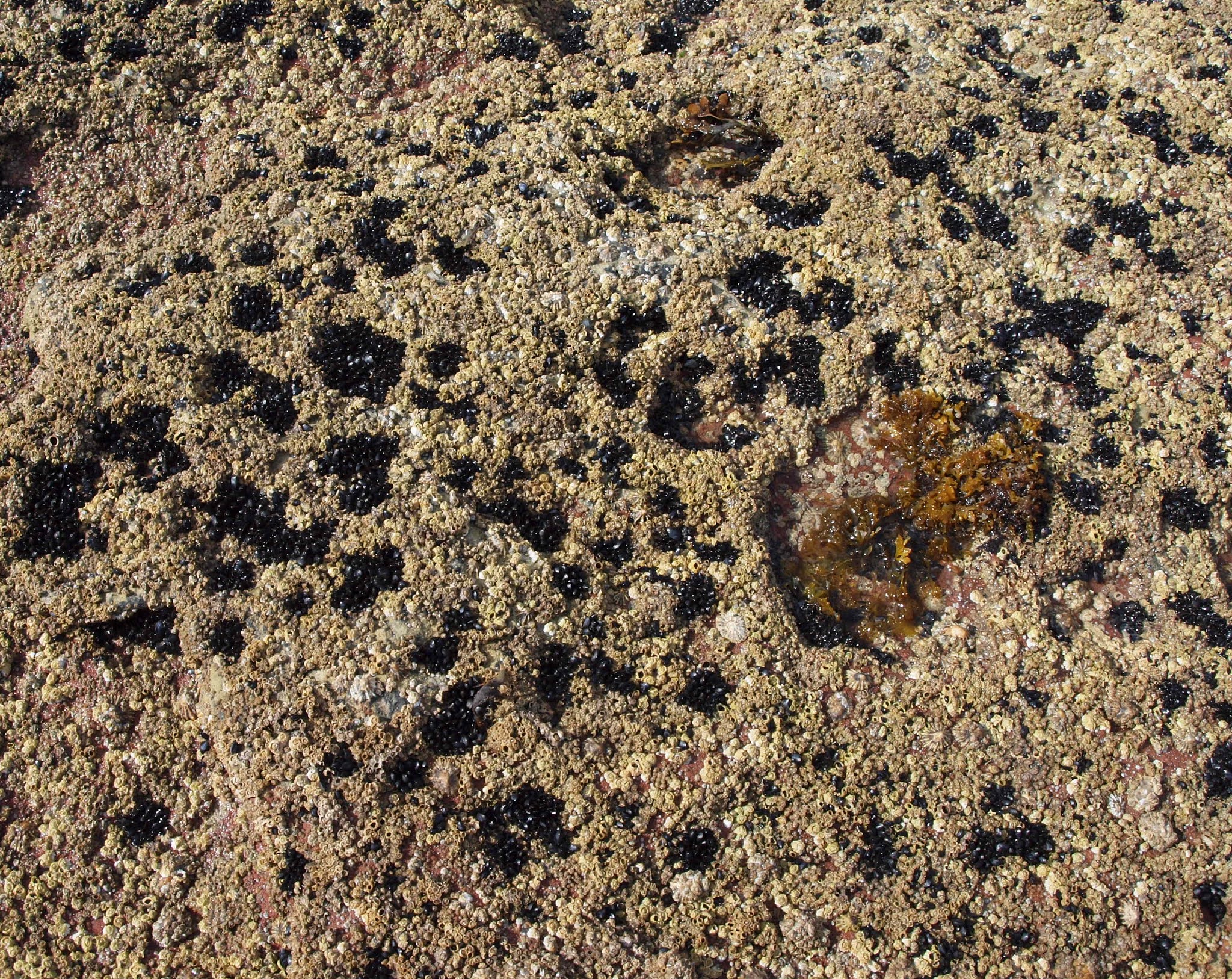
I must have made that walk scores of times when I was living in Paignton, and at school in Torquay, and it is always something I love to do on my rare visits back to Torbay. Nowadays, I stick to the path, but when I was younger, I also walked on the beaches and, at low tide, walked round headlands by jumping from boulder to boulder. I had no real sense of danger and it wasn’t just the physical exercise, excitement, and feeling of isolation that I enjoyed, as there was also much natural history to observe, both in rock pools and on the rocks themselves (see below). I became fascinated by creatures like limpets, mussels and barnacles that attached themselves, often in huge masses, and I wondered how they had arrived, and how they survived. I knew that barnacles and mussels lived by capturing particles from the sea, but had no idea at the time that my walks to Elbury Cove would provide inspiration for my career in biological research.


My interest was always in aquatic biology and my research work was mostly on suspension-feeding animals. Although I didn’t work directly on barnacles and mussels, I developed an appreciation of the types of particles that they captured and these were not just planktonic plants, but also dead organic matter. Some organic particles were from the breakdown of plants and animals, others were formed by aggregation processes at the micro-scale, often involving exudates from cells. I learned about the importance of waves and bubbles in particle formation and that, of course, took me right back to my walks. When I look out at the waves at Elbury Cove now, I not only see a Romantic vista, but also the source of my understanding of how aquatic systems work, something I was able to describe for others (see below). I guess that’s the result of being a Romantic, too. It's been quite an adventure



[1] Roger S Wotton (2020) Walking with Gosse: Natural History, Creation and Religious Conflicts. Available from Amazon, Barnes & Noble, and other e-book sellers.


[2] https://davedoeshistory.com/2018/07/31/elberry-cove-bathhouse/


Thursday, 18 April 2019

Looking for the sublime


I was fascinated by Canada as a teenager. It came from looking at pictures in books that I borrowed from the local lending library and, while I appreciated the skyscapes of the prairies, it was the grandeur of the mountains, the lakes and the forests that had the most appeal. There was also the sense of scale and the vastness of it all.

The interest in the Canadian landscape re-surfaced when I was an undergraduate. Being interested in animals and plants, I knew that I wanted to continue to study Biology by conducting research in the field. I mentioned this, together with my feelings about the boreal landscape, to one of my lecturers and he kindly put me in touch with possible research supervisors in Canada. These contacts resulted in several provisional offers, providing I could get funding from teaching assistantships or research grants. However, nothing more came of it and I stayed in the UK; my fascination for boreal landscapes being given reality when I studied lakes and rivers in northern Sweden and in Finland. It was in these countries that I could get a sense of wilderness; of something that appeared to show no influence of humans. I can sum up this sense by using, as illustration, Gallen-Kallelas’s painting Lake Keitele (see below). Gallen-Kallela was a seeker of “virgin Nature” and I can easily empathise with that [1].


During my undergraduate years, I spent many happy Saturdays visiting the National Gallery and the Tate Gallery (as it was then) in London. Torbay, where I grew up, was not a centre for looking at a wide range of paintings and I felt drawn to the galleries and to certain works. It wasn’t because of any skill that I had in art, as I have no artistic talent, but I felt a strong connection with some of the images and the way that landscapes had been portrayed. It was similar to looking at pictures of Canada when I was younger - something “clicked” and I didn’t know why, nor was I interested in thinking about that.

As an old man, I realise that my interest in the boreal landscape, and the various ways in which it was illustrated in great paintings, were part of the same identity – I am an unabashed Romantic with a love of the sublime. The latter possibly comes from a religious upbringing that clearly influenced me, even though I left formal religion when I was twelve. It now takes a nebulous form, but it is certainly there (and not only in paintings, but also from music and poetry). While artists like Caspar David Friedrich and Harald Sohlberg introduced Christian symbolism into their paintings of sublime landscapes, there seems to me something even more powerful if the landscape overwhelms without any obvious theistic force (although theists might suggest that I was just being blind).

It’s not to say that I don’t appreciate both natural and painted landscapes that do show human influence. The Renforsen rapids on the River Vindel in northern Sweden always fill me with awe [2] and, during the spring flood caused by snow melt in the mountains, there is something about their impressive power that certainly stirs the soul. There are, however, so many signs of human influence here: bridges, paths, a hotel, a cafĂ©, mill buildings, car parks, etc. that one realises it is far from wilderness. If part of the splendour of being in wilderness comes from tranquillity, Renforsen, other rapids, and raging seas are part of another kind of awe; that which contains an implied threat. Compare Gallen-Kallela’s Lake Keitele with Johan Christian Dahl’s The Lower Falls of the Labrofoss (see below) to see examples of this contrast. Both portray the sublime.


Of course, the art and aesthetics of the sublime have been written about many times and I’m not saying anything new. Rather, in a pretentious way, I’m trying to understand my personal view of landscape and what has made me so enraptured by some natural and painted scenes. I’m hooked.


Wednesday, 25 January 2017

An Artist who loved Virgin Nature


Most visitors to Room 41 of the National Gallery in London come to see the collection of works by well-known Impressionist painters. The room also contains the only painting by Akseli Gallen-Kallela in the Gallery: a view of Lake Keitele in Finland, the country where the artist was born and lived for much of his life. In an earlier blog post I compared the atmosphere created by this work and by the 5th Symphony of Sibelius [1], both being strongly Nordic. However, while the music of Sibelius is well known, the art of Gallen-Kallela is less familiar to most of us, as music travels more easily than paintings and frescoes, although modern illustrations make copies available widely. As young men, Sibelius and Gallen-Kallela shared a passion for both Nature and Finnish traditions [2] and were part of Symposium, an influential group of young creative artists who met to discuss Finnish national identity at a time when the country was a Grand Duchy of Russia. Their interest focussed on Karelia (a large part of which was ceded to the Soviet Union after the Second World War) and this region had a profound effect on Gallen-Kallela.

I made my first extended visit to Finland in the winter of 1976 and my hostess, knowing perhaps of my interest in paintings, took me to the Gallen-Kallela Museum at Tarvaspää. After leaving the tram stop, we walked across part of a frozen lake and it was so cold that the snow covering the ice was scattered as we walked, forming a glittery haze. There was something magical in that as I had never seen it before so, on arrival at the museum, I was especially receptive to viewing the works on display. I was not disappointed and followed up this visit by looking at as many pictures by this great artist as I could during my stay in Helsinki. Having spent the summers of 1975 and 1976 in the north of Sweden, I developed a love of Nordic wilderness but I was surprised at the powerful connection that I felt to many of Gallen-Kallela's paintings.


Before becoming a student in Paris, Gallen-Kallela painted a series of pictures of rural life, among the earliest being Boy with a Crow (above, upper), made when the artist was 19 years old. This is one of the paintings that had a big effect on me and it is not difficult to read a story into the simple portrayal of two beings against the ground of an enclosed meadow. There are many other works based on everyday life (e.g. above, lower) and Timo Martin and Douglas Sivén wrote in their splendid celebration of Gallen-Kallela [3]:

In the forests, the landscape of the wilds and in the solitude of the great outdoors Akseli Gallen-Kallela always found peace of mind for a while, and most often he portrayed the wild scenery as softly limpid and melancholy. He made his most joyful notes when work had gone well and his mind was at peace, far from the madding crowd. Born a country boy, Gallen-Kallela throve in the country, in the forests and among the innocent people of his childhood memories, even for long time periods – until his complex, restless nature drew him to the turmoil of cities and to the activities of equally ambitious kindred spirits. His devotion to virgin nature sprang from his childhood, remembered with a warmth that as time passed so gilded those memories that he came to expect life and people in other regions to live up to them.

Romantics can identify readily with these sentiments and, in an attempt to satisfy them, Gallen-Kallela designed a wooden house to be his home in an isolated part of Finland, long before Tarvaspää was built. This house was named Kalela (not Kallela) and the interior decorations, and the furniture, were made by Gallen-Kallela himself using Karelian and National Romantic motifs. He lived here with his wife and young family but it was far from idyllic in any practical way as it was always cold during the winter and Finnish winters are often very cold indeed. However, it brought him close to the natural world throughout the year, although his restlessness saw him make many trips to other countries. His mature style changed to be more Symbolist and, in addition to oil painting, he painted in tempera, made wood cuts and etchings and created pieces of stained glass. 

On one of his visits to Italy, he learned about fresco techniques and devoted years to making frescoes in Finland and in the Finnish Pavilion in the 1900 Paris World Exhibition. Very few of these works have survived: they featured subjects connected with Kalevela, the Finnish "national legends" based on Karelian folk tales that were also an important source for many paintings. However, it is the landscapes and informal portraits by Gallen-Kallela that I appreciate most. It's one Romantic speaking to another, sharing a similar taste for melancholy and Nature.


[2] William L. Coleman (2014) Sibelius, Gallen-Kallela, and the Symposium: Painting in Fin-de-Siècle Finland. Nineteenth-Century Art Worldwide 13: 1-18.

[3] Timo Martin and Douglas Sivén (1985) Akseli Gallen-Kallela: National Artist of Finland. Helsinki, Watti-Kustannus.

Wednesday, 6 February 2013

Philip Henry Gosse and Nature


Henry Gosse - aged 45 (two years after the publication of "A Naturalist's Rambles on the Devonshire Coast")


Henry Gosse was a great Natural Historian and communicator who believed that making observations of organisms and the environment in which they live has a powerful, positive effect on our emotions. For Henry, it was a confirmation of the magnificence of his God, for he was a devout Christian and believed completely in the Biblical account of Creation. This is what he wrote in the Preface of "A Naturalist's Rambles on the Devonshire Coast":

The following pages I have endeavoured, as far as possible, to make a mirror of the thoughts and feelings that have occupied my own mind during a nine months' residence on the charming shores of North and South Devon. There I have been pursuing an occupation which always possesses for me new delight,- the study of the curious forms, and still more curious instincts, of animated beings. So interesting, so attractive has the pursuit been, so unexpected in many instances the facts revealed by the research, that I have thought the attempt to convey, with pen and pencil, to others the impressions vividly receibed by myself might be a welcome service....

.... I have not made a book of systematic zoology; nor a book of mere zoology of any sort. I venture to ask your companionship, courteous Reader, in my Rambles over field and down in the fresh dewy morning; I ask you to listen with me the carol of the lark, and the hum of the wild bee; I ask you to stand with me at the edge of the precipice and mark the glories of the setting sun; to watch with me the mantling tide as it rolls inward, and roars among the hollow caves; I ask you to share with me the delightful emotions which the contemplation of unbounded beauty and beneficence ever calls up in the cultivated mind.

Hence I have not scrupled to sketch pen-pictures of the lovely and romantic scenery with which both coasts of Devon abound; and to press into my service personal narrative, local anecdote, and traditionary legend; and, in short, any and every thing, that, having conveyed pleasure and interest to myself, I thought might entertain and please my reader. It is not the least of the advantages of the study of natural history, that it strengthens in us "the habit of wishing to discover the good and the beautiful in all that meet and surround us."

If it should be objected that - to treat of the facts which science reveals to us, in any other manner than that technical measured style, which aims not at conveying any pleasurable emotions beyond the mere acquisition of knowledge, and is therefore satisfied with being coldly correct,- is to degrade science below its proper dignity, I would modestly reply that I think otherwise. That the increase of knowledge is in itself a pleasure to a healthy mind is surely true; but is there not in our hearts a chord that thrills in response to the beautiful, the joyous, the perfect in Nature? I aim to convey to my reader, to reflect, as it were, the complacency which is produced in my own mind by the contemplation of the excellence impressed on everything which God has created.

Just to emphasise the importance of accuracy in scientific investigation, Henry goes on to state:

....I would not have it supposed that I have ever stated the facts of Natural History in a loose, vague, imaginative way. Precision is the very soul of science,- precision in observation, truthfulness in record: and I should deem myself unworthy of a place among naturalists, if I were not studious to exhibit the phenomena of Nature with the most scrupulous care and fidelity. Humanum est errare: I dare not suppose I have escaped error; but I am sure it is not the result of wilfulness, I trust it is not of carelessness.

There is no doubting Henry's honesty in all that he did and this certainly applied to his scientific work, which led to him being elected a Fellow of the Royal Society. However, his science had the wider setting that provided a more fulfilling view of Natural History. It is a highly Romantic approach, of course, but that is no bad thing. It is an approach which enhances our appreciation of the World and helps us to recognise our responsibilities in minimising the destruction of Nature.

Although Henry Gosse and I would disagree on many things related to religious belief, I find him to be an inspiration and agree strongly with the sentiments in the Preface. I am not ashamed to call myself a Romantic.

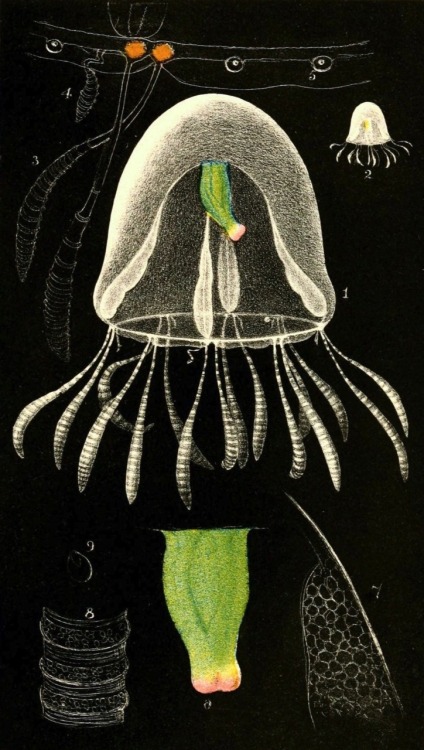
       One of Henry Gosse's beautiful illustrations from "A Naturalist's Rambles on the Devonshire Coast"