The study of marine organisms, by both professionals and amateurs, underwent an explosion in the 19th century. Although most interest was in animals and plants of the shore, there was also a developing fascination with plankton, studied by means of nets. Among the pioneers of this approach was John Vaughan Thompson (above), who is little known and doesn’t merit a mention in Lynn Barber’s “The Heyday of Natural History” [1], yet his contribution to our understanding of the life cycles of marine organisms was very important. This is what Sir Alister Hardy said in the Introduction to the New Naturalist book “The Open Sea: The World of Plankton” [2]. (The well-known cover of my worn copy is shown below the quote).
In nearly all the text-books of
oceanography it is stated that the tow-net was first used in 1844 by the German
naturalist Johannes Müller, and I have myself been guilty of repeating this
error. It is certain that Müller’s researches excited the scientific world and
led many others to follow him; but our own great amateur naturalist J. Vaughan
Thompson, when serving as an army surgeon in Ireland, was using a tow-net to
collect plankton from the sea off Cork as early as 1828. It was there that he
first described the zoëa, the young planktonic stage of the crab. A little
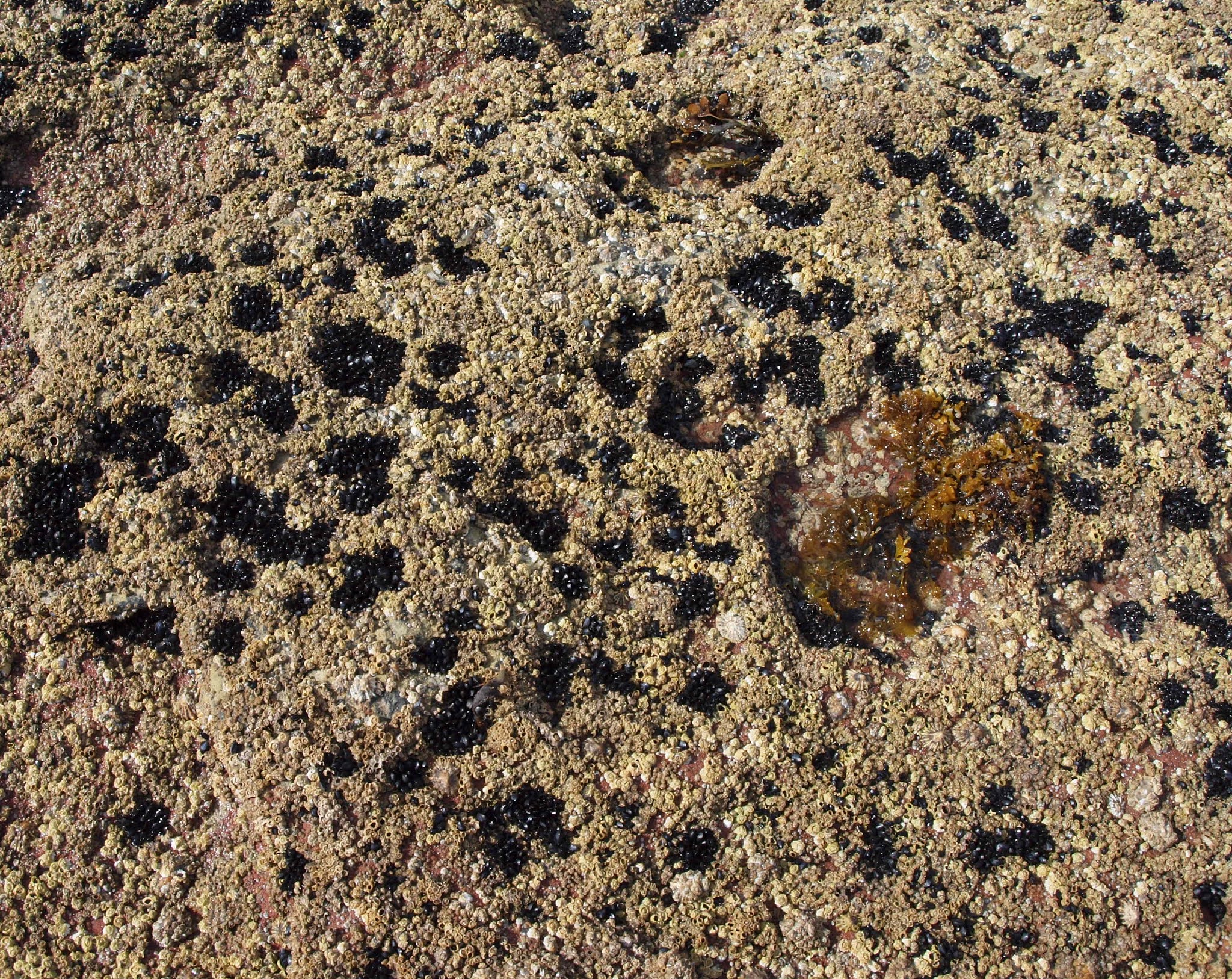
later, 1833, he discovered the true nature of the barnacles and so solved an age-long
puzzle. These enigmatic creatures, fixed to rocks or the bottom of ships, had
been thought to be aberrant molluscs. Thompson caught little undoubted
crustaceans in his tow-net and found that they settled down to be transformed
into barnacles. His classical discoveries were described in privately printed
memoirs which he published in Cork; they are among the rarest items of
biological literature.

Adding to the important role that Hardy describes, we read [3] that:
Thompson not only mastered the use of a fine-meshed net from a moving vessel, but also developed the ingenious method of fastening the net over the spout of the ship’s sea water pumps – arguably the first use of a continuous plankton sampler.
Davis [3] also wrote:
Thompson’s studies in marine biology.. ..revolutionised some aspects of zoological thought. His name is unfamiliar however, even to marine zoologists, partly because of the general absorption of his discoveries and the waning of the controversies his research caused. He has not escaped recognition entirely, however, with distinguished naturalists including Charles Darwin, E.R.Lankester, T.R.R.Stebbing, C.M.Yonge, and Sir Sidney Harmer recognising and paying tribute to his genius.
So why was Thompson questioned by established marine biologists and why were his publications difficult to find, as Hardy [2] has stated? Before answering those questions, we need to find out more about Thompson.
During his motherless childhood in Berwick, Thompson had a love of natural history and recorded the distribution of plants in the area. He studied medicine at the University of Edinburgh in 1797 and 1798 and then joined the army as a surgeon, again studying natural history on all his postings. It was as a surgeon that Thompson was assigned to Cork in1816 “the location of his most famous discoveries and the wellspring of all his subsequent publications” [4].
In his biography, Damkaer writes further:
Looking back on Thompson’s discoveries it is now more surprising to believe they were so surprising. The transition between his observations and their acceptance happened fairly quickly, but there was a reluctance to give Thompson much credit when his discoveries were seen to be so commonplace and so easily demonstrated. Perhaps some researchers were simply embarrassed to admit that they had missed such phenomena.
Fortunately, Adam Nicolson has brought Thompson to a wider audience [5], describing him as “the great hidden hero” of studies on metamorphosis in crustaceans. As he says:
No one believed him. The biological establishment in Britain and Europe poo-pooed the revelations from Cork.. ..Thompson was right and the grandees wrong but he was poor, publishing privately in Cork and they rich, with all the resources and influence behind them of the great scientific institutions in London, Berlin and Paris.
There are thus three components to the lack of recognition of Thompson’s work:
(i) His background as an independent, amateur researcher
made him an “outsider”;
(ii) His discoveries challenged the scientific establishment
of the time; and
(iii) His work was published privately and was not widely available.
Have things changed markedly since Thompson’s time and are there lessons to be learned from Thompson’s story?
[1] Lynn Barber (1980) The Heyday of Natural History. Jonathan Cape, London.
[2] Alister Hardy (1956) The Open Sea: The World of Plankton. Collins New Naturalist, London.
[3] Peter Davis (2004) Thompson, John Vaughan (1779-1847). Oxford Dictionary of National Biography https://doi.org/10.1093/ref:odnb/2723
[4] David M. Damkaer (2016) John Vaughan Thompson (1779-1847), pioneer planktonologist: A life renewed. Journal of Crustacean Biology 36:256-262.
[5] Adam Nicolson (2021) The Sea is not made of Water. William Collins, London.
P.S. For those wishing to look at Thompson’s original work,
his descriptions are now available on the Biodiversity Heritage Library website:
https://www.biodiversitylibrary.org/item/50371#page/5/mode/1up