Showing posts with label Mussels. Show all posts

Thursday, 26 November 2020

The walk to Elbury Cove


When I started blogging, I never imagined that I would achieve the milestone of 250 posts. What started as publicity for “Walking with Gosse” (the blog taking its title from the sub-title of the book [1]) has grown to encompass wider fields related to many aspects of Nature, Creation and Religious Conflicts. To celebrate the 250, I would like to describe a walk, part of the South West Coast Path, that has always meant a great deal to me and with which I associate many memories, both distant and recent. I was raised in Torbay and the coastal landscape of the bay inspired me in important ways. It was where I could escape from things that troubled me and it instilled in me a Romantic approach to life that replaced the religion of my upbringing.


The walk began at Paignton Harbour (above), where I loved to spend time watching the tide and the boats. and, from there, I followed the coast to the beaches at Goodrington, the location of the well-known Gosse family outing in 1887 [1]. The path then led uphill, past Saltern Cove (where I sometimes sat to ineffectually revise chemistry, among other subjects), and onwards to the next sandy beach at Broadsands (all shown in the sequence of images below).


My destination was Elbury Cove, but not as far as the shingle beach that seemed so different to the golden sands more typical of the bay. It was the limestone outcrops that I liked and I walked out to be close to the sea, listening to it lapping against the shore and looking down in the hope of seeing fish. In summer, I would stretch out on the smooth rocks and, in other seasons, become fascinated by the way waves crashed in. From the outcrops, I could look across to the cove and see Lord Churston’s bathhouse that allowed his lordship the chance to go sea bathing [2]. Set against the dark woods, and adjacent to the steep shingle beach, the bathhouse ruin would have appealed to landscape painters, especially those in the Romantic tradition and the view certainly appealed to me. All this is seen in the following images:


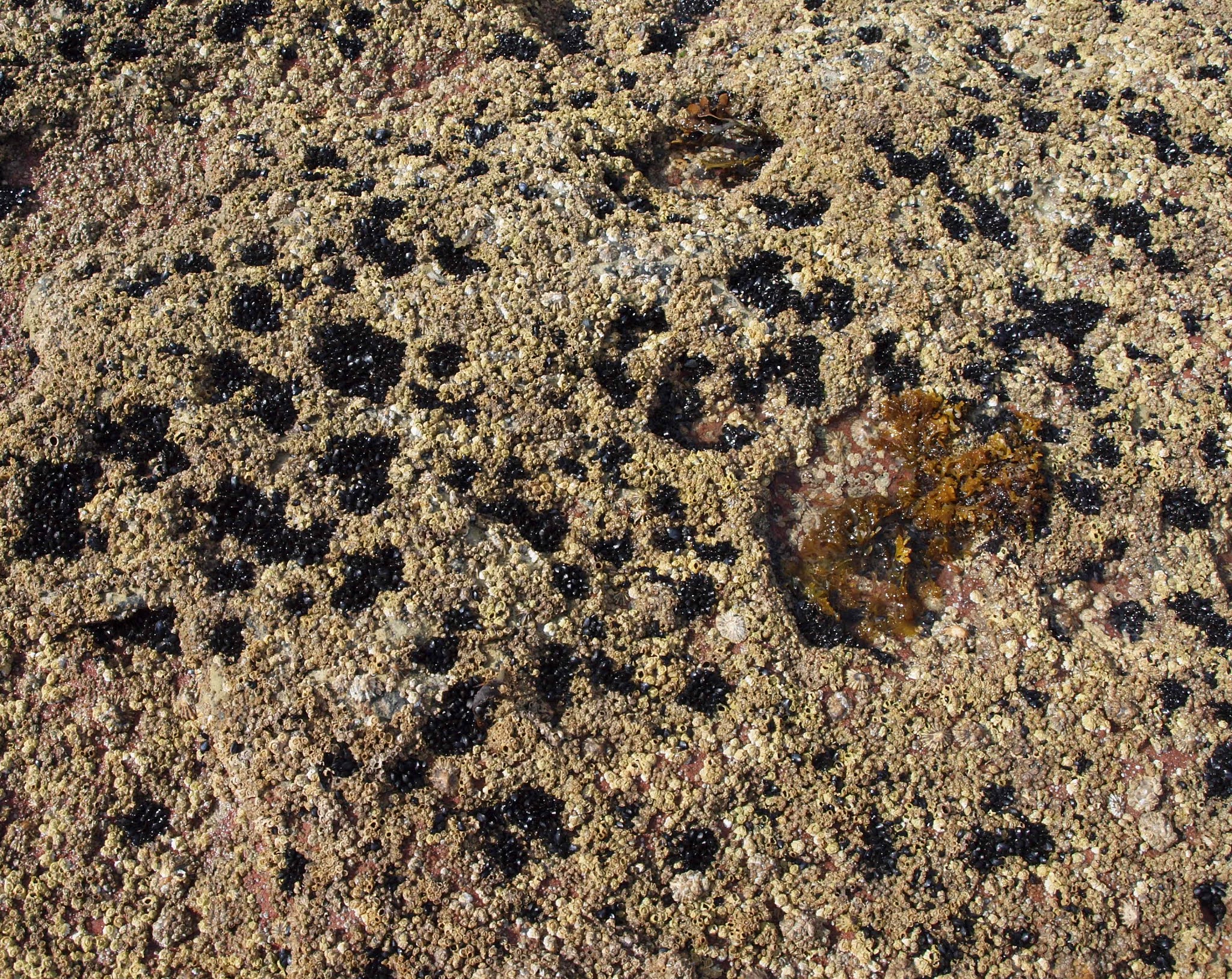
I must have made that walk scores of times when I was living in Paignton, and at school in Torquay, and it is always something I love to do on my rare visits back to Torbay. Nowadays, I stick to the path, but when I was younger, I also walked on the beaches and, at low tide, walked round headlands by jumping from boulder to boulder. I had no real sense of danger and it wasn’t just the physical exercise, excitement, and feeling of isolation that I enjoyed, as there was also much natural history to observe, both in rock pools and on the rocks themselves (see below). I became fascinated by creatures like limpets, mussels and barnacles that attached themselves, often in huge masses, and I wondered how they had arrived, and how they survived. I knew that barnacles and mussels lived by capturing particles from the sea, but had no idea at the time that my walks to Elbury Cove would provide inspiration for my career in biological research.


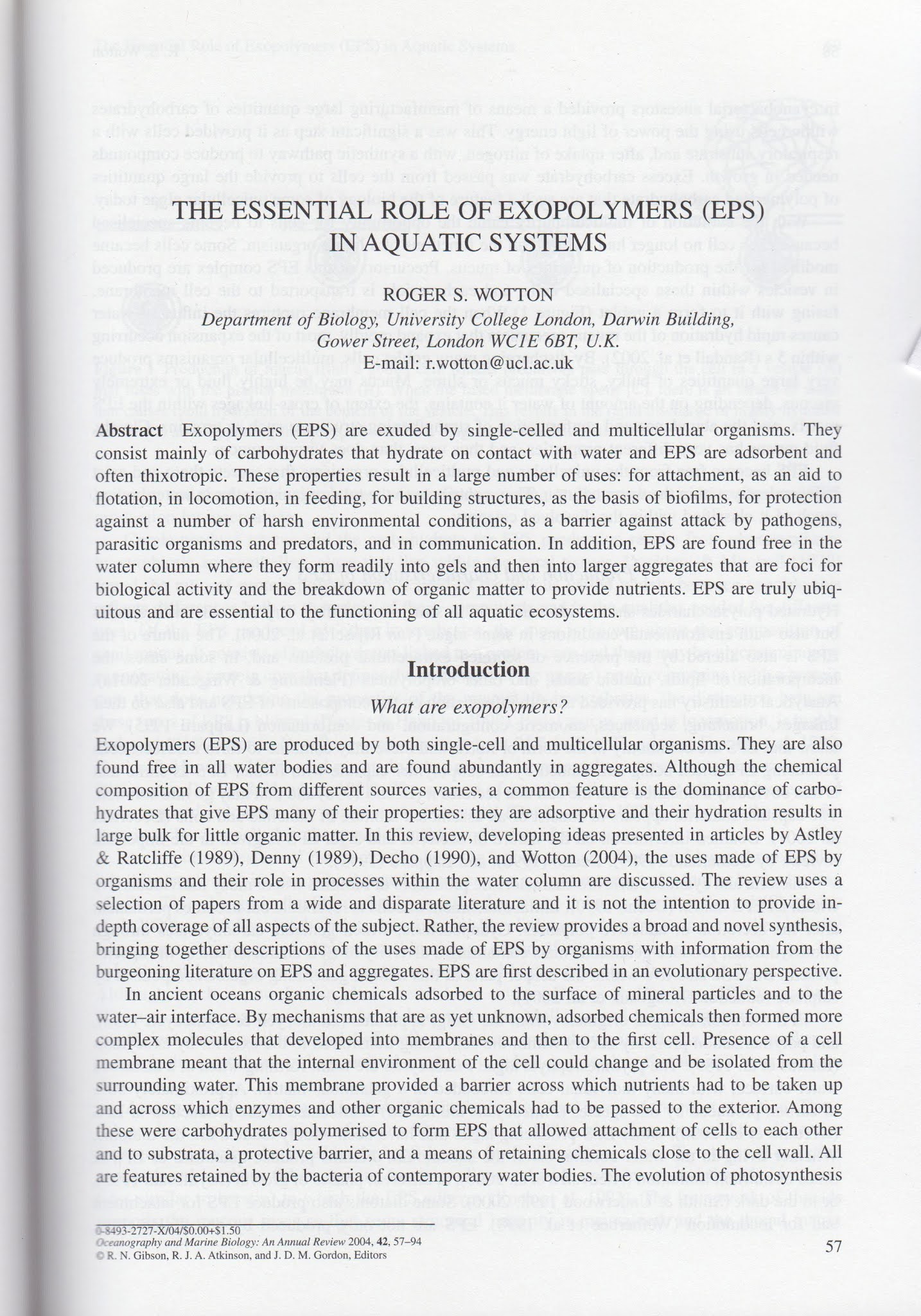
My interest was always in aquatic biology and my research work was mostly on suspension-feeding animals. Although I didn’t work directly on barnacles and mussels, I developed an appreciation of the types of particles that they captured and these were not just planktonic plants, but also dead organic matter. Some organic particles were from the breakdown of plants and animals, others were formed by aggregation processes at the micro-scale, often involving exudates from cells. I learned about the importance of waves and bubbles in particle formation and that, of course, took me right back to my walks. When I look out at the waves at Elbury Cove now, I not only see a Romantic vista, but also the source of my understanding of how aquatic systems work, something I was able to describe for others (see below). I guess that’s the result of being a Romantic, too. It's been quite an adventure



[1] Roger S Wotton (2020) Walking with Gosse: Natural History, Creation and Religious Conflicts. Available from Amazon, Barnes & Noble, and other e-book sellers.


[2] https://davedoeshistory.com/2018/07/31/elberry-cove-bathhouse/


Wednesday, 11 March 2020

The zoology of Bruegel’s The Fall of the Rebel Angels


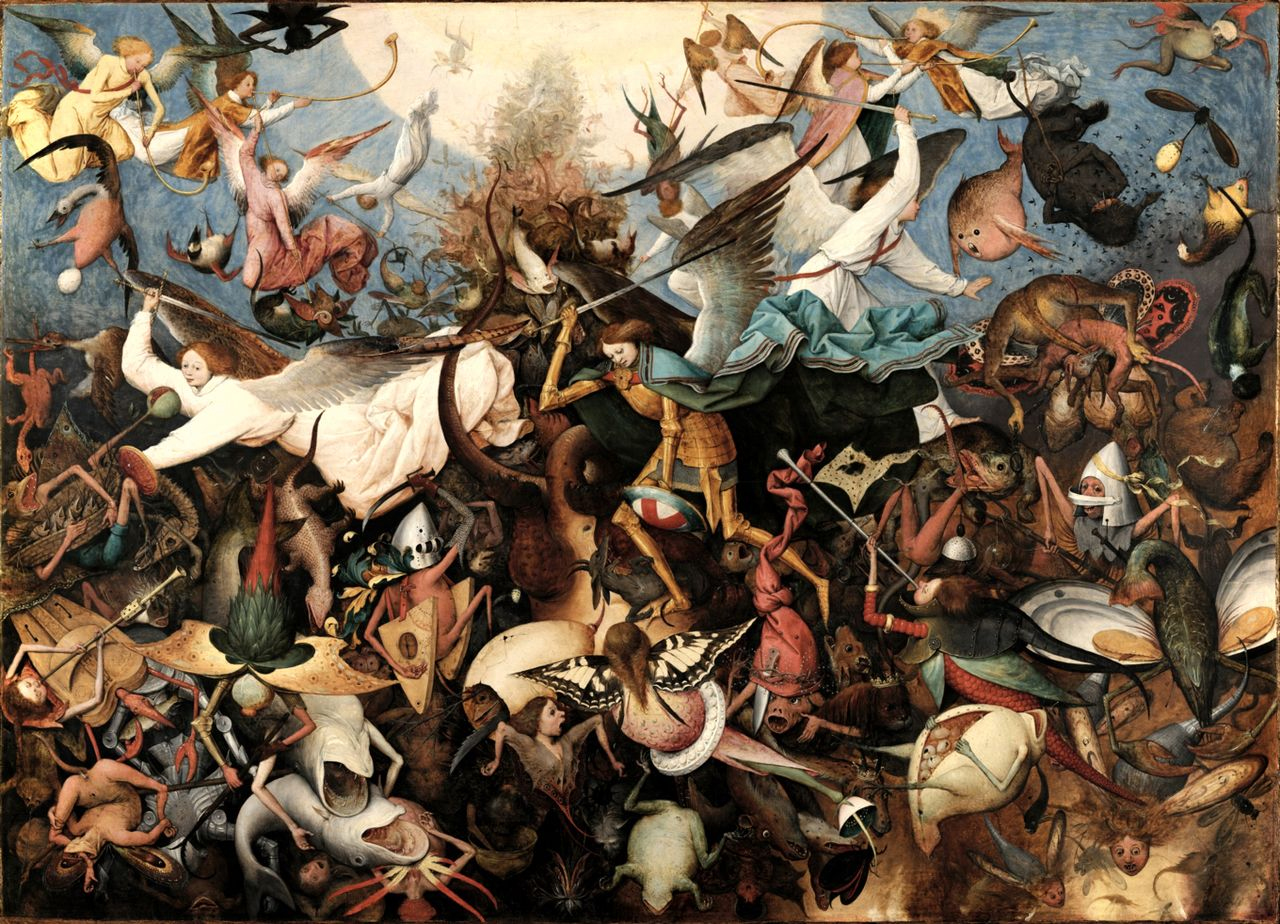
Pieter Bruegel the Elder is best known for scenes of everyday life and he can be regarded as the first well-known exponent of genre painting. The Fall of the Rebel Angels shows a quite different topic: the expulsion of Lucifer from Heaven by St Michael and a group of angels loyal to God. Bruegel shows us St Michael (with his shield bearing the cross of the resurrection), but it is difficult to make out Lucifer in his many-headed form. Heavenly light shines from the top of the picture, through the blue sky, and we then move down to the darkness of the abyss of Hell. Some animals are present in the sky, together with angels, and most are descending into Hell, which is not fiery, as it is described in The Holy Bible and as it is usually shown in paintings. The only hint of fire in Bruegel’s work turns out to be a feathery headdress.


An excellent commentary on the painting has been provided by the Royal Museums of Fine Art in Brussels, where the painting is exhibited [1]. As mentioned in this commentary, several of the animals shown are based on those from collections of curiosities, which were becoming popular as sources of wonder at the unfamiliar.

I would like to make some additional comments on some of the animals shown in the painting.

The puffer fish

Bruegel shows a puffer fish with the body distended. One defence mechanism used by these fish is to rapidly take water into the stomach to “inflate” the body and make spines stand out: the same mechanism is used when the fish gulp air should they be caught out of the water. In this state, puffer fish have been preserved by drying and it is likely that Bruegel saw a preserved specimen displayed in a collection of curiosities. While the eyes look unnatural, he shows the fused teeth that are used by the living fish to bite into their prey [2].

Interestingly, some puffer fish have another defence mechanism in the production of chemicals within the liver that are highly toxic to humans. So much so, that raw fugu – a delicacy in some parts of the world – requires preparation by specially-trained chefs. It tempts us to think that the inflation of the body, and the production of toxins, evolved to prevent predation by humans, but both must have existed long before the evolution of humans.


Two dead fish and bloated frogs

The fish are shown with their mouths open as if gasping, an indication of distress that Bruegel clearly wished to convey. The same intention of providing images that cause us to become frightened comes in the bloated frog, whether bloating was caused by decomposition or, should the frog be female, by being filled with eggs that will now not be laid. A second frog-like creature is shown with the abdomen split open to show what appears to be spawn, but this animal is different to Bruegel’s frog (having what looks like the “parson’s nose” of a chicken at the end of the abdomen). I have no idea what Bruegel was trying to show here.


Mussels + a crustacean

In this image we see two open mussel shells containing the body of each mollusc. The two mussels, each shown inside one of their shell valves, have clearly been cooked as, in life, the mantle (the pink/yellow fold) is closely applied to the shell for almost all of its length. Lying between the two mussels is what appears to be a crustacean, blue in colour like a lobster when alive, and the whole reminds us of a flying creature, with the mussel shells forming “wings”.


The stenogastrine wasp

Although stylised, the stenogastrine wasp is probably included as a threat and also as a bizarre creature that would also have occurred in a collection of curiosities. These wasps, like other social insects, are likely to be female and possessed of a mild sting. However, they are not usually aggressive and their appearance more frightening than reality, especially when shown at such a large size relative to other recognisable animals in the painting.


The falling birds

Two birds are shown falling into the abyss. One appears to be laying an egg, but it is impossible to identify what type of bird it might be: the other resembles a great auk, now extinct. Interestingly, Ole Worm (1588-1654), the Danish natural historian and physician, kept a great auk as a pet and, after its death and preservation, it might have found its way into his splendid cabinet of curiosities [3].


We can spend much time in speculating on what Bruegel intended in his use of images of animals, both real and imaginary. His view of the expulsion of Lucifer is certainly unique and is based on his imagination, with no attempt made to show the realistic scale of the different components. Dead terrestrial and aquatic animals are present in all parts of the painting, together with images that are supernatural and were likely to have been strongly influenced by the earlier works of Hieronymus Bosch (as mentioned in the commentary).

It is an extraordinary painting.


Wednesday, 16 September 2015

Sea silk – the Natural History of an unusual textile


Anyone preparing mussels for moules marinières [1] is familiar with the beards that need to be pulled free of the closed shell. These beards are more properly termed byssus threads and they are the means by which mussels attach to substrata, allowing them to withstand the effects of waves and water currents. Unlike snails, bivalves do not use their foot for gliding locomotion and, instead, it provides an effective burrowing organ or, in mussels and their relatives, a means of secreting threads and then holding them in tension. The threads are produced from a gland on the foot and pass along a groove, being attached to the substratum and the foot then withdrawn, each proteinaceous thread hardening very rapidly and thus ensuring secure attachment. The bivalve shells are opened by the elastic hinge when the muscles that hold the valves tightly together are relaxed and the mussels then feed on the good supply of suspended food particles brought by tidal flows.

 
Pinna nobilis, commonly called the pen shell, is a large bivalve that can grow to 1 metre in length and it requires strong attachment by byssus to avoid being moved by currents and to hold the animal upright to allow efficient feeding (an example of a pen shell is shown in the video clip above). Pen shells are found on soft bottoms but are most commonly associated with beds of seagrasses, underwater flowering plants that are anchored into sediments by means of rhizomes [2]. In a study in the Ebro Delta in Spain, Prado et al [3] concluded that:

Seagrass beds have been considered to be the most suitable substrate for P. nobilis, since their rhizomes allow a complex connection between byssus filaments and the sediments. In fact, although individuals were detected in both vegetated and unvegetated areas, higher abundances (by ca. 40%) were observed in areas with 80%-100% cover, thus suggesting that dense meadows may favour the highest abundances of individuals.

In addition to providing ideal locations for attachment, seagrass beds are also highly productive marine habitats and it is likely that these provide an abundance of food for the growing bivalves. The large number of shells also provides good conditions for the colonisation by plants and animals; shells from dead bivalves transplanted experimentally into areas of bare soft sediment readily became colonised by a diverse community of marine creatures [4].  


The natural community of Pinna nobilis, and its associated plants and animals, could not develop if it were not for byssus, recognised increasingly as an important biomaterial [5]. Byssus consists mainly of collagen, a fibrous protein that shares many characteristics with fibroin, the main constituent of insect silk. The most well known insect silk is that produced by silkworms to form a cocoon in which to pupate. The pupae and cocoons are harvested and it is important that these are placed into boiling water to kill the pupae before the adult insects emerge to cut through the threads. The long fibres are unwound and, as they are produced by being exuded through an aperture, they are uniform in both diameter and consistency. Byssus threads, on the other hand, vary in diameter and they are usually elliptical in cross section, a result of their method of production from the byssal gland and byssal groove on the bivalve foot.


It may come as a surprise to know that the byssus of Pinna nobilis is collected, carded and spun to produce a thread used in weaving, knitting and embroidery. Recently, this use was highlighted in an article on the BBC web site [6] that included a portrait of Chiara Vigo, a Sardinian collector, weaver and embroiderer and the strong feeling and respect that she has for byssus. The same attitude is shown by Felicitas Maeder who has a wonderful web site that is packed with historical and scientific information, as well as having an illustrated inventory of many items made from sea silk. If you are interested in the Natural History of this unusual material, an historian of textiles, or an enthusiast for weaving, knitting and embroidery please visit http://www.muschelseide.ch/en/projekt.html. It is a fascinating site and makes one wonder about the evolution of byssus and the ingenuity of humans who saw it as a useful fibre, both for clothing and ornament.


[3] Patricia Prado, Nuno Caiola and Carles Ibáñez (2014) Habitat use by a large population of Pinna nobilis in shallow waters. Scientia Marina 78:555-565

[4] Lotfi Rabaoui, Walid Belgacem, Dorsaf Ben Ismail, Lamjed Mansour and Sabiha Tlig-Zouari (2015) Engineering effects of Pinna nobilis shells on benthic communities. Oceanologia 57:271-279.

[5] J. Herbert Waite and Christopher C. Broomell (2012) Changing environments and structure-property relationships in marine biomaterials. The Journal of Experimental Biology 215:873-883.


Thursday, 6 March 2014

Moules marinières


Moules marinières is one of my favourite seafood dishes and so simple to prepare. This is my version:

1. Wash recently-collected mussels under running water, clean off anything attached to the shell valves and also “beards” (called byssus threads by Biologists). Ensure that all mussels are closed tightly, or close when the shell valves are tapped with the blade of a knife.

2. Chop 3-4 shallots coarsely and sauté them in butter in a large pan until they are softened, but not coloured.

3. Add a half bottle of white wine (Muscadet works very well) and bring it to the boil. Add a little freshly-ground pepper and pour in the mussels, immediately covering the pan with a lid.

4. Turn down the heat and allow the mussels to cook for 5 minutes, shaking the pan from time to time. Pass the whole contents through a sieve, before returning the strained liquor to the pan and reducing vigorously. Keep the mussels warm.

5. Place 10-20 mussels in a deep dish and pour over some of the reduced liquor and garnish with chopped parsley. Use a shell valve as a spoon to eat the mussels and mop up the remaining juices with crusty white bread.

The rest of the white wine makes a fine accompaniment and a second bottle is usually needed if the meal is shared with others - and sometimes another bowl of mussels each, too. Fortunately, the blue mussel (Mytilus edulis) is very common on coasts and in shallow seas, and mussels are also farmed, so they are easily acquired.

Byssus threads ensure that these bivalves are attached firmly to the substratum, or to other mussels, and this provides anchorage to withstand the effect of waves and the tide when they are found in the intertidal zone. In this habitat they must also withstand exposure to the air twice a day, as this brings both the threat of drying and, during warm periods, of dangerous overheating. Drying is prevented by keeping the shell valves tightly closed by means of adductor muscles and the main one of these, the posterior adductor (A, in the photograph below), is kept contracted when the animals are not covered by water. They can keep this up for some time, as we know from looking at fishmongers’ slabs, and the mussels are thus living in their own little marine world and they can withstand quite high temperatures without harmful effects. Unfortunately, the temperature of boiling Muscadet means a quick denaturing of muscles and of proteins in other tissues, so the mussels gape open by the action of the hinge and we separate the valves (held together only by the hinge) to provide us with the spoon we use to eat the cooked animal. It is worth noting that the wonderful liquor we mop up with bread consists of wine, oil, shallots, pepper, parsley, sea water and mollusc waste products.


When living molluscs are covered by the sea, the adductor muscle is relaxed and the shell valves open by means of the elastic hinge. To grow, the mussels must feed and, perhaps surprisingly, the main organs of food capture are the gills, with two pairs on each side of the animal (visible as large translucent structures [G, in the photograph above]). The gills have many filaments and the surface of each gill is covered by millions of tiny hairs called cilia that beat with a power and recovery stroke. 1 Cilia are ubiquitous in the Animal Kingdom and serve many functions, but the millions on the mussel gill create a current that draws water into the cavity formed between the shell valves and the water then passes between the gill filaments. Particles trapped on the gills are moved by further cilia to a food groove on each gill and yet more cilia transport the food, by now wrapped in mucus, to extensions of the mouth (the labial palps), where potential food is sorted for ingestion, the remainder being “dropped” into the exhalant current.

The anatomy of a mussel shows the evolution of extraordinary structures: the byssus threads produced from a gland on the foot; the two shell valves; the adductor muscle; the elastic hinge opening the shell valves; the gills for respiration and for feeding; the labial palps for sorting. These, in addition to the evolution of the rest of the body, with its tissues, organs and organ systems, the whole having started out somewhere in very distant time as a single cell. How did all these structures, most of which are common to all bivalve molluscs, develop? Of course, I don’t think of that question when I kill mussels in boiling wine or when I eat them, satisfying myself that they are killed rapidly. The death of oysters and scallops is different. Oysters are usually chewed, or pressed against the palate, whilst still alive and living scallops are cut up to obtain the adductor muscle, 2 the commonest part that we eat. Although this is little different to the fate of these animals when attacked by a predator in natural conditions, there is something about humans eating live animals, or chopping them up while they are still alive, that makes me feel uncomfortable. Why is that? Is it because I have a sense of wonder at their extraordinary evolution and that they shouldn’t suffer this fate? I have never had a problem with dissecting live bivalves in practical classes for undergraduate students, although we were focussing on their fascinating biology. Did that overcome my apprehension?