Showing posts with label Blogs. Show all posts

Monday, 15 November 2021

Outsiders and the world of scientific publication

All areas of life are influenced by establishment views – where those in authority, or have expertise, influence the acceptance of new views or opinions. In an earlier post, I described why the conclusions drawn by John Vaughan Thompson were not readily accepted, and suggested that there were three factors why this was so [1]:

(i) His background as an independent, amateur researcher made him an “outsider”;

(ii) His work was published privately and was not widely available; and

(iii) His discoveries challenged the scientific establishment of the time.

Does this apply today?

In the nineteenth century, when Thompson was active, there was much still to be discovered about the life history and behaviour of organisms, and we now know so much more. Yet there continue to be many observers and amateur researchers who have a fund of knowledge that is not published in scientific journals and does not become part of the mainstream.

During the early 1970s, I was a PhD student working at the Moor House Field Station, high in the Pennines. It was a remote place that was once a hunting lodge, at least 5 miles from the nearest village [2], and needed a permanent caretaker to maintain the buildings, machinery, and land. At the time, it was someone called Jim and he had a passion for the natural world and, especially, for the biology of dippers (Cinclus cinclus) [3], that were relatively common in moorland streams like Moss Burn (see above) and other tributaries of the River Tees. As a result, Jim had a great insight into the breeding, distribution, and behaviour of these fascinating birds and it was always a pleasure to get him talking about them. I encouraged him to write about his observations, but he wouldn’t do so, and thus his knowledge was only known to those who engaged him in conversation.

How would someone like Jim share their knowledge in the 2020s? By conversation, certainly, but we now have the internet and all manner of sites on which observations can be posted. Of course, there are problems of accessing the information, and searches using keywords can come up with huge numbers of entries that must then be sifted through. Some sites allow labels that aid search engines but we all experience the difficulty of access, even though much information is readily accessible! This is the world of “grey literature” and would someone interested in publishing in an academic journal use Jim’s observations? Almost certainly not.

Some mainstream journals accept observations, but the majority require papers based on research and/or scholarship, to be submitted according to their house style and rules for submission. Many journals feature in abstracts and search engines like “Web of Knowledge”, but there are several hurdles to overcome before a paper is accepted. The most prestigious ones will not send all submitted papers out to referees, and rejection can also come after receipt of referees’ comments. In my (limited) experience it is uncommon for a paper to be accepted as submitted, and “minor revisions” or “major revisions” are usually required. To an author this can be a frustrating process, as referees may have agendas: most, however, take their role as referees seriously and want to help the author and the editor. Once accepted, there is then the wait for publication, but all this is for the academic community, not for someone with important observations that can add to the grey literature, much of which is not peer reviewed. If John Vaughan Thompson had attempted to publish in one of the leading journals, he would likely have seen his papers rejected, given the response he received. Such is the power of the establishment in any discipline.


[1] https://rwotton.blogspot.com/2021/10/being-outsider-story-of-john-vaughan.html

[2] https://rwotton.blogspot.com/2018/04/tempus-fugit.html 

[3] https://www.rspb.org.uk/birds-and-wildlife/wildlife-guides/bird-a-z/dipper/


Thursday, 26 November 2020

The walk to Elbury Cove


When I started blogging, I never imagined that I would achieve the milestone of 250 posts. What started as publicity for “Walking with Gosse” (the blog taking its title from the sub-title of the book [1]) has grown to encompass wider fields related to many aspects of Nature, Creation and Religious Conflicts. To celebrate the 250, I would like to describe a walk, part of the South West Coast Path, that has always meant a great deal to me and with which I associate many memories, both distant and recent. I was raised in Torbay and the coastal landscape of the bay inspired me in important ways. It was where I could escape from things that troubled me and it instilled in me a Romantic approach to life that replaced the religion of my upbringing.


The walk began at Paignton Harbour (above), where I loved to spend time watching the tide and the boats. and, from there, I followed the coast to the beaches at Goodrington, the location of the well-known Gosse family outing in 1887 [1]. The path then led uphill, past Saltern Cove (where I sometimes sat to ineffectually revise chemistry, among other subjects), and onwards to the next sandy beach at Broadsands (all shown in the sequence of images below).


My destination was Elbury Cove, but not as far as the shingle beach that seemed so different to the golden sands more typical of the bay. It was the limestone outcrops that I liked and I walked out to be close to the sea, listening to it lapping against the shore and looking down in the hope of seeing fish. In summer, I would stretch out on the smooth rocks and, in other seasons, become fascinated by the way waves crashed in. From the outcrops, I could look across to the cove and see Lord Churston’s bathhouse that allowed his lordship the chance to go sea bathing [2]. Set against the dark woods, and adjacent to the steep shingle beach, the bathhouse ruin would have appealed to landscape painters, especially those in the Romantic tradition and the view certainly appealed to me. All this is seen in the following images:


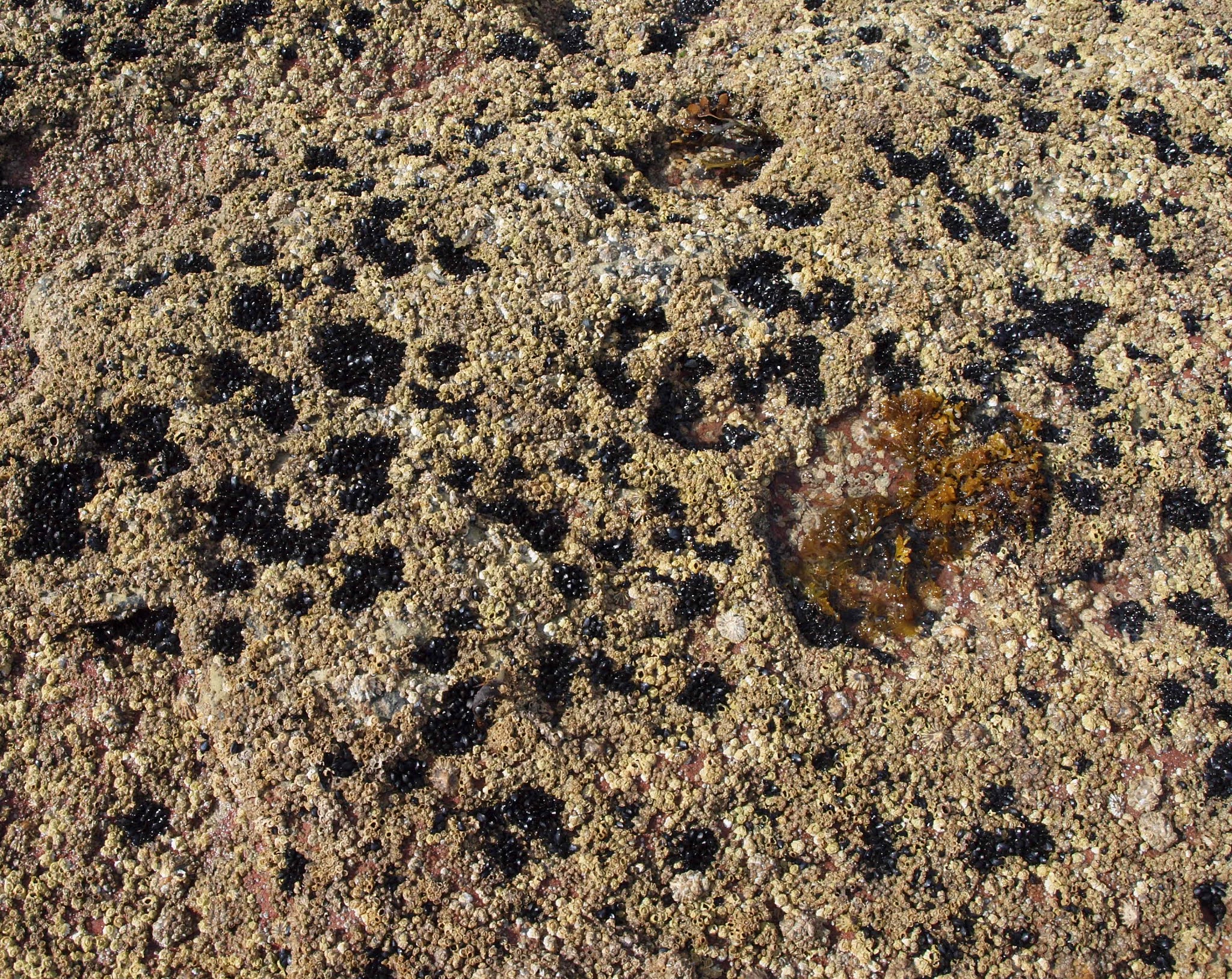
I must have made that walk scores of times when I was living in Paignton, and at school in Torquay, and it is always something I love to do on my rare visits back to Torbay. Nowadays, I stick to the path, but when I was younger, I also walked on the beaches and, at low tide, walked round headlands by jumping from boulder to boulder. I had no real sense of danger and it wasn’t just the physical exercise, excitement, and feeling of isolation that I enjoyed, as there was also much natural history to observe, both in rock pools and on the rocks themselves (see below). I became fascinated by creatures like limpets, mussels and barnacles that attached themselves, often in huge masses, and I wondered how they had arrived, and how they survived. I knew that barnacles and mussels lived by capturing particles from the sea, but had no idea at the time that my walks to Elbury Cove would provide inspiration for my career in biological research.


My interest was always in aquatic biology and my research work was mostly on suspension-feeding animals. Although I didn’t work directly on barnacles and mussels, I developed an appreciation of the types of particles that they captured and these were not just planktonic plants, but also dead organic matter. Some organic particles were from the breakdown of plants and animals, others were formed by aggregation processes at the micro-scale, often involving exudates from cells. I learned about the importance of waves and bubbles in particle formation and that, of course, took me right back to my walks. When I look out at the waves at Elbury Cove now, I not only see a Romantic vista, but also the source of my understanding of how aquatic systems work, something I was able to describe for others (see below). I guess that’s the result of being a Romantic, too. It's been quite an adventure


[1] Roger S Wotton (2020) Walking with Gosse: Natural History, Creation and Religious Conflicts. Available from Amazon, Barnes & Noble, and other e-book sellers.


[2] https://davedoeshistory.com/2018/07/31/elberry-cove-bathhouse/