Monday, 20 April 2015

Cosmology, theistic force and human imagination


I was drawn to a headline in The Independent newspaper: "'Dark matter' not as dark as first thought: Scientists find it interacts with forces other than just gravity" [1]. The scientists referred to in the article were a team of 23 headed by Richard Massey, and their findings were published in the Monthly Notices of the Royal Astronomical Society [2]. Although I have little understanding of astrophysics, I was interested in the closing sentence of their Conclusions section where, having described their findings of the "possible stripping or deceleration of dark matter associated with the infalling galaxies [in the 10kpc core of Abell 3827]", they write:

Detailed hydrodynamical simulations of galaxy infall, incorporating dark matter physics beyond the standard model, are needed to predict its behaviour within a cluster environment, and to more accurately interpret high-precision observations.

I take this to mean that our interpretation of dark matter needs to be re-examined; so what is our current view of this matter and what is a 10kpc core? As a kpc (kiloparsec) is approximately 3.26 light years, the core of the infalling galaxies observed by Massey et al. (and shown below in an illustration from the BBC [3]) is over 300,000,000,000,000,000 km across, if my arithmetic is correct. It is in this minute part of the Universe that the new observations have been made; dark matter making up, in total, about 27% of the material in space, with everything that we can observe (planets, stars, galaxies, etc.) making up less than 5% of the total. The rest is dark energy [4]. 


To define dark energy, I quote from the NASA site [4]:

We know how much dark energy there is because we know how it affects the Universe's expansion. Other than that it is a complete mystery.

Do we have a better understanding of dark matter? Again, a quote from the NASA site is helpful:

We are much more certain what dark matter is not than we are what it is. First, it is dark, meaning that it is not in the form of stars and planets that we see.. ..Second, it is not in the form of dark clouds of normal matter, matter made up of particles called baryons. We know this because we would be able to detect baryonic clouds by their absorption of radiation passing through them. Third, dark matter is not antimatter, because we do not see the unique gamma rays that are produced when antimatter annihilates with matter.

We can therefore conclude that the Universe is vast and beyond any scale that we can comprehend and that it is made up of a fraction of matter that we can measure. The rest is explained by our powers of imagination and the predictions made by experts in mathematics and physics.

Recently, I took a course in Cosmology to try and get an understanding of what we know about the Universe and its origins. The course was taught well, but I found myself hopelessly lost with the scales involved and with the levels of imagination required. Our existing knowledge has been gained from Earth-bound observations and, recently, those from satellites and devices that record signals over mind-boggling distances. All the interpretation of these observations has necessarily been Earth-bound and based on human analytical skills, aided by the high-powered computers we have devised. Given the scale of the Universe, these tools seem inadequate, but it is a human characteristic that we feel we can eventually explain all that is currently unexplained.

During the Cosmology course, I also thought about another model that seems equally plausible – that everything was designed by a theistic force. Just as I was overwhelmed by the study of the Universe from Earth, so I was overwhelmed by the idea that a God that created the Universe chose an infinitesimally small planet on which to locate humans that were then given unique powers of reasoning and the belief that, given time, they could understand everything. It is tempting to accept that the idea of such a theistic force is, in turn, a result of human imagination. 

Will we ever understand the Universe? Almost certainly not without the development of a "better" mathematics (of which our wonderfully powerful mathematics is a subset), but now I'm veering off into science fiction.


[2] Richard Massey + 22 authors (2015) The behaviour of dark matter associated with four bright cluster galaxies in the 10kpc core of Abell 3827. Monthly Notices of the Royal Astronomical Society 449:3393-3406.


Thursday, 9 April 2015

The blindness of a Creationist


Philip Henry Gosse, the Nineteenth Century Natural Historian, was one of the pioneers of the craze for parlour aquaria. In addition to popularising aquatic life through his wonderful books, lectures and field courses, he was an acute and enquiring observer of aquatic organisms and his research led to him being appointed a Fellow of the Royal Society.

A visit to South Wales resulted in Tenby: a sea-side holiday [1] that Henry describes as: 

..a faithful narrative of how the author was engaged for about six weeks at that pleasant little watering-place.. ..He hopes..that the approbation so kindly bestowed on his former works will be continued to this, and that it may be accepted as another Lesson in the important art of "How and What to Observe"

The former works include A Naturalist's Rambles on the Devonshire Coast, and Tenby follows a similar format, demonstrating Gosse's skill, both as an observer and as a communicator. There was another side to Henry Gosse and, to him, very much the most important. As a member of the Brethren, he had a strong Christian faith and this extended to a belief in the literal truth of The Bible. On the Title Page of Tenby [1] is a quote from Cowper (shown below) that mirrors Henry's view that observation of all creatures leads to our having a sense of wonder in God's Creation. This standpoint was so important to him that he wrote a book, Omphalos [2], to defend it and this was published in 1857, a year after Tenby and two years before Darwin published The Origin of Species. Darwin's great work revolutionised thinking about evolution, but the concept of geological time scales had already been accepted by most, although not by Henry, who believed that all strata, and the fossils that they contained, were created by God some thousands of years ago [2]. Henry Gosse would certainly have been aware of ideas surrounding the evolution of life forms in 1856, even if he didn't agree with them.


In Tenby, Henry describes an observation that he made on two marine organisms that were placed into fresh water [1]:

The power which some animals have of sustaining with impunity circumstances which are fatal to others closely allied to them, is remarkable. To most marine animals immersion in water is instant death. Some young Crabs in the Megalopa stage which I found in luminous water, and which remained several days alive and well in a bottle of sea-water, died instantaneously on being dropped into a tumbler of fresh water. On the other hand, a specimen of Eurydice pulchra,-one of two that occurred in the same dip,-manifested not the slightest inconvenience at the change, but continued for several days to dart about the vessel, with intervals of motionless, death-like repose on the bottom, and behaved in every respect in a manner identical with that of his fellow that was allowed to remain in his native sea-water.

Henry was observing the effects of osmosis on the crab larvae, with water passing into the body from the weaker medium to the more concentrated body tissues. The result was rapid death, as will be the case with all marine animals having a permeable coating. Eurydice pulchra (see below) is a crustacean that lives in the intertidal zone, buried in sand, and individuals come to the surface and swim when the tide covers them [3]. Having an external skeleton protects them from abrasion from the sand and, as it is impervious to water, it also serves to protect them against changes in salinity and exposure, as might occur after a rain storm, or when they are caught on the surface as the tide goes out.

Image © Hans Hillewaert.

I wonder what went through Henry Gosse's mind when he was making his observations on E. pulchra. A Natural Historian with an open, and enquiring, approach may have wondered whether it was the presence of a resistant cuticle in ancestral organisms that allowed the colonisation of rivers from the sea by migration from estuaries, something that soft-bodied marine creatures cannot do. Or perhaps the thought would arise that the cuticle of intertidal crustaceans allowed the conquest of land by their ancestors, leading to the insects and the subsequent re-colonisation of fresh waters, where insects are abundant? A present-day Natural Historian accepts that the presence of a resistant cuticle is an example of pre-adaptation, but further questions arise about the marine/fresh water transition? For example, how do eels and salmon survive in fresh water before/after the marine phase of their life cycle? The answer lies in their having resistant coverings, but also efficient kidneys to expel water and, importantly, a coating of slime on permeable surfaces that acts as a barrier [4]. Of course, Henry Gosse, for all his powers of observation, could not ask questions such as these, or, if he did, he had to dismiss them as something mischievous that was sent to tempt him away from his anti-evolutionary stance. He was a great observer, but had the blindness of a Creationist.

There are still some Christians with similar views to those of Henry Gosse, although the majority now accept evolution and a looser interpretation of the Biblical account of Creation. That raises another question: how does one separate the literal from the figurative in The Bible?


[1] Philip Henry Gosse (1856) Tenby: a sea-side holiday. London, John Van Voorst.

[2] Philip Henry Gosse (1857) Omphalos: an attempt to untie the geological knot. London, John Van Voorst.

[3] D. A. Jones (1970) Factors affecting the distribution of the intertidal isopods Eurydice pulchra Leach and E. affinis Hansen in Britain. Journal of Animal Ecology 39:455-472.

[4] Roger S. Wotton (2004) The essential role of exopolymers (EPS) in aquatic systems. Oceanography and Marine Biology, An Annual Review 42:57-94.


Thursday, 26 March 2015

The beginning and the end of the Anthropocene


Is there an Anthropocene? This question is being debated currently and a report is to be published in 2016 on whether a geological epoch created by the transformative activities of Homo sapiens should be defined, and what should mark its beginning. According to Richard Monastersky [1]:

A committee of researchers is currently hashing out whether to codify the Anthropocene as a formal geological unit, and when to define its starting point.. .. The push to formalize the Anthropocene upsets some stratigraphers.. ..One major question is whether there really are significant records of the Anthropocene in global stratigraphy.. ..Some researchers argue that it is too soon to make a decision – it will take centuries or longer to know what lasting impact humans are having on the planet.

Monastersky then quotes from Erle Ellis, a Geographer at the University of Maryland:

"We should set a time, perhaps 1000 years from now, in which we would officially investigate this.. ..Making a decision before then would be premature."

Discussion about the Anthropocene thus reflects a typical debate among scientists and other academics having different views of what marks a definable stratigraphic boundary.

As Monastersky points out, markers could be from the Industrial Revolution, or from the radioisotope signatures resulting from atmospheric testing of nuclear weapons that ceased in the 1960s. While supporting the case for 1964 as the beginning of the Anthropocene, Lewis and Maslin [2] also put forward a strong argument for using the measurable decrease in atmospheric carbon dioxide between 1570 and 1620 (with a minimum in 1610), something that they relate to the effects of New World colonisation and dramatic changes in human population density, changes in diet and agricultural practices brought by new foods, and the development of increased trade based on industrial production. Their selection of 1610 adds another part to the Anthropocene debate, but their paper also contains an interesting review of human impacts in the very short time that Homo sapiens has been the dominant species on the Earth.

In conclusion, Lewis and Maslin write [2]:

Past scientific discoveries have tended to shift perceptions away from a view of humanity as occupying the centre of the Universe. In 1543 Copernicus's observation of the Earth revolving around the Sun demonstrated that this is not the case. The implications of Darwin's 1859 discoveries then established that Homo sapiens is simply part of the tree of life with no special origin. Adopting the Anthropocene may reverse this trend by asserting that humans are not passive observers of Earth's functioning. To a large extent the future of the only place where life is known to exist is being determined by the actions of humans. Yet, the power that humans wield is unlike any other force of nature, because it is reflexive and therefore can be used, withdrawn or modified. More widespread recognition that human actions are driving far-reaching changes to the life-supporting infrastructure of Earth may well have increasing philosophical, social, economic and political implications over the coming decades.

Whether the Anthropocene should be defined, and what its definition should be, seem trifling issues compared with those raised in that last paragraph. Whether the Anthropocene began in 1610 or 1964, it has the potential to be one of the shortest epochs thus far. The end of a geological time period is usually marked by large-scale events such as asteroid impacts, widespread upheavals in the Earth’s crust, or dramatic changes in climate. We don’t know how the Anthropocene will end and it may be from one of these causes and thus be outside human control. Alternatively, the epoch may end as a direct result of human actions. We know how destructive we have already been, and continue to be; with wars, global warming, widespread removal of forests, extinction of populations, introduction of poisons and antibiotics, etc. all being major impacts. There are those who feel that we should be able to overcome the many difficulties we face using technological solutions but, while I admire human invention, I do not feel optimistic about the future. The dominant economic system is based on growth and growth cannot be sustained indefinitely, so those of us in the Developed World will no longer be able to cocoon ourselves in warmed (or cooled) buildings and we may need to hunt and forage to obtain food. The social crises that result from a catastrophic fall in living standards can be imagined.

This is preachy, but our way of life, and its characteristic complacency, is highly damaging for other organisms on Earth and, like all the others, our epoch will end. The Anthropocene will be followed by another epoch, but what organisms will dominate? After our controlling influence is no longer present, the environment will again be the main vehicle for selection of changes in genes (a natural mechanism that we override). Bacteria and other unicellular organisms are sure to survive the cataclysmic events at the end of the Anthropocene, but what about other organisms? Will evolution result inevitably in a dominant form that makes drastic changes to its surroundings, or will there be a less destructive solution to the relationship between organisms and their environment?


[1] Richard Monastersky (2015) The human age. Nature 519: 144-147.

[2] Simon L. Lewis and Mark A. Maslin (2015) Defining the Anthropocene. Nature 519: 171-180.

Wednesday, 4 March 2015

Eating limpets


In my last blog post, I wrote an appreciation of limpets and the extraordinary adaptations that they show for life on rocky marine shores [1]. As I pointed out, that should not prevent us from using these molluscs as a source of food and that is something that fits with contemporary debates about sustainability and the need for animal protein. We are now much less resourceful than our ancestors, and are dependent on what is available in stores or on market stalls, with the latter often showing a more local approach than the former.

To gain an historical perspective on eating limpets, I read Lovell's The Edible Molluscs of Great Britain and Ireland with Recipes for cooking them [2] and he describes their consumption by some communities:

"In many places limpets are used for food, especially on the Continent, where they are oftener eaten than the periwinkle. At Naples they make them into soup, and I am told it is an excellent dish.. ..The poorer classes at Eastbourne eat them constantly.. ..At Plymouth they gather great numbers of them, especially from the breakwater, as well as in the Isle of Man, where they are known by the name of "flitters"; and in Scotland the juice of these shellfishes is mixed with oatmeal.."

In addition to this background information, Lovell also gives recipes [2]:

"Limpet Soup – Wash them, and free the shells from seaweeds etc.; put them into a saucepan and parboil them. Take them out of the shells; chop up some parsley, and put it, with a tablespoonful of oil, or an ounce of lard or butter, into a saucepan, and fry until it becomes brown. Add a pint of water, and, when boiling, throw in the limpets, with a teaspoonful of anchovy sauce, some pepper, and boil again for half an hour; or, if preferred, stew them before putting them into the soup.

Limpet sauce – Choose clean-shelled limpets, not covered with barnacles, steep them in fresh water, and then heat them in a close covered saucepan until they part easily from the shells. They yield a rich brown liquor, in which, after being shelled, they may be stewed for half an hour. Thicken the liquor with butter and flour; strain and season with pepper, cayenne, and salt, and a slight flavouring of lemon-juice or vinegar. The limpets, being tough and indigestible, are not returned into the sauce."

The latter comment reminds us of the common failing of over-cooking seafood of all kinds, something that one learns by trial and error.

Lovell [2] also gives a more rustic approach to cooking limpets, originating from the island of Herm in the Channel Islands, and reported by Jeffreys in Volume 3 of his British Conchology:

"Roasted limpets - The limpets were placed on the ground, and laid in their usual position, and cooked by being covered with a heap of straw, which had been set on fire, about twenty minutes before dinner."

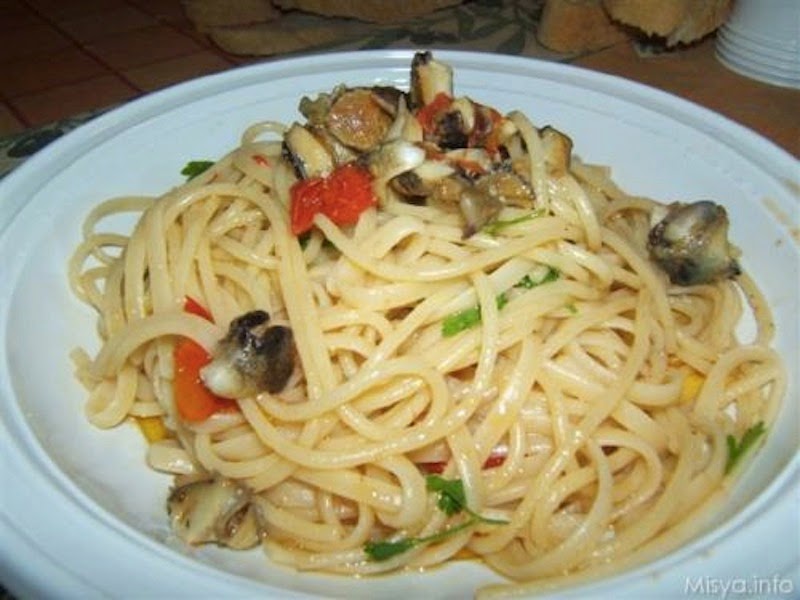
To these recipes can be added others from different parts of the World (illustrations of each dish are given, with the URL to the web page for each recipe):


It is only possible to eat limpets as a regular part of the diet if one lives at, or near, the coast. For those who are landlocked, Lovell guides us to Garden Snails, together with their close relatives, including the Roman, or Vine, Snail (and who doesn't like Escargots à la Bourguinonne?). Limpets and land snails are both sustainable foods and provide good sources of animal protein. Although I don't feel comfortable about roasting them alive, placing the molluscs in boiling water kills them rapidly and they can also be kept in a deep freeze for a short time to reduce their metabolism severely before they are cooked.

Mark Zuckerberg became famous not only for Facebook, but also for his statement that killing animals oneself is better than willingly being ignorant of how we obtain the meat we buy from butchers or supermarkets [3]. For those that would like to follow Mr Zuckerberg's example, but cannot face the prospect of cutting the throat of a pig or a goat, killing snails of various kinds provides rather less of a challenge.   


[2] M. S. Lovell (1867) The Edible Molluscs of Great Britain and Ireland with Recipes for cooking them. London, Reeve & Co.