Friday, 19 August 2022

A walk in the countryside is not always a positive experience

In his Introduction to the Oxford World’s Classics edition of Rousseau’s Reveries of the Solitary Walker [1], Russell Goulbourne writes:

For Rousseau, ..musings and movement go hand in hand. Walking is.. ..thought-inspiring: ‘Seated at my table, with my pen in my hand and my paper in front of me, I have never been able to achieve anything. It is when I am out walking among the rocks and the woods, it is at night, sleepless in my bed, that I write in my head’. This link between musings and movement.. ..is fundamental to the Reveries.. ..since Rousseau based his text on notes he had scribbled down on twenty-seven playing cards while out walking..


A similar approach to the creative impulse provided by solitary walking in the countryside was described by Edward Elgar, who also enjoyed riding a bicycle over the lanes and tracks of Worcestershire and, especially, the Malvern Hills (see above). In a letter from Malvern on 11th July 1900 to A.J.Jaeger (“Nimrod” of the Enigma Variations), Elgar writes, describing a musical phrase [2]:

This is what I hear all day – the trees are singing my music – or have I sung theirs? It’s too lovely here.

Unfortunately, I don’t have the genius of Rousseau or Elgar, but I understand their sentiments. For me, walking through the countryside has always been my favourite exercise (I never learned to ride a bicycle) and provides a source of freedom from day-to-day problems. It is more that that, though, in that it enables me to appreciate the natural world and to observe closely all the changes that occur through the year. Like Rousseau and Elgar, my walks are also a time when ideas come to the fore – perhaps for a different way of looking at something, or for generating ideas for a new talk, or blog post.

Early morning walks in summer are especially uplifting and I have recently discovered that short video clips act as aides-memoires. Being a technophobe, I have only recently started using the video recorder on my mobile telephone and the clip below shows a section of country lane that opens to reveal a pretty cottage with well-kept gardens on either side of the road. This has always seemed odd to me, as I am not a gardener and I prefer the wonderful complexity of natural world as it is – there’s no doubting that it is attractive, though.


Further in the dawn walk, I headed through a field and took a path into a wood. The transition appealed to me, so I took a video as I walked from the one to the other and the clip can be viewed below, complete with soundtrack:


My experience was very similar to that of Geoff Nicholson [3]:

Even as I was falling I thought, Oh crap, I’m not going all the way to the ground, am I? I’ll stop myself somehow. I’ll keep my footing. I’ll regain my balance. And then I knew I was mistaken about that. I was going all the way. I’d passed the tipping point. Oh crap indeed.

Then there was the impact, a much greater, more generalised blow than I’d been anticipating. I was on the ground, winded, hurting all over, feeling like a fool, trying to breathe deeply and regularly, and thinking.. ..’Oh man this really, really hurts, this is a bad one’.

Nicholson broke his arm, but I was luckier as I only had cuts on various parts of my face and arms and a badly swollen hand. Once I had recovered a little, I gingerly pushed myself up and then sat for a while on a tree stump before walking the 2 km to my home. A visit to the hospital later in the day revealed a dislocated, and broken, little finger that required surgery under general anaesthetic and, as I write, my hand and lower arm are in plaster and I await the verdict of the medical team as to the extent of healing.

I was a fool to concentrate on making the videoclip and not looking where I was putting my feet. A lesson learned, certainly, but I so look forward to going out on more solitary walks in the countryside. Despite recent evidence, thy are good for me…

[1] Russell Goulbourne (2011) Introduction. Reveries of the Solitary Walker by Jean-Jacques Rousseau. Oxford, Oxford University Press.

[2] Percy M. Young (1956) Letters of Edward Elgar and Other Writings. London, Geoffrey Bles.

[3] Geoff Nicholson (2010) The Lost Art of Walking. Chelmsford, Harbour.


My thanks to Anna Easton for her advice on the use of videoclips.


Thursday, 28 July 2022

Learning about Picasso

For the past six weeks, I’ve been taking a WEA course on Picasso. Caroline Levisse, our tutor, has the happy knack of being informal, and inviting questions of those attending, while also having an in-depth knowledge of art history. As a result, the group had its own dynamic and it was interesting to hear what members had to say about Picasso, his life, and the many varieties of his art – from paintings, through sculpture, to ceramics and much else [1].

Most were very enthusiastic about what they saw, and we were all happy to acknowledge that Picasso was an extraordinarily talented artist and, probably, a great one. Others, while admiring his virtuosity, were left to question why they didn’t “get” some of his art, even that which was based on artists whose work they did react to positively. I was one of the dissenters, and was relieved when one of the class members said he admired Guernica (see above), but was not especially moved by it. His comment came as a relief to me, as I found it difficult to engage with much of Picasso’s work and I started to wonder why.

Since I was young, I have loved looking at paintings and have tried to interpret what I see. As an undergraduate, I made many visits to the National and Tate Galleries in London and attempted to learn more by listening to talks and by reading. Some paintings made an instant impact on me, some took more time, and some left me baffled. Regrettably, much modern art fell into the latter category, but I was bowled over by the large-scale paintings by Turner: one of them, Sun Setting over a Lake, is shown below.


In contrast to Picasso, Turner’s work focussed on the “essence” of the world around us. He had the skill to paint portraits and, as James Hamilton writes [2]: 

Turner’s education as an artist was running on a number of fronts in the early 1790s [when in his teens]. He followed the standard Academy tuition of drawing from casts of antique sculpture, in preparation for the Life Class, which he entered on 25th June 1792.. .. Through the evidence of two self-portraits made at the beginning and end of the decade, Turner had more than a passing interest in becoming competent in portraiture, and must have taken lessons in it. All this was available to every other ambitious artist of his generation; but what stands out in Turner’s case is the breadth of his interest, and his dogged refusal to specialise. At all times he kept a weather eye open for opportunities to make money out of his art. 

From Hamilton’s description, we see parallels with Picasso: both had a rare talent for several categories of painting (and Picasso had many other creative outlets) and both had an interest in the monetary value of their work. To this can be added their enjoyment of a messy studio, and a powerful impulse to draw and paint at every opportunity. Both were strongly egocentric and driven men and there is an interesting “compare and contrast exercise" for someone interested in those aspects of their lives.


In Turner’s works, people play an ancillary role to the landscape in which they are portrayed: in his classical works in the style of Claude, the distant figures give scale and this is true also of other works, like Snow Storm: Hannibal and his Army Crossing the Alps (see above), where the many members of the army give the scene a strong sense of the sublime. Picasso, on the other hand, used a strongly anthropocentric approach and most of his works featured portraits of one kind or another and, while the contents of houses had a role in providing a setting, landscape did not.

Is this why I find it difficult to appreciate Picasso’s work, while being moved by that of Turner? Is it that I find Picasso’s use of strong lines challenging and find the more diffuse shapes in Turner’s work easier to relate to? What is certain is that I am a Romantic and I have also been shaped by my career in biology, with over forty years’ of research on animals, plants, microorganisms, and the environment in which they live. While recognising that humans are unique, and very highly evolved, I am aware that we are animals that are intimately linked to the natural world, even though we can isolate ourselves from it. That form of thinking must have come early in my life, for I always liked solitary walks along the coasts and lanes of Devonshire while growing up. Maybe that is the root of my Romanticism and why I can respect Picasso as a great artist, but find his work puzzling?


[1] James Voorhies (2004) Pablo Picasso (1881–1973). In Heilbrunn Timeline of Art History. New York: The Metropolitan Museum of Art. http://www.metmuseum.org/toah/hd/pica/hd_pica.htm

[2] James Hamilton (1997) Turner, a Life. London, Hodder and Stoughton.

Friday, 8 July 2022

Seaside resorts: seasons, decades and geological time

We have all visited seaside resorts and some of us are fortunate enough to have been brought up in one: I lived in Paignton in South Devon and went to school in Torquay more than 50 years ago, so knew both towns well. I expect that they are rather different now to the way that I remember them, while both resorts have an interesting history. 

In his foreword to John Pike’s Iron Horse to the Sea, Crispin Gill writes [1]: 

The turnpike roads to Exmouth and Torquay first created the resorts of South Devon, but it was the coming of the railway.. ..that really saw these places grow. In the early days it was the aristocracy and the upper middle class who could afford holidays when these resorts were frequented mainly in the winter. Since the First World War, with the growth of holidays with pay, these resorts have become accessible to all and are now among the most popular in Britain. 

Initially, the railway terminated at Torquay (at what is now Torre) and Pike [1] describes the onward extension (including quotes from private papers supporting the proposal to build the railway): 

The route of the proposed railway was 11 miles in length and approached quite near to Brixham which was then becoming an important fishing port. Equally of interest is the prophecy of a future for Paignton ‘in climate of equal salubrity with Torquay, it possesses, in addition, a hard sandy beach nearly two miles in length, admirably adapted for bathing. Being in the centre of the Bay, it also embraces, within easy drives, all points of beauty … [it] annually draws to it numerous visitors for health as well as recreation.’ 

In Bradshaw’s Descriptive Railway Handbook [2], originally published in 1863 shortly after the extension had been completed, we have a fulsome account of the pleasures of Torquay, while Paignton is described thus: 

The situation of this place is really beautiful, commanding a central aspect of Torbay. Its picturesque church and the sand rounding from it to the fine woods of Tor Abbey, and the town and pier below it, form a pleasing coup d’œil. 

No mention of the swampy land between the railway and the sea and, by the relative size of the two entries, readers of Bradshaw’s will gain the impression that Paignton was regarded as a poor neighbour of Torquay, although there were wealthy residents. This may well have been the attitude of many outsiders, and some Paignton residents would not disagree with that perception, despite our pride in the town. 

The importance of winter visitors has been emphasised by StJohn Thomas and Smith [3]: 

As late as the 1890s, when following the abandonment of Brunel’s broad gauge, the first through trains ran from the North to Torbay, the resorts were still busier in winter than in summer, when many of their facilities closed down. Sea bathing (of course dependent on the bathing machine) was however growing rapidly in popularity and certainly local traffic was heavier in summer; Exeter in particular has a strong tradition of sending its people to the sea on day trips.. ..and by 1914 the upper middle class family by the sea was more usually a summer affair. 

By my time, in the 1950s, Paignton was a popular family resort and any wealthy visitors coming down in winter for their health were not apparent to us residents. In the opening of Walking with Gosse, I describe what I remembered [4]: 

After the summer holiday season, Paignton in the 1950s was typical of many seaside towns in the UK, being quiet and left to its residents. A small theatre put on rather good amateur pantomimes at Christmas and, at other times, hosted school music festivals, elocution contests, and the occasional Billy Graham-style Christian “Crusade”. Bakers, butchers, grocers, newsagents, chemists, banks and other high street shops supported the local community; while pubs, churches and clubs, associated with organisations like the British Legion, provided social life. In almost all homes, meals were prepared from basic ingredients and, as a treat, fish and chip shops dotted through the town were a source of takeaway meals: the fish being cod, plaice, haddock, bream or rock salmon (dogfish), all caught locally. 

Nothing much seemed to change in the pattern of life during the week, with Saturdays a time for relaxation and, perhaps, watching, or playing, sport. Sundays were for dressing in one’s “best” clothes, with very few shops, or places of entertainment, open. It was a day for gentle walks, going to church or Sunday School, and having a roast lunch (called dinner), followed by tea with tinned fruit and fancy cakes. If the routine of the week was broken by illness, support came from General Practitioners and a small hospital; while several dentists looked after teeth and dentures (that were much commoner then than now). 

That is one person’s view of winter in a summer-resort where all the shops selling rock, “kiss-me-quick hats”, saucy postcards, etc.. were boarded up, as were the stalls selling candyfloss, seafood, chips and the like. Some cafes remained open, but winter provided a bleaker outlook that was such a contrast to the summer, when train after train brought holidaymakers on Saturdays (changeover day), with similar numbers of trains taking them home after a week. I have tried to capture Paignton in winter in photographs (see below), as, to quote a 1918 advertisement, “one picture is worth a thousand words”.


Clearly, I have little skill as a photographer, but Rob Ball is highly skilled and also has the eye of an artist. He produced a wonderful photograph in his recent collection entitled Silent Coast [5] that was referenced by the Financial Times Magazine of 4th June 2022 (see below – the associated text is worth reading).


This image is not from Paignton, of course, but Rob’s photograph conjures up the ghostly feeling that seaside resorts can create out of season. There is no-one to be seen, yet everything that provides entertainment is still there, but locked up. In looking at the image, one remembers the noise of excited children running around in bathing costumes, the warmth of the balmy air, the thrill of slides (especially water slides), etc.. 

There are not only changes in types of visitors and their means of getting to the resorts of Torbay at different times of the year as there are also changes in topography. For example, the magnificent view of the coast from Babbacombe has been altered by the cliff fall at Oddicombe (see images below), where saturated sandstones fractured at weak points and then slid down. A different form of erosion comes in the effect of tides and waves that attack coastal defences and have severed some coastal paths that linked adjacent coves. Storms and tidal surges have also affected the railway lines that run to Torquay and Paignton through Dawlish, where landslips and breaches are familiar to both contemporary residents and those that are interests in transport history. These are decadal, rather than seasonal, changes, but what of Paignton in earlier times?


Before it became a resort, the town was renowned for its production of vegetables and it was a centre for cider making. There were also “Paignton cockles” and other shellfish, and fish, to collect and that reminds us of the other, non-human, residents of the shores of Torbay, well-known to those residents and holidaymakers that enjoy rock pooling and similar activities. There are many types of seaweeds, snails and barnacles and these show different levels of tolerance to drying, with some found higher up the shore than others and some never uncovered by the sea, even at low spring tides that occur every two weeks or so. Of course, tides are familiar to holidaymakers, as the sea creeps up the beach as the tide comes in twice each day, reducing the available space on the sand and creating a Canute-style adventure for children who have defences around their sand castles. Very few visitors and residents think of the effect of tides on other shore life. 

The presence of the beach for sunbathing and swimming is something we take for granted and, apart from the various erosional events, is little changed within our lifetime. However, if we go back tens of thousands of years to the time of the last Ice Age, the coast was way to the east of where it is now and Torbay was part of a lowland forest. We would recognise some features, like headlands and hilly peaks, but we would certainly not recognise the coast as it was then; increase in sea level at the time of the melting of the northern ice cap giving us the outline of the shore that we have today. If we look into the future, it seems certain that sea level rise resulting from global warming will cause local inundations and, without increased sea defences, the coastline will be inland of its current position. I wonder what it will be like and what kinds of visitors it will attract? 


[1] John Pike (1987) Iron Horse to the Sea: Railways in South Devon. Bradford on Aven. Ex-Libris Press. 

[2] Anon (1863) Bradshaw’s Descriptive Railway Hand-book of Great Britain and Ireland. London, W.J.Adams. 

[3] David StJohn Thomas and Simon Rocksborough Smith (1973) Summer Saturdays in the West. Newton Abbot, David & Charles. 

[4] Roger S Wotton (2020) Walking with Gosse: Natural History, Creation and Religious Conflicts. e-book. 

[5] https://www.robball.co.uk/


Wednesday, 22 June 2022

Evangelical Christianity: reflections on the views of George Eliot, George Henry Lewes and Philip Henry Gosse

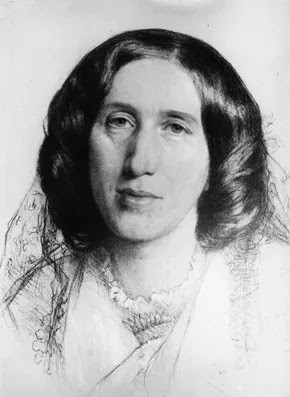
Evangelical Christians play important roles in George Eliot’s first two novels: Scenes of Clerical Life (really three separate novellas in one volume) and Adam Bede. As is well known, George Eliot (see above) was the pen name of Marian (earlier Mary Ann, or Mary Anne) Evans and her interest in evangelical Christianity came from when she attended schools in Nuneaton and Coventry. In her Introduction to the Oxford World’s Classics edition of Scenes of Clerical Life, Josie Billington writes [1]: 

As an adolescent, coming of age in just the period – the 1830s – she writes of in Scenes, Mary Anne Evans was swept up in the religious current of Evangelicalism.. ..If the Oxford Movement sought to turn back the legacy of the Reformation, Evangelicalism sought to complete what the Reformation had begun, expunging the ceremony and sacrament which were the remaining formal vestiges of Roman Catholicism and rediscovering the vital puritan impulses of original Protestantism.. ..Evangelicalism offered a belief that was hard and uncompromising, yet passionately earnest and totalizing, which in the first half of the nineteenth century had a profound impact not just on the rural towns of England, but on the nation’s cultural and intellectual life in general. 

Never fully committed to evangelical Christianity, Marian went on to reject it, while retaining sympathies for the “good side” of some of those who believed wholeheartedly in this approach. Her views are discussed in an essay by Donald C. Masters [2]: 

While George Eliot (1819-1880) came to dislike the Evangelical viewpoint, her treatment of Evangelicals, particularly in her early novels, was much more sympathetic than that of other Victorian novelists.. ..Like many other disillusioned Christians she retained her belief in the Christian ethic. She liked the Evangelicals in spite of their doctrines and what she regarded as their naïveté and narrowness, because they made people better.. 

..Her early letters.. ..suggest that her acceptance of Evangelical principles was merely an intellectual process. She never made the complete personal commitment that is the secret and core of the Evangelical position.. ..She had lost faith in the Bible, the essential basis of the Evangelical tradition and described it.. ..as “histories consisting of mangled truth and fiction.” 

Many of us who have encountered evangelical Christianity, and subsequently turned away from it without making “the commitment”, can recognise George Eliot’s feelings. I have described my own experience [3]: 

My last contact with formal Christianity came at Torquay Boys’ Grammar School, where I went to meetings of the Christian Union, in which my elder brother was a leader. We sat around a table and listened to speakers, or to tapes of Billy Graham preaching. We also had prayer meetings when we all had to take part. Prayers were for the usual things connected with our salvation but, being a school, we also prayed for masters who were Christian, to boost their religious, as well as their educational, mission. I always dreaded prayer meetings and was not comfortable at any of the other meetings either. Unlike some of those present, I found Billy Graham strange and rather too energetic, and neither could I summon up much enthusiasm for a guest speaker who spent many minutes propounding the correct pronunciation of Bethphage. 

There were tracts for us to hand out in the school, delivered in bulk from the Evangelical Tract Society.. ..I couldn’t hand out such things and had quite a collection by the time I stopped attending the Christian Union. 

It is not difficult, then, to see how personal experience of religious groups affects one’s reading of George Eliot’s novels. Like Marian, I rejected the thinking of evangelical Christians (on many grounds) and, like her, try to see their good human qualities, although I worry about their tendency to proselytise to those going through hard times. 
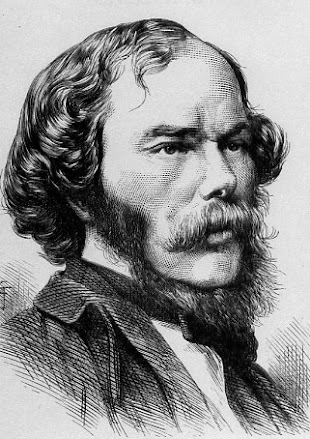

In addition to Evangelicals, another feature of George Eliot’s novels is the presence of young children, often described in detail and forming important threads to the various storylines. Marian loved children, but she was unable to have any of her own. The reason was not biological, as far as I know, more that she didn’t marry until she was in her sixties and spent most of her adult life living with George Henry Lewes (see above), who was already married and had children. If “living in sin” was bad enough in the eyes of many in Victorian society, having children while in such a relationship would be viewed very severely indeed. Certainly, Marian’s cohabitation with Lewes caused much pain to her upright family and this, in turn, was the source of much sadness to her. 

The couple had a very close relationship, with Marian depending on George for reassurance and advice. He was from a theatrical family and both acted in, and wrote, plays: he also wrote novels, was an expert on Goethe, published an outstanding review of philosophy through the ages, contributed to many leading artistic journals, and was also what we would now call a networker [4]. Although unprepossessing in appearance (some called him ugly), he was popular for his conversation and energy and he knew many of the movers and shakers in Victorian literary society. He was one himself. 

Lewes met Marian through John Chapman, the publisher of the Westminster Review [5]. Chapman was a “free-thinker” and Marian lived in his household, where relationships between Mr and Mrs Chapman, their governess, and Marian were complicated. In Ashton’s account [5] we read that Chapman “visited Marian Evans’ room, where she played the piano for him and taught him German.” It was all too much for Mrs Chapman and Marian left the household, but returned in 1851 when Chapman asked her back to help him as part of the editorial team on the Review, where her “sharp brain, wide knowledge, willing labour, and ability to deal tactfully yet firmly with touchy contributors” [5] was invaluable. 

During 1852, Marian was spending much time with Herbert Spencer, the philosopher and biologist to whom she had been introduced by Chapman, and they “were so often in one another’s company that ‘all the world is setting us down as engaged’, Marian would have liked nothing better, but Spencer was less keen.” [5] The result was that, in 1853, Lewes replaced Spencer in her affections and this was the start of a deep relationship that only ended with Lewes’ death. He was a great support to Marian and advised her during her first, tentative steps as a novelist and he played the same role after she had become famous and was being hailed as a very significant writer. Marian had come a long way from those evangelical Christian schooldays in Warwickshire and Lewes had also progressed in his interests. Like his hero Goethe, he then became interested in practical science. 

In the early years of his relationship with Marian, Lewes had been chided by T.H.Huxley as a “’mere’ book scientist ‘without the discipline and knowledge which result from being a worker also’”. This came after a review that Lewes had written and it perhaps inspired him to join the Victorian craze for the study of marine natural history. The leading figure in popularising this interest was Philip Henry Gosse, who had written A Naturalist’s Rambles on the Devonshire Coast (1853, centred on Torquay and Ilfracombe), The Aquarium (1854) and Tenby (published in March 1856, centred on the Welsh seaside town). Lewes read all these books and, in the summer of 1856, he and Marian left for Ilfracombe (where they befriended another enthusiast, Mr Tugwell, the curate of Ilfracombe) and then Tenby; following this with visits to the Scilly Isles and Jersey in spring and early summer of 1857. It was during the first section of this marine shore adventure that the pair discussed the possibility of Marian’s writing a novel. The Sad Fortunes of the Rev Amos Barton was commenced in the autumn of 1856 and became the first part of Scenes of Clerical Life published, anonymously, in instalments in Blackwood’s Magazine through 1857 and as a book in two volumes in 1858. She was not an enthusiast for studying shore life, so Lewes’ avid work on the coast allowed Marian time to think about the content of her embryo novel. 

Lewes’ work was published in instalments in Blackwood’s Magazine through 1856/7 and came out in book form, published by Blackwood and Sons and dedicated to Richard Owen, as Sea-side Studies in 1858. In the preface, Lewes pays homage to Huxley (perhaps the latter’s comment stung?) and there are frequent references to Gosse throughout the book. Both men showed a particular interest in sea anemones and, indeed they had a dispute over one aspect of the biology of some of these animals [6]. It is interesting to make a comparison of the two men. 


Whereas Lewes was a free-thinking agnostic (if he must be classified), Philip Henry Gosse (above) was a strict believer in the literal truth of the Bible [3] and an evangelical Christian. In 1857 he moved to St Marychurch in Torquay after the death of his wife Emily, who had accompanied him to Torquay, Ilfracombe and Tenby on the collecting trips that resulted in his earlier books. Emily was a writer of religious tracts (like those I failed to hand out during my school days) and as deeply committed as her husband to evangelical Christianity. Her painful death, leaving Henry Gosse with his young son Edmund (later Sir Edmund), was the main reason that he decided to move. 

At the time of the move to Torquay, he was expecting high sales of his book Omphalos, that was to be published in late autumn 1857, and he was looking forward to the attention that it would bring. Although there are many references to God and Creation in Henry’s books, Omphalos saw him tackle head-on the conflict between the Biblical Creation and the idea of geological time scales, that were becoming accepted by the mid-1850s. It is subtitled “an attempt to untie the geological knot” and it was Henry’s attempt to ease an obvious conflict: his idea being that rock strata and fossils were all created over the short period of the Biblical Creation. In Omphalos, he showed a thorough knowledge of geology and palaeontology and knew that large time periods were involved, but clung to his odd theory, for which he was duly mocked. Through all the difficulties of 1857, Henry didn’t question his beliefs; rather he became even more ensconced in evangelical Christianity. He reduced his attendance at meetings of the learned societies and didn’t have much personal contact with members the scientific community, although he had correspondence with many people, including Darwin. 

There are many that still adhere to the Creationist views shown by Henry Gosse, although they make little attempt to provide a rational explanation to account for the differences between their views and those of the scientific community. At least Henry made an attempt, even if his explanation was unacceptable to both scientists and believers; Charles Kingsley, for example, chastised Gosse for suggesting the God appears to be telling lies [3]. It seems that evangelical Christians who believe in the literal truth of the Bible have the opinion that there can be no opposition to their view and cannot tolerate any other explanations. 

Lewes took a very different approach, as described by David Williams [4]: 

He thinks, or at any rate he wishes, that the scientific explorers and the religious no-compromise men.. .. can be brought together to ‘sit round a table’, as we put it, that Huxley and Darwin can amicably confer with the tractarians and the Evangelicals and come out of the room with a formula acceptable to both sides. 

There has been movement among some evangelical Christians and we are all familiar with the little car badge of a fish with limbs, bearing the word “Darwin” at its centre. Perhaps the only major difference for many is whether there was a Creator, or whether all that we see around us is the result of chance events. 

After the adverse comments about Omphalos, Henry Gosse spent much time collecting marine creatures from the shores of South Devon [3]. He was in the throes of producing his major monograph on sea anemones, that was to be a standard work on these animals for many years and is still consulted today. It contains brilliant illustrations, as Gosse was a very capable artist in watercolours [7]. 

In a letter sent to Tugwell in November 1856, Lewes writes [8]: 

It would be a pleasant thing for you to write the monograph on Actinae with W. Thompson; & as to the money, you can’t expect much from such labour, but may consider yourself lucky to be free of expense. At the same time you have a formidable rival in Gosse, who is I believe engaged on a monograph. 

This shows Lewes’ respect for Gosse as an expert in sea anemones, but in a later letter to Hutton on 5th May 1859 we read [8]: 

Gosse’s book is too poor for a review; & I have long been making notes of the history I shall sketch which will I hope be far more entertaining than a review. 

I assume that Lewes is referring here to Omphalos, as Actinologica Britannica appeared in book form in 1860, having previously been published in twelve parts from 1858-1860 [9]. Despite their disagreement over some points [6], Lewes clearly respected Gosse as a natural historian. 

We know that Lewes and Marian visited Torquay in 1868 and, while the former continued with dissections for a future publication, Marian was preparing ideas for Middlemarch and it is possible that there were some indirect references to Torquay in that book [10]. We also learn that Marian and Lewes enjoyed walks at Babbacombe, adjacent to St Marychurch [10], and one wonders whether they called on Gosse, or encountered him while walking. I cannot find reference to a meeting and would be intrigued to know how it might have gone and what Marian would have made of this evangelical Christian and a man who was not afraid of proselytising. The urge to spread the Gospel came through in many of Henry Gosse’s books, but rarely with the intensity of the extraordinary conclusion of A Year at the Shore, published in 1865, three years before George and Marian arrived in Torquay [11]: 

I cannot conclude this volume without recording my solemn and deliberate protest against the infidelity with which, to a very painful extent, modern physical science is associated. I allude not only to the ground which the conclusions of modern geologists take, in opposition to the veracity of the “God which cannot lie,” though the distinct statements which He has made to us concerning Creation are now, as if by common consent, put aside, with silent contempt, as effete fables, unworthy of a moment’s thought, and this too before vast assemblages of persons, not one of whom lifts his voice for the truth of God. These assaults are at least open and unmasked. But there is in our scientific literature, and specially in that which takes a popular form, a tone equally dangerous and more insidious. It altogether ignores the awful truths of God’s revelation, that all mankind are guilty and condemned and spiritually dead in Adam; that we are by nature children of wrath; that the whole world lieth in the wicked one; and that the wrath of God abideth on it: it ignores the glorious facts of atonement by the precious blood of Christ, and of acceptance in Him. It substitutes for these a mere sentimental admiration of nature, and teaches that the love of the beautiful makes man acceptable to God, and secures His favour. How often do we see quoted and be-praised, as if it were an indisputable axiom, the sentiment of a poet who ought to have known better,–


“He prayeth best who loveth best

All things, both great and small;” –


a sentiment as silly as it is unscriptural; for what connexion can there be between the love of the inferior creatures, and the acceptableness of a sinner praying to the Holy God? It is the intervention of Christ Jesus, the anointed Priest, which alone gives prayer acceptance… There is no sentimental or scientific road to heaven. There is absolutely nothing in the study of created things, however single, however intense, which will admit sinful man into the presence of God, or fit him to enjoy it. If there were, what need was there that the glorious Son, the everlasting Word, should be made flesh, and give His life a ransom for many? … If I have come to God as a guilty sinner, and have found acceptance, and reconciliation, and sonship, in the blood of His only-begotten Son, then I may come down from that elevation, and study creation with advantage and profit; but to attempt to scale heaven with the ladder of natural history, is nothing else than Cain's religion; it is the presentation of the fruit of the earth, instead of the blood of the Lamb … This will be, in all probability, the last occasion of my coming in literary guise before the public: how can I better take my leave than with the solemn testimony of the Spirit of God, which I affectionately commend to my readers, – … THERE IS NO WAY INTO THE HOLIEST BUT BY THE BLOOD OF JESUS. FINIS. 

Henry Gosse was not only a proselytising evangelical Christian, but the leader of his group of Brethren in St Marychurch. He thus retreated into his own support group and this made it increasingly difficult for him to accept any religious views other than those he supported. It was religious differences, and the views of Henry on who one should have as friends, that was the basis of the conflict with his son, Edmund, described (with some elaboration?) in the latter’s famous book Father and Son [12]. This volume, more than any other work, has shaped our view of Henry [3], a pity as, if one could find a way of negotiating the religious hurdle, with all its side effects, he was a very nice man and would certainly be good company on rambles or on the shore. 

As we have seen, Marian Evans and Geoge Lewes were more accepting of those with religious differences and the former certainly recognised these human sides of evangelical Christians, although she was aware of their dogmatism and inflexibility. I think they would have enjoyed meeting Gosse, but what would Henry make of them? He would balk at their lack of faith in his version of Christianity and he would also strongly disapprove of their relationship. Henry did re-marry after the tragic death of Emily and his second wife, Eliza, while also being a member of the Brethren appeared to be a little more flexible in her approach to Edmund’s “sinfulness” than was his father. Edmund was also helped in his relationship with his father by his wife, the painter Nellie Epps, whom I have described as a “Nineteenth Century Wonder Woman” [13]. Nellie’s sister, Laura Alma-Tadema drew a profile of Marian in 1877 [14] and it would be amusing to know what the artist felt about her sitter and what views she shared with the Gosse family. 


[1] Josie Billington (1988) Introduction to George Eliot’s Scenes of Clerical Life. Oxford, Oxford University Press World’s Classics. 

[2] Donald C. Masters (1962) George Eliot and the Evangelicals. The Dalhousie Review 41: 505-512. 

[3] Roger S Wotton (2020) Walking with Gosse: Natural History, Creation and Religious Conflicts. e-book. 

[4] David Williams (1983) Mr George Eliot: A Biography of George Henry Lewes. London, Hodder and Stoughton. 

[5] Rosemary Ashton (2008) Lewes, George Henry (1817-1878). https://doi.org/10.1093/ref:odnb/16562 

[6] https://rwotton.blogspot.com/2016/11/the-human-side-of-science.html 

[7] https://rwotton.blogspot.com/2017/04/stunning-biological-illustrations.html 

[8] William Baker (ed.) (1995) The Letters of George Henry Lewes Volume 1. Victoria, Canada, ELS Editions. 

[9] R.B.Freeman and Douglas Wetheimer (1980) Philip Henry Gosse: A Bibliography. Folkestone, Wm. Dawon & Sons. 

[10] Kathleen McCormack (2005) George Eliot’s English Travels: Composite characters and coded communications. Abingdon, Routledge. 

[11] Philip Henry Gosse (1865) A Year at the Shore. London, Alexander Strahan. 

[12] Edmund Gosse (1907) Father and Son: A Study of Two Temperaments. London, William Heinemann Ltd. 

[13] https://rwotton.blogspot.com/2017/08/nellie-epps-nineteenth-century-wonder.html 

[14] https://www.npg.org.uk/collections/search/portrait/mw01628 


Friday, 27 May 2022

School classmates with famous parents


At Oldway Primary School in Paignton, I had three classmates who had famous parents: Jennifer was the daughter of Myrtle Devenish [1] (above left, in later years); Geoff was the son of Arnie Kitson [2] (no image found!); and Diane was the daughter of Leslie Jackman [3] (above right, in later years).

I knew that Mrs Devenish was an actress, but didn’t know any roles she had taken, or seen any of her performances, but just being an actress was enough to be famous in my very limited world. In contrast to Myrtle, I had heard Arnie Kitson play his xylophone on radio broadcasts and he also taught Geoff the instrument – the latter making an appearance on “The Children’s Television Caravan”, a touring TV show that came to Paignton. I guess that Arnie, who came originally from Yorkshire, learned his craft in the music halls and I heard him play the xylophone on enough occasions to recognise his skill.

Leslie Jackman was a local schoolteacher who also ran Paignton Aquarium [4]. A keen naturalist, Leslie published many books about seashore life, insects, and much else and he also became a well-known natural history film-maker. He worked on the BBC “Out of Doors” TV programme where he occupied the Club Room and encouraged many children to look in pools, to make bark rubbings, or to try and find egg shells dropped from nests. Much of Leslie’s work, like that of Myrtle Devenish, came after I had left Oldway Primary School, but he was already well-known and therefore qualified as someone famous. In Walking with Gosse [5], I relate that my pressed flower collection was given second place in a competition at the school; first prize being given to Diane, as she had such an excellent mentor. Leslie (always Mr Jackman to me) certainly influenced me and I recognise his importance in my development as a natural historian.

So, three indirect contacts with fame (I only met Mrs Devenish on a couple of occasions, I never met Mr Kitson, and was yet to meet Mr Jackman). All on a rather small scale, perhaps, but nevertheless something that registered in my parochial little world.

There are those who are desperate to be nationally, or world, famous, and contemporary media can make it possible for web “influencers”, pop stars, and reality TV show participants to achieve this goal. Unfortunately, fame and recognition are rarely long-term, although there are exceptions to that general rule: A-listers are likely to stay there, but B-listers can slide to the C-list and onwards into oblivion.

In his book Fame in the 20th Century, Clive James writes [6]:

There was always fame. As long as there have been human beings, there has always been fame. It’s a human weakness.

He then goes on to describe 406 famous men and women of the century (plus 5 from earlier times) and I only had to look up one of them, the rest being familiar to me. As would be expected, most came from the world of Entertainment and the Arts; areas, together with sport, that can produce enduring fame, although famous sportspeople are usually young, as their careers taper with age. That’s not to say that some sportsmen and sportswomen do not retain their fame, as there are those who become “legends” in popular parlance. 

This leads me to wonder whether fame was important to Myrtle Devenish, Arnie Kitson and Leslie Jackman? We all appreciate recognition of our activities and we like “pats on the back”, but is the quest for fame a human weakness as Clive James suggests and does it bring any meaningful benefits apart from wealth and the best tables in restaurants? There are certainly drawbacks, as one moves further and further from what might be called normality. Many famous people feel threatened, they can fear lack of recognition, be besieged and stared at wherever they go, and may have to hide behind a mask. Who wants to be famous?


[1] https://www.imdb.com/name/nm0222318/

[2] https://genome.ch.bbc.co.uk/c29bb3108f3146798780d5077445a9d3

[3] https://www.jukolart.us/wildlife-filmmaking/leslie-jackman.html

[4] https://rwotton.blogspot.com/2020/12/leslie-jackmans-marine-aquaria_22.html

[5] Roger S Wotton (2020) Walking with Gosse: Natural History, Creation and Religious Conflicts. e-book.

[6] Clive James (1993) Fame in the 20th Century. London, BBC Books.


Friday, 22 April 2022

Homage to the Torbay Express

Growing up in South Devon, I appreciated how lucky I was to be able to walk around the coast and through country lanes, lined by deep hedges, to woods and meadows with abundant wild flowers. Solitary walks were a source of solace from unhappy times and they also enabled me to recognise the importance of the natural world; something that has stayed with me ever since. It influenced my choice of subjects to study in the Sixth Form at school and then at university, and, although I could be called a scientist, I prefer to think of myself as a natural historian, as physical sciences are still a bit of a mystery to me and the study of biosciences is now dominated by one animal, rather than the wide range of animals, plants and micro-organisms that make up most of the natural world.

My other passion as a boy was trainspotting [1] and we were lucky in having a large number of trains bringing visitors to Torbay, especially on summer Saturdays. One train stood out: this was the Torbay Express that ran daily from Paddington to Kingswear and I looked on it with both admiration and envy; the former coming from the condition of whichever Castle Class locomotive pulled the train in the 1950s, and envy because I felt that there was no chance of me travelling on anything so prestigious. The Torbay Express was second only to the Cornish Riviera Express (called the Reveera by us) that didn’t come along our line and, as its name suggests, went to Plymouth and then on to Cornwall. Like “The Torbay”, it was not a train used much by holidaymakers; more by those in business and similar occupations, or by those who preferred smart, and rapid, travel.

The Torbay Express was originally called the Torbay Limited and ran on the GWR’s direct line through Berkshire, Wiltshire and Somerset, rather than on the earlier main line through Bristol. After Taunton, the line climbed to Whiteball tunnel and then entered Devonshire (an image of the express at this point is shown below, together with one of the train entering Exeter, where it made its first stop in the 1950s).


O.S.Nock [2] describes the journey on to Torbay: 

Emerging from the western end of Parsons Tunnel [see image below] the coastwise prospect is completely changed and extends to the rocky islets at the entrance to Tor Bay that we shall see at closer range later. The red cliffs are higher than ever here though less dramatic in their formation, but the sea wall, an invaluable protection for the railway in winter, is a favourite promenade for the holiday-makers of Teignmouth, whether they are railway enthusiasts or not.. 

..The line runs through the back of Teignmouth town between high retaining walls, in Dartmoor granite, but quickly enough on the left hand side there come delightful glimpses across the harbour, boat yards, and the estuary of the River Teign, with the beautiful little town of Shaldon beneath the high red cliff of the Ness.


The description by Nock continues after the Torbay Express has run through Newton Abbot (see image above) and then on through Kingskerswell and Torre to its next stop in Torquay: 

The present main station, by Livermead Sands, is near enough to the beach for some enticing glimpses of the waters of Tor Bay, and as the train starts away for the south, and negotiates some sharp though short gradients the line comes right out above the beach [at Hollicombe] and the full beauty of Torquay’s situation and its superb and rugged coastline is displayed. At this stage in the journey the prospect is soon cut off, by the houses of Paignton.. 

..On leaving Paignton, and climbing on to the cliff edge beyond Goodrington Sands (see image below) the wide panorama over the entire sweep of Tor Bay reveals some of its interesting and complex geological features. The red sandstone cliffs of Dawlish and Teignmouth recur at Paignton, in an even deeper shade of red, but at each end of the bay, on the north side extending outwards from Torquay to Hope’s Nose, and at the south beyond Brixham to Berry Head, the tattered and splintered rock formations from “London Bridge” to the outlying Thatcher and Oar Stones, and Berry Head itself are examples of carboniferous limestone, and provide such striking and spectacular cliff structure as to cause at least one eminent geographer to compare it with those of the Mediterranean Riviera resorts.


Passing over the summit at Churston the express then ran down to the beautiful Dart valley, skirting along the river bank to the terminus at the small town of Kingswear at the mouth of the river. Remaining passengers could then travel over to Dartmouth by ferry, the town having a railway station but no railway lines (there were never any!). What a contrast it must have seemed to London and its suburbs, and what a pleasure to be able to study the landscape from a railway carriage as it passes down the line.

All this was for the passengers. Trainspotters could either find a location where the express sped past or see it at Exeter, Torquay or Paignton. There, the polished locomotive could be admired and one could take in its metallic, oily and smoky smells after the rapid, and hard-working, journey down from London. All very special memories and, as Nock points out in his descriptions of the section of line through South Devon, a link between the wonders of steam locomotives and the geology of the terrain through which the Torbay Express passed at the end of its journey. Geology is part of natural history after all, but my main interest in that subject did not involve distant views, rather in what plants and animals could be seen first-hand on shores, or in hedgerows, and what could be seen with a simple microscope.

I still like steam locomotives and, as my career has shown, I have an abiding love of natural history. Both started when I was in a boy in Torbay and I’m pleased that, in this regard at least, I have failed to grow up.


[1] https://rwotton.blogspot.com/2021/07/memories-of-privet-in-torbay.html

[2] O.S.Nock (1985) Great British Trains: An evocation of a memorable age in travel. London, Pelham Books.

Photograph credits (in sequence) R.J.Blenkinsop; S.Creer; Ben Brooksbank;  R.J.Blenkinsop; and Derek Cross.


Friday, 1 April 2022

The Tale of Tim and David

I’m very proud to have been a professor at UCL and I met some wonderful people during my time there: students, academics, and support staff. When one reads the history of the place in Harte and North’s The World of University College London 1828-1978 [1] (the book has subsequently been updated), feelings are not just of pride, but also of humility, as so many great academics have graced the college. 

One of the pleasures of working at UCL was being able to pursue my interests in both research and teaching, but that also brought a downside, for I was the only person in my department working in Aquatic Biology and I was very grateful for the collaborations that I developed elsewhere in the UK, in Sweden and in the USA. In the end, I realised that my time would best be spent on scholarship, as well as in practical research, and I wrote several reviews that cut across disciplines and sub-disciplines. This was good for me and, I hope, for those wanting to break down barriers in Aquatic Biology, and I am so grateful that I was allowed to do this unhindered. That work certainly enhanced, and informed, my teaching. 

During my time at UCL, changes in higher education were occurring and the pressure to obtain research grants, high fee-paying overseas students, etc. were uppermost. Universities were being run more and more on business lines and, at UCL, there was a heavy stress on Medicine and Biomedicine, as these were areas where funding was generous for many projects. UCL attracted many very able researchers in these disciplines. 

It was in the field of biomedical research where I feel a bit confused and disappointed by the senior administrators at UCL and that takes me on to the title of  “The Tale of Tim and David”. Tim is Sir Tim Hunt (a Nobel Laureate) and David is Professor David Latchman, now Master of Birkbeck, University of London and described on his website [2] as “a leading UK university academic, author, and philanthropist”. Let me begin by referring to two pieces in The Guardian online. 

These are selected comments from an article in 2015 about Sir Tim, after he made a silly remark at a conference [3]: 

As jokes go, Sir Tim Hunt’s brief standup routine about women in science last week must rank as one of the worst acts of academic self-harm in history. 

“I stood up and went mad,” he admits. “I was very nervous and a bit confused but, yes, I made those remarks – which were inexcusable – but I made them in a totally jocular, ironic way. There was some polite applause and that was it, I thought. I thought everything was OK. No one accused me of being a sexist pig.” 

Collins [Professor Mary Collins, wife of Sir Tim and an eminent professor at UCL, Sir Tim being an honorary researcher there] was called by University College London. “I was told by a senior that Tim had to resign immediately or be sacked – though I was told it would be treated as a low-key affair. Tim duly emailed his resignation when he got home. The university promptly announced his resignation on its website and started tweeting that they had got rid of him. Essentially they had hung both of us out to dry.. .. What they did was unacceptable.” 

This is what was written in 2020 about David [4]: 

David Latchman, professor of genetics at University College London.. ..has angered senior academics by presiding over a laboratory that published fraudulent research, mostly on genetics and heart disease, for more than a decade. The number of fabricated results and the length of time over which the deception took place made the case one of the worst instances of research fraud uncovered in a British university. 

..two investigations at UCL.. .. were deeply critical of Latchman. Both found that his failure to run the lab properly, and his position as author on many of the doctored papers, amounted to “recklessness”, and upheld an allegation of research misconduct against him. 

Latchman no longer has a lab and has stopped supervising research, but he is still a part-time professor of human genetics at UCL, and master of Birkbeck. 

I have little more information than these two newspaper stories and I am not in a position to make judgement, nor would I wish to, as I do not have access to the details. However, I am struck by the difference in the “transgressions” made by the two eminent scientists: one made a silly comment and the other (apparently unknowingly) allowed the falsification of results in research. While Sir Tim was cast out, David was allowed to continue in his post. Why? Was it something to do with the philanthropy mentioned at the head of David’s website? Did money, and lawyers, talk? All this happened after I left UCL in 2012, but it leaves a bad taste and I reflect on the tolerance, integrity and collegiality of the college that I once knew well. 

[I’ve never met Sir Tim Hunt, but I have met David Latchman on a few occasions and found him pleasant, and informed, company. Professor Mary Collins was my Dean at the end of my career at UCL.]


[1] Negley Harte and John North (1979) The World of University College London 1828-1978. Portsmouth, Eyre & Spottiswoode 

[2] https://davidlatchman.net/ 

[3] https://www.theguardian.com/science/2015/jun/13/tim-hunt-hung-out-to-dry-interview-mary-collins 

[4] https://www.theguardian.com/education/2020/feb/01/david-latchman-geneticist-should-resign-over-his-team-science-fraud