Showing posts with label Edward Elgar. Show all posts

Friday, 5 May 2023

Wood anemones, Edward Elgar and “Windflower”


Wood anemones (Anemone nemorosa) are a common feature of mature woodlands in spring and there can be carpets of these pretty plants, with their white flowers and palmate leaves (see above). They grow vegetatively by means of rhizomes and cannot photosynthesise efficiently in shade [1], so the production of leaves and flowers is therefore early in the temperate growing season, before woodland trees come into leaf. The flowers do not produce nectar but are pollinated mainly by insects [1] and that may be aided by the generation of chemical attractants by the plants. As Shirreffs [1] states, the flower “is held erect during [the] day, but closes and droops at night and in bad weather”. This habit has given rise to folklore that the flowers provide resting places for fairies at night [2,3] and their seeming intolerance of windy conditions has resulted in their common name of windflowers, as though they have a human-like sensitivity. It’s a behaviour that appeals to the imagination, especially for those who enjoy walking in woods.

Edward Elgar used Nature as a source of inspiration for his music and he knew many woods in his native Worcestershire, and elsewhere, where wood anemones grew in large numbers. One of the most important people in his life, Alice Stuart-Wortley (later Lady Stuart of Wortley), was named “Windflower” by Elgar and this may have been a reflection of her beauty and sensitivity. A daughter of the painter John Everett Millais, Alice (known as Carrie within the family) married Charles Stuart-Wortley after the death of his first wife, becoming the stepmother to Charles’ daughter, Bice, and the mother of another daughter, Clare. An important bond between Charles and Alice was their love of music and both were competent pianists and would play concertos together in addition to their separate playing. Elgar first met Alice Stuart-Wortley “two years before the Enigma Variations made him famous” [4].

Elgar was fortunate in having the unfailing support of his wife Alice, but he also enjoyed the company of other women, especially when they appreciated his music.  In describing the friendship with Alice Stuart-Wortley, Michael De-la-Noy wrote this [4]: 

..she was five years younger than Elgar, very beautiful, and she is now generally assumed to be “the Soul” enshrined in the Violin Concerto. Safely married, she was typical of the assured, aristocratic and handsome type of woman Elgar was content to place on a pedestal and worship from afar.

The reference to “the Soul” comes from an inscription in Spanish at the head of the concerto, translated as “Here is enshrined the soul of…”. As Michael Kennedy has written of a letter to Alice Stuart-Wortley [5]: 

While composing the Violin Concerto early in 1910 he [Elgar] wrote to her on 27 April: “I have been working hard at the windflower themes – but all stands still until you come and approve!”

In addition to providing inspiration, Alice Stuart-Wortley supported him when he was at his most self-pitying and despondent, and was generous in sending him, and members of his family, gifts. Not only a musical inspiration then, but a true friend.

When reading the letters to Windflower [6], I had a sense that I was intruding on a very private relationship and that made me uncomfortable. Elgar was a great letter writer and we have many of them [7,8 and see above]. Perhaps the most significant recipients were A.J.Jaeger (“Nimrod” of the Enigma Variations), who was his contact at Novello, Frank Schuster (who owned “The Hut”, a sanctuary where Elgar often retreated), and Troyte Griffiths who was a loyal friend from his youth [9] and who, like Windflower, was with him to the end. In some of these letters we see another side of Elgar, with puns and jokey light-heartedness, both characteristics of his child-like humour.

It can be said that Edward Elgar was always child-like in his need to be looked after and supported through his gloomy phases by Alice Elgar, his sister “Pollie” Grafton, and a number of others. It is clear from his comments about his daughter Carice, Windflower’s daughter Clare, and several nieces, that he was himself fond of children and the Windflower letters also show how much he cherished the company of dogs and their obvious devotion to him. Elgar was a very emotional man and that, together with his skill in orchestration, comes through in some of his music. If I’m in a melancholic mood, some pieces by Elgar reduce me to tears and that is especially so of the Violin Concerto with its “Windflower themes”. In that way, Alice Stuart-Wortley was not only an inspiration for Elgar, but the agent of profound feelings in listeners over a hundred years later. I can’t look at wood anemones without thinking of her.


[1] Deirdre A. Shirreffs (1985) Biological Flora of the British Isles: Anemone nemorosa L. Journal of Ecology 73: 1005-1020.

[2] https://www.youtube.com/watch?v=oMZYTynh6Yg&ab_channel=Mr.COutdoors

[3] https://www.woodlands.co.uk/blog/flora-and-fauna/wood-anemone-anemone-nemorosa/#:~:text=Folklore%20has%20it%20that%20the,it%20the%20flower%20of%20death

[4] Michael De-la-Noy (1983) Elgar: The Man. London, Allen Lane.

[5] Michael Kennedy (1968) Portrait of Elgar. Oxford, Oxford University Press.

[6] Jerrold Northrop Moore (editor) (1989) Edward Elgar: the Windflower Letters. Oxford, Clarendon Press.

[7] Percy M. Young (editor) (1956) Letters of Edward Elgar and Other Writings. London, Geoffrey Bles.

[8] Percy M. Young (editor) (1965) Letters to Nimrod from Edward Elgar. London, Dennis Dobson.

[9] https://rwotton.blogspot.com/2019/05/remembering-troyte-edward-elgars.html


Friday, 19 August 2022

A walk in the countryside is not always a positive experience

In his Introduction to the Oxford World’s Classics edition of Rousseau’s Reveries of the Solitary Walker [1], Russell Goulbourne writes:

For Rousseau, ..musings and movement go hand in hand. Walking is.. ..thought-inspiring: ‘Seated at my table, with my pen in my hand and my paper in front of me, I have never been able to achieve anything. It is when I am out walking among the rocks and the woods, it is at night, sleepless in my bed, that I write in my head’. This link between musings and movement.. ..is fundamental to the Reveries.. ..since Rousseau based his text on notes he had scribbled down on twenty-seven playing cards while out walking..


A similar approach to the creative impulse provided by solitary walking in the countryside was described by Edward Elgar, who also enjoyed riding a bicycle over the lanes and tracks of Worcestershire and, especially, the Malvern Hills (see above). In a letter from Malvern on 11th July 1900 to A.J.Jaeger (“Nimrod” of the Enigma Variations), Elgar writes, describing a musical phrase [2]:

This is what I hear all day – the trees are singing my music – or have I sung theirs? It’s too lovely here.

Unfortunately, I don’t have the genius of Rousseau or Elgar, but I understand their sentiments. For me, walking through the countryside has always been my favourite exercise (I never learned to ride a bicycle) and provides a source of freedom from day-to-day problems. It is more that that, though, in that it enables me to appreciate the natural world and to observe closely all the changes that occur through the year. Like Rousseau and Elgar, my walks are also a time when ideas come to the fore – perhaps for a different way of looking at something, or for generating ideas for a new talk, or blog post.

Early morning walks in summer are especially uplifting and I have recently discovered that short video clips act as aides-memoires. Being a technophobe, I have only recently started using the video recorder on my mobile telephone and the clip below shows a section of country lane that opens to reveal a pretty cottage with well-kept gardens on either side of the road. This has always seemed odd to me, as I am not a gardener and I prefer the wonderful complexity of natural world as it is – there’s no doubting that it is attractive, though.


Further in the dawn walk, I headed through a field and took a path into a wood. The transition appealed to me, so I took a video as I walked from the one to the other and the clip can be viewed below, complete with soundtrack:


My experience was very similar to that of Geoff Nicholson [3]:

Even as I was falling I thought, Oh crap, I’m not going all the way to the ground, am I? I’ll stop myself somehow. I’ll keep my footing. I’ll regain my balance. And then I knew I was mistaken about that. I was going all the way. I’d passed the tipping point. Oh crap indeed.

Then there was the impact, a much greater, more generalised blow than I’d been anticipating. I was on the ground, winded, hurting all over, feeling like a fool, trying to breathe deeply and regularly, and thinking.. ..’Oh man this really, really hurts, this is a bad one’.

Nicholson broke his arm, but I was luckier as I only had cuts on various parts of my face and arms and a badly swollen hand. Once I had recovered a little, I gingerly pushed myself up and then sat for a while on a tree stump before walking the 2 km to my home. A visit to the hospital later in the day revealed a dislocated, and broken, little finger that required surgery under general anaesthetic and, as I write, my hand and lower arm are in plaster and I await the verdict of the medical team as to the extent of healing.

I was a fool to concentrate on making the videoclip and not looking where I was putting my feet. A lesson learned, certainly, but I so look forward to going out on more solitary walks in the countryside. Despite recent evidence, thy are good for me…

[1] Russell Goulbourne (2011) Introduction. Reveries of the Solitary Walker by Jean-Jacques Rousseau. Oxford, Oxford University Press.

[2] Percy M. Young (1956) Letters of Edward Elgar and Other Writings. London, Geoffrey Bles.

[3] Geoff Nicholson (2010) The Lost Art of Walking. Chelmsford, Harbour.


My thanks to Anna Easton for her advice on the use of videoclips.


Wednesday, 29 May 2019

Remembering Troyte – Edward Elgar’s dependable friend


A stone monument was erected at the summit of the Worcestershire Beacon (the highest point in the Malvern Hills) to mark Queen Victoria’s Diamond Jubilee in 1897. It features a toposcope, which allows visitors to identify the hills, and other features, that they can observe from this point (see above). The current toposcope is an exact replacement of the original, which was stolen (but subsequently recovered), and it was designed by Arthur Troyte Griffith (1864-1942), a well-known Malvern architect of the time (see below).


Troyte was educated at Harrow (where his father was a master) and at Oriel College Oxford. Percy M Young [1] describes him as “an all-round scholar, with special interests in art and literature”, who loved nature and painted water colours, played chess to a high level, and who was also an enthusiast for crossword puzzles. After Oxford, his interest in buildings led him to architecture and he moved to Malvern to set up a practice. 

In 1896, Troyte became friends with Edward Elgar, who was seven years older and who, at that time, was living in “Forli”, a house in Alexandra Road, Malvern Link. Elgar was well-known locally as a teacher, musician, and composer of pieces for various instruments and ensembles, but he was a difficult man [2], with a strong need for recognition and praise; sinking into self-pitying gloom when he felt things were not going well for him. A contrasting side of Elgar’s personality was his love of “japes” and the exhilaration provided by being outdoors in the natural world, and these were both traits that Troyte shared. He was later celebrated by Elgar in Variation VII of the Enigma Variations, where the composer highlights his friend’s lack of skill as a musician. Michael Kennedy writes [3]:

The variation is not a portrait. It merely records “maladroit essays to play the pianoforte; later the strong rhythm suggests the attempts of the instructor [Elgar] to make something like order out of the chaos, and the final despairing ‘slam’ records that the effort proved to be [in] vain.”   

As music was so important to Elgar, and he had the facility to play several instruments well, one can imagine his frustration. It is not unusual for musicians to have a low tolerance of the performance of those less gifted than themselves, but the strong bond of affection, and shared interests, between the two men overcame Elgar’s likely intolerance. Indeed, Troyte remained one of Elgar’s most valued friends for the rest of his life; many letters being written between the two [1] that show Troyte’s dependability and support in all manner of practical matters, including interior design [4]. He was also a valued guest at dinner parties and other social events, where the two could enjoy their love of what we now call banter.

If Troyte’s contribution to Queen Victoria’s Diamond Jubilee was the toposcope on Worcestershire Beacon, Elgar’s was his Imperial March, a composition that impressed London audiences [3] and which began the progress to world-wide recognition. In 1897, the two men had been friends for a year and it was in 1899 that Troyte was celebrated in the Enigma Variations, the piece that cemented Elgar’s fame and which remains so popular today.


I wrote earlier about my recent walk on the Malvern Hills [5] and I began my stroll close to Troyte’s old house in Lower Wyche Road on the flanks of the Worcestershire Beacon. On reaching the top of the Beacon, I had the reminder of Troyte on the Silver Jubilee monument and, in addition to being surrounded “by a feeling of Elgar”, it was also good to remember one of Elgar’s most valued friends. We know that Elgar had generous musical support from Augustus Jaeger (of Novello and Company - fondly recalled as Nimrod in Variation IX of the Enigma Variations) and from many others, but Troyte provided a substantial “anchoring role” in the gifted composer’s life. Those of us who are moved by Elgar’s music probably owe Troyte a good deal.


[1] Percy M Young (ed.) (1956) Letters of Edward Elgar, and other writings. London, Geoffrey Bles.

[2] Michael De-la-Noy (1983) Elgar: the man. London, Allen Lane.

[3] Michael Kennedy (1968) Portrait of Elgar. Oxford, Oxford University Press.

[4] Michael Kennedy (2004) The Life of Elgar. Cambridge, Cambridge University Press.


For a recording of Variotion VII of the Enigma Variations, see https://www.youtube.com/watch?v=ugeTgWjIt6c

For a biography of Arthur Troyte Griffith, see http://www.troytegriffith.org/

Thursday, 23 May 2019

Elgar’s inspiration


I have loved Elgar’s orchestral music since I was a child. There is something about it that brings a connection with Nature and the outdoors, summed up by Jerrold Northrop Moore [1]:

The country had filled Elgar’s music as it had filled the greatest English art. It is a pastoral vision reaching back through Samuel Palmer and Turner and Constable, through Keats and Coleridge and Wordsworth.. ..This was the heritage that shaped Elgar and his music, and that touches his music’s audience still.

It wasn’t until I watched Ken Russell’s BBC documentary [2] that I knew much about Elgar the man, but that programme set me off reading biographies and articles. For some reason, I came to view Elgar as a person whose love of the countryside was similar to my own, although I have no skill in communicating that love in music, or in any other way for that matter. 

In crude terms, his music “touched my soul” (whatever that means), and it is difficult for me to listen to some pieces without feeling strong emotions. I’m not frightened by that, but for many years I put off visiting the Malvern Hills, an important source of inspiration for Elgar, because I thought I might be disappointed. Last week, however, I walked up to the top of the Worcestershire Beacon from the woods surrounding the Hills.

Moore [1] relates a story about Elgar at the end of his life:

It was the music of the Cello Concerto that remained with him then. As he lay dying early in 1934, he “rather feebly” whistled the 9/8 sequence of up-and-down to the friend who had tried to provide his opera libretto: “If ever you’re walking on the Malvern Hills and hear that, don’t be afraid. It’s only me.”

I carried this thought with me on my walk and found myself humming the 9/8 theme, so I was carrying Elgar with me. The walk began with leafy paths and it then became more open as I climbed, admiring the views all the while. This is a brief photographic record of the day:


It was exhilarating to stroll up to the Beacon and I can see how it provided inspiration for the beautiful pastoral music of a great Romantic like Elgar. At the risk of gaining an entry in “Pseuds Corner”, there was a sense of being on Earth, but also looking out from above it, at the wide vista on either side. It was a joyous experience and I can’t understand why I hesitated walking on the Malvern Hills for so many years. 

I’m already looking forward to going back and the 9/8 theme of the Cello Concerto now brings new memories.


[1] Jerrold Northrop Moore (2004) Elgar: Child of Dreams. London, Faber and Faber.


Wednesday, 30 August 2017

Elgar's Enigma


I've been re-reading Patrick Turner's scholarly book on Elgar's Variations on an Original Theme (Enigma) Op. 36 [1]. He explains how the piece acquired its title and also puts forward an explanation of the enigma – that the variations originated with the French folk melody to which we sing the nursery rhyme Twinkle, Twinkle, Little Star. As Elgar never explained the origin of the Variations we will never know whether Turner is correct, but we do know that Elgar played a tune to his wife, Alice, in the manner of several of his friends and that this led to the dedication of the Variations by Elgar "to my friends pictured within".

The link below is to the acclaimed interpretation of the work by Toscanini.

Even if one knows little of the origins of the piece, the Enigma Variations are certainly popular and "Nimrod", the variation based on Elgar's friend August Jaeger of the music publisher Novello, is the best known. I knew it before I knew the rest of the piece, largely from hearing "Nimrod" many times on radio programmes of music requests. We didn't have a record player (this must sound so odd to readers brought up in the modern era) and it wasn't until I was a student that I was able to buy an LP of the Enigma Variations and that began my exploration of Elgar's beautiful and inspiring music.

I have already written about Elgar and soul, complete with a tease that neuroscientists will never understand how music affects the emotions [2], but I wanted to write more after reading quotes in Turner's book [1]. The first came from the conductor Leopold Stokowski after he conducted the Variations in Philadelphia and New York in 1929:

We had not played them for four seasons, and the impression I received from them was of such depth of feeling and beauty that I was stirred by this music far more profoundly than I can express in words. Often when we play a work after not having heard it for several seasons, we have the impression of its being the expression of another period and of being alien to the life of today. But your Variations gave me the most powerful impression of eternal vitality and architectural design – and also something very difficult to express, a floating upward into a mystical level where time and space seem to cease.

The other quote is from Turner himself:

..I never cease to wonder what it was about Elgar that enabled him to produce music which succeeds in moving me in a way in which no other music does. What is the strange alchemy that draws people to his music and, once drawn, traps them?

Both quotes imply that Elgar had a special quality that enabled him to communicate something deep and intimate. I alluded to this in the earlier post [2], yet I have no idea whether the moving feelings that I have when listening to the piece are the same as those that Stokowski, Turner and many others describe. The imagery that I have must be personal, yet the result is the same for all of us – almost being in contact with a higher sense. What is the rational explanation of that and why is Elgar so good at creating that feeling? It's another enigma.


[1] Patrick Turner (1999) Elgar's 'Enigma' Variations – a centenary celebration. London, Thames Publishing.


Monday, 21 December 2015

Elgar, soul, and neuroscience


Sir Edward Elgar did not follow conventional religious practices and his biographer, Michael Kennedy [1], remarks that:

He expressed a wish that he should be buried at the confluence of Severn and Teme, without religious ceremony. He had for many years avoided going to church and while dying and still lucid refused to see a priest.

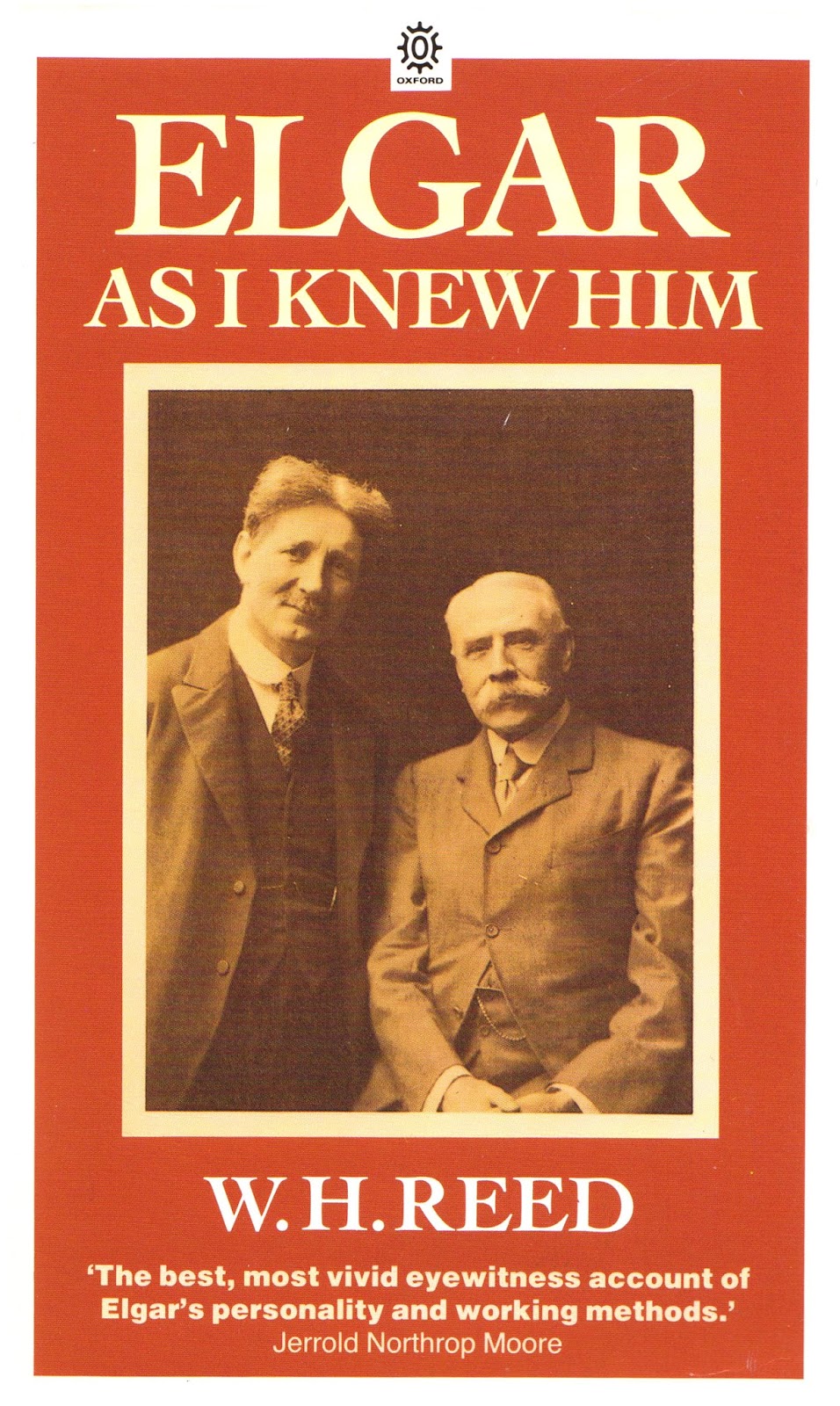
Raised a Roman Catholic, Elgar certainly knew well the concept of soul – it is no wonder that Cardinal Newman's poem The Dream of Gerontius had such an attraction for him, forming the basis of one of his greatest compositions. He was a complex man and his music reflected that, extending from State ceremonial, through religious oratorio, to the pastoral. It is the reflective, soulful Elgar that has always had the most appeal for me and his source of inspiration came from his feelings for people and a passion for landscape and the natural world. His loyal friend, W. H. (Billy) Reed [2] tells us of visits to Elgar:

Elgar was intensely fond of the country. Like William Morris, he was in love with the earth. He seemed to know every inch of Worcestershire (his own county), Herefordshire and the Malverns, Gloucestershire, and the Severn and Wye Rivers. He never tired of talking of them, exploring and re-exploring them if only to see again all the things he knew to be there; and his great joy was to have a kindred spirit with him to share in these pleasures, and to see his own joy reflected in the face of another.

Reed was the leader of the London Symphony Orchestra and provides us with another insight into the inner Elgar when he wrote:

I remember once when we were rehearsing the First Symphony, and the passage at Fig. 66 in the second movement was being played in too matter-of-fact a manner to please him, he stopped and said, "Don't play it like that: play it like" – then he hesitated, and added under his breath before he could stop himself – "like something we hear down by the river"..

It is soul – an inner self, moulded by emotional wounds and triumphs – that Elgar portrays so well in his music. Some people listening to pieces such as Sospiri or the Violin Concerto will be unmoved and find them rather slow and meaningless, but, for me, these pieces cut through everyday things into something much deeper. Here are recordings of the two:


Both works have a link to Billy Reed as he helped Elgar, himself a competent violinist, with fingering and other technical aspects of the solo part of the Concerto. He was not only a very fine violinist, but his nature was quite different to that of Elgar's [3]:

Reed was valuable as a technical adviser and indispensible as a warm-hearted companion, his sympathy, wit, and gay charm being antidotal to Elgar's frequent melancholy.

A photograph of the two men in later years is shown below (from the cover of Reed's book) and something of their relationship comes across in it. Reed was the dedicatee of Sospiri and this was a wonderful gesture by Elgar, reflecting the help that Reed had given the composer four years earlier. 


On the manuscript of the Violin Concerto is written "AquΓ­ estΓ‘ encerrada el alma de ....." (Herein is enshrined the soul of .....), something that has engaged many Elgar scholars, in attempting to identify the person represented by "....." Not being a scholar, I have nothing to add there. What is clear, however, is that the piece does contain what Elgar himself described as his "insidest inside" [1,3]. He was pleased with the Violin Concerto and, during its composition, wrote to a friend [3]:

I have the Concerto well in hand & have played (?) it thro' on the p.f. & it's good! awfully emotional! too emotional but I love it..

I do not get an affecting and moving response when I see the notes of Sospiri or the Violin Concerto written down – I have to hear them (they are music after all). At the risk of trivialising the wonderful sensations that result from listening to the pieces, I wonder how the music would be interpreted by a neuroscientist? Firstly, each instrument in the orchestra is creating sound waves and the complex of sounds is transmitted through the air to be picked up by the ears of the listener, then passing down the auditory canals to vibrate the eardrums and the small bones of the middle ear. The complex of sounds is then translated into electrochemical signals that pass along the auditory nerve to the brain where they are interpreted. Recent studies indicate that there is a special area of the brain that is used to process signals that are generated by music [4], but this is only part of the story. Once received, the signals produce responses in other parts of the brain dealing with pleasure, memory and a host of other activities related to soul. 


In closing, I would like to return to Elgar the man rather than the composer, although both are, of course, interlinked. Above is a picture of Elgar shortly after he had cycled over to his father's home (Mr Elgar was, by then, a widower, living with his daughter, Polly). The composer had just learned of his Knighthood and the reaction of old Mr Elgar also expresses a very special kind of emotion; the handkerchief being used for much blowing of the nose and mopping of the eyes. Elgar stands behind him in "nobilmente" pose, showing a very different part of his soul from that which generated Sospiri and the Violin Concerto. He would no doubt been impressed by the extraordinary achievements of contemporary neuroscience (he was an enthusiast for both chemistry and technology), even though its findings only lead to a rudimentary understanding of the complexities of musical appreciation. If we ever understand the neuroscience of soul, and I doubt that we will, the next question would be: how did soul evolve?


[1] Michael Kennedy (1968) Portrait of Elgar. Oxford, Oxford University Press.

[2] W. H. Reed (1936) Elgar as I knew him. London, Victor Gollancz.

[3] Percy M. Young (1956) Letters of Edward Elgar and other writings. London, Geoffrey Bles.


Friday, 16 August 2013

Hockney, Elgar and dead trees


A Bigger Picture, the exhibition of David Hockney’s landscapes, especially those of his native Yorkshire, was almost overwhelming in its scale. The paintings were mostly huge and many had such bright colours that it took some time for me to get over a sense of shock. Being a traditionalist, I liked his more naturalistic works and I found Hockney’s occasionally vivid palette to be too much for my conventional taste. There was an exception, the painting entitled Winter Timber. It was the bleakness of the subject that I found fascinating, with felled wood stacked up and ready to be taken out on a track passing through leafless, wintry trees and over the horizon in the far distance. Alongside the felled timber is a dead tree stump, an icon which appears out of place. We all put our own interpretations on what we see and for me the painting represents death and the achievements of each of our lives, which will be removed and forgotten. However, the one tree stump remains as a symbol - but of what? Of death certainly, but also of the existence beyond death of works of art (the stump that clearly meant a lot to Hockney has since been destroyed by vandals).
 
There is something about trees, and especially dead trees, that moves us. They are larger than we are and decay more slowly, remaining sometimes for decades or even centuries, as reminders of a past life. We know that one group of dead trees was of particular significance to another great English artist, the composer Sir Edward Elgar. At the end of the 1910s, Elgar became disillusioned and miserable after the devastating events of the First World War and the ending of the values of the Edwardian era. His last major work, the Cello Concerto, reflects this in having a sense of yearning for earlier times. It was also a time when Lady Elgar, his greatest support, suffered from illness and the composer must have felt intimations of mortality (to borrow from Wordsworth). Three chamber works were completed by Elgar at about the same time as the Cello Concerto and these all have an eerie, mysterious quality. We find out from Billy Reed, the violinist and good friend of Elgar’s, that a group of dead trees near Brinkwells, a cottage in Sussex that provided an escape for the Elgars, influenced the composer strongly at this time: 1

A favourite short walk from the house up through the woods brought one clean out of the everyday world to a region prosaically called Flexham Park, which might have been the Wolf’s Glen in Der FreischΓΌtz. The strangeness of the place was created by a group of dead trees which, apparently struck by lightning, had very gnarled and twisted branches stretching out in an eerie manner as if beckoning one to come nearer, To walk up there in the evening when it was just getting dark was to get “the creeps”..

   ..The rather oriental and fatalistic themes in the quintet, and the air of sadness in the quartet, like the wind sighing in those dead trees - I can see it all whenever I play any of these works, or hear them played. Elgar was such a nature-lover and had such an impressionable mind that he could not fail to be influenced by such surroundings. There was so powerful a fascination for him there that he was always strolling up to look at the scene again.

In Portrait of Elgar, 2 Michael Kennedy records that Lady Elgar referred to these late chamber works as “wood magic” and she made direct reference to the dead trees as having an influence on the Quintet. It was the “curse” of being struck by lightning that provided the force - these were not trees that had died naturally, but ones which had been killed by an outside force. You can hear the mysterious quality of the work in this clip of a fine performance:

 
So, two great artists inspired by dead trees; one by cut timber and a single stump and the other by a group of dead trees killed by lightning. Of the very large number of trees in Great Britain, it was these that acted as inspirations. For all of us, dead trees remind us of what we leave behind, whether we are great artists or not.


1 W.H.Reed (1936) Elgar as I knew him. London, Victor Gollancz.

2 Michael Kennedy (1968) Portrait of Elgar. Oxford, Oxford University Press.