Friday, 14 June 2013

Aunts and time


Most of us have been through the ritual of being taken to visit relatives when we were young. My earliest memories include those of going to the homes of various aunts (actually great aunts) in the early 1950s and then wondering how long we were going to stay. Their drawing rooms were dark, with lots of lace, china ornaments, aspidistras in large planters, sentimental pictures, and a characteristic smell. It wasn’t unpleasant, just different, and I was conscious of having to be well behaved (we were made very “presentable” for these visits), saying a few things and then tuning out of the conversation, about which I understood little.

In contrast to these routine visits, going to see one of the aunts was always a pleasure. Aunt Ede loved cats (see the picture below, taken in the early 1930s), had married Uncle Os when she was 66 (and I was 3), and was very happy with her companions. Aunt Ede used to accompany us on Nature walks in the surrounding countryside, while Uncle Os was busy in his workshop, in an atmosphere of oil vapour and pipe smoke. We would also see her in the town, always carrying her round wicker basket containing fish bought at the fishmongers and which was destined to be supper for the cats. Aunt Ede lived in a house named Malvernia (her family came originally from Malvern) and when we called she would always thrust money into our hands and make tea and provide cakes. A wonderful lady and, like me, a bit of an independent-minded sort. She never really recovered after Uncle Os died in 1965, but her joy at seeing me when I popped around to Malvernia during University vacations was touching. 

The last time I saw Aunt Ede was in a nursing home in 1972 and she asked repeatedly about the cats and whether they were being looked after. I suspect that, by then, the cats had been removed and it was a sad way to say goodbye to a remarkable lady, although I didn’t know that it was to be a final goodbye. I still remember Aunt Ede with fondness. She loved Nature.


The aunts seemed very old indeed to me when I was a boy, but I had only a few years of my own to compare against their many decades. For me, the future was full of unknowns, whereas the aunts knew what they had achieved and also knew that they did not have many years to live. Perhaps that’s why their conversation reverted to chat about other family members and that excluded me as I had no idea who was related to whom, and no interest in their lives. As far as I know, none of the aunts extended this interest into preparing a family tree, but doing so has become a popular hobby now that we have such easy access to data that help us in tracing ancestry. Genealogy is mostly an occupation for older people, as it provides a way of recording one’s place in history, although with the date of death still to be inserted, of course.

Most family trees go back two or three generations (those of Royal Families substantially longer) and the further we go back the less we know about the way of life of our ancestors. Is it possible to get a feeling for the lives of those, say, four or five generations back? We can get some information by visiting museums or preserved buildings, but that seems impersonal and contrived and the way of life of the occupants of the rooms displayed can only be imagined. If that is true of the recent past, how can we get a feel for life thousands of years ago? Probably not by looking at artefacts, montages or re-creations.

If that is a difficult question to answer, what about our understanding of geological time scales, where 10 million years is recent and where the origins of the Earth go back billions of years? These are just numbers to us and mean little, except as reminders that humans are very recent indeed on such time scales and our knowledge of the Universe, including our World, has been acquired largely within a handful of generations. It is an astonishing achievement and provides us with the best explanation of what we observe to have happened over unimaginable timescales and distances (with apologies to those who believe it was all created 8000 years ago). It doesn’t seem feasible that such a very recent species has been able, in a few hundred years, to explain so many things, just by using our Earth-bound mathematics, physics, chemistry and biology. What if we are wrong in our assumptions and there is a different, more fundamental basis for understanding time and space that awaits discovery? Will we then be able to gain a real sense of time?





Tuesday, 11 June 2013

Watching azure damsels


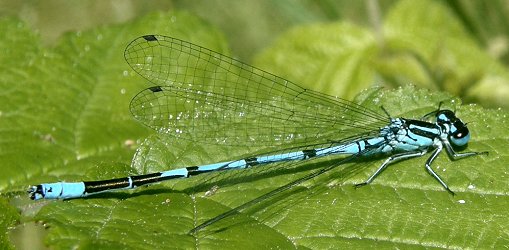
It’s the time of year in the UK when dragonflies and damselflies are emerging. The margins of ponds, streams and lakes start to harbour blue, red or other coloured damselflies, while their larger and variously coloured relatives, the dragonflies, fly over the water searching for prey insects. Yesterday, I was visiting ponds in Norfolk and came across many azure damselflies (Coenagrion puella), the bodies of males being a striking combination of blue and black, with the females rather duller (despite their common name, there are male and female damselflies). They were flying around the vegetation and occasionally perching and it was clear that some were newly emerged from the ponds where they had been living as larvae since last summer, as their colours had not developed fully. One adult, just minutes after emerging, became the victim of a spider, which grabbed the damselfly resting on a plant stem and took it to the base of the plant to be devoured later. A piece of “raw” Nature and one that reminded me that my love of watching damselflies and dragonflies is based on my very partial knowledge of how Nature really is, as well my aesthetic appreciation of the insects.


Dragonflies and damselflies (I’ll call them Odonata, as that is the name for the Order) are beautiful to look at, and are very well engineered, but that is not for my benefit. They have existed in much the same form as we see them today for well over 100 million years. We cannot comprehend such a period of time, but we are fairly sure that there were no humans for 99.8% of the time that the contemporary Odonata have been in existence. It is quite extraordinary to know that all the stages of their evolution, from a single cell to the complex insects we know today, occurred way before 100 million years ago: the development through larval stages, with moults to increase size; the ability to fly and change direction rapidly; the development of excellent vision; the different catching devices of larvae and adults. I could go on and on in making a list of features and they were all in place so very long ago, with the successful pattern being repeated through more than 100 million generations. Of course, there are some who cannot accept this view and among the more famous of these was Philip Henry Gosse, the excellent Victorian Natural Historian and author of Omphalos, 1 in which he explained that Creation occurred as described literally in the Holy Bible, over a period of days. To him, fossils (including those of the Odonata, some of which are of much larger forms than are found today) were part of that Creation and it is a view which is still held by some. 

The folklore surrounding damselflies and dragonflies is even more odd than the explanations provided by Creationists like Gosse. As their common name might suggest, it is the dragonflies, rather than their smaller and more delicate relatives, the damselflies, which feature in most folklore.  A review is given in Spinning Jenny and Devil’s Darning Needle by M. Jill Lucas 2 and the title of her book gives us a clue of what is to come. She has researched information from around the World and found that dragonflies may be associated with death (by them breathing on us, or by their sting - although the insects do not exhale and cannot sting) and they might be used by the Devil to “weigh people’s souls”. For those who enjoy fishing, the insects are a sign of good luck or bad luck depending on one’s country and, despite their negative religious associations, are regarded generally as being tokens of good luck, whether one is fishing or not.  In contrast, these “Devil’s Darning Needles” may stitch up the mouths of children who tell lies, the mouths of noisy persons, or the toes of those who sleep with their feet uncovered. It's all very confusing and there is much more on folklore in Jill Lucas’ book, which also covers the position accorded to dragonflies and damselflies in the Arts and as illustrations on stamps. It is well worth reading and shows us both the way in which the insects are appreciated and how extraordinary are our imaginations in making interpretations of the unknown.

I have always spent time watching damselflies and dragonflies. From childhood, it was something that I loved doing and, together with looking at wild flowers and collecting animals and plants from rock pools and streams, was part of my early interest in Natural History. As I describe in Walking with Gosse: Natural History, Creation and Religious Conflicts,3 the Odonata even became the subject of my undergraduate research project. Is it possible to have a favourite species? Probably not, as they are all beautiful and one cannot separate the insects from their location, which might be magical in the scented evening of a balmy summer’s day. However, if I had to make a choice, it would be the Blue-tailed Damselfly (Ischnura elegans) flitting over reeds. If I didn’t know better, I could believe that it was created just to give me pleasure and a sense of wonder.


1 Philip Henry Gosse (1857) Omphalos: an attempt to untie the geological knot. London, John Van Voorst.

2 M. Jill Lucas (2002) Spinning Jenny and Devil’s Darning Needle. Bradford, Wheelden Print.

3 Roger S. Wotton (2012) Walking with Gosse: Natural History, Creation and Religious Conflicts. Southampton, Clio Publishing.


Tuesday, 28 May 2013

Coming Up for Air


I first read George Orwell’s Coming Up for Air when still at school in Torquay and the book made a strong impression on me. It was the effect of the vivid and gritty description of George Bowling’s life and times just before the Second World War, his feeling of being trapped and needing to escape, and Orwell’s fascination for Nature that impressed me. I could certainly identify with the latter, if not the other two aspects, and this section in Coming Up for Air must have had a special appeal:


 “...Why don’t people, instead of the idiocies they do spend their time on, just walk around looking at things? That pool, for instance - all the stuff that’s in it. Newts, water-snails, water-beetles, caddis-flies, leeches, and God know how many other things that you can only see with a microscope. The mystery of their lives, down there under water. You could spend a lifetime watching them, ten lifetimes, and still you wouldn’t have got to the end of that pool. And all the while the sort of feeling of wonder, the peculiar flame inside you. It’s the only thing worth having, but we don’t want it.”


I was always fascinated with looking at marine and freshwater creatures - in their natural habitat, in aquarium tanks, and under the microscope - the same fascinations that had inspired the wonderful Philip Henry Gosse, also a resident of Torbay, a hundred years before. However, it was much later that the work of Gosse was to play a role in my life.


Dominic Cavendish describes Orwell’s attitude to Nature, as expressed in Coming Up for Air, in an essay published by Orwell Society [1]:


“There should be no disbelieving the rapture that Bowling feels in the presence of nature – rapture recalled as a child, and rapture re-experienced as an adult. It’s a rapture we know Orwell experienced in his own childhood, and the book is imbued with the writer’s fondness for flora and fauna – and fishing. “


When George Bowling “escaped” from his day-to-day life to visit his old home town of Lower Binfield after twenty years, it was the changes in buildings, landscape and people that fuelled his disappointment. That, and the recognition that the carp pond that he had discovered as a boy, but never fished, and which he was so keen to fish now, had been transformed into a rubbish dump. The whole experience was disillusioning and yet:


 “The beech trees seemed just the same. Lord, how they were the same! I backed the car onto a bit of grass beside the road, under a fall of chalk, and got out and walked. Just the same. The same stillness, the same great beds of rustling leaves that seem to go on from year to year without rotting. Not a creature stirring except the small birds in the tree tops which you couldn’t see. It wasn’t easy to believe that that great noisy mess of a town was barely three miles away.”


A few years ago, I felt a need to go back to Torbay and my first reactions on visiting after two decades were superficially similar to those of George Bowling on returning to Lower Binfield. There were indeed many changes to the towns in the Bay and these were not for the better. Everything seemed much tackier than I remembered it, although my memories must be coloured by both time and nostalgia. However, a walk along the coast, using the same footpaths I had used as a boy, brought me to an unchanged landscape of coves, headlands and woods. There was Saltern Cove (see below), where I spent several days in the 1960s revising inorganic chemistry, while sitting in the warm sun. I was only kidding myself that I was revising, for my mind was always venturing off into some dream, and the biology of the rock pools, and the interesting geology of the Cove, were much too great a diversion. Now, there is no chemistry to revise, no examinations to pass, and certainly no need for any escape. My Coming Up for Air is a wonderfully positive experience and one which I look forward to each year, if at all possible. It gives me a sense of the continuity of the coastal landscape and of the plants and animals which are found there. A feeling that the Nature of my childhood, so important to me then, is alive and well, despite all the adverse changes nearby. Unfortunately, I don’t have Orwell’s writing skills, so I cannot put it better than that.


[1] http://www.orwellsociety.com/2011/11/06/coming-up-for-air-revisited/


Tuesday, 14 May 2013

Wart cures and our powers of imagination


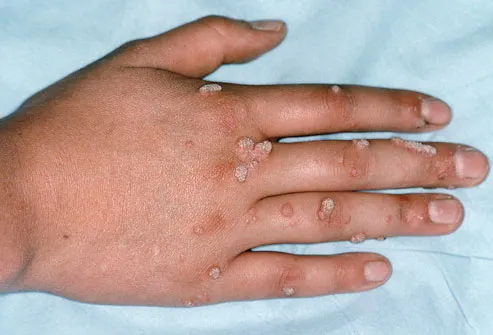
One of my strong memories of early childhood was the appearance of a wart on the side of my left hand. I wasn’t very concerned, although I was intrigued to know what it was. No information was forthcoming and, as is usually the case with the skin eruptions caused by these viral infections, it disappeared after a few weeks. However, that was not before my parents had rubbed a piece of raw meat on the wart and then buried the meat in the front garden. We were a church-going and Christian family and, as there is no reference to cures for warts in The Bible, my parents tried the folk cure instead of buying some proprietary product. I don’t think they believed it would work and, as I was a rather serious child, it is likely that they rubbed the wart with meat as a light-hearted way of preventing me from becoming anxious. But what an odd superstition, or is it?


I turned to Steve Roud’s book The Penguin Guide to the Superstitions of Britain and Ireland 1 to look up cures for warts and was surprised to see that there were 31 separate entries. There is just as rich a series of explanations for the appearance of warts on the hand, the commonest of which being that they result from washing the hands in water that has been used to boil eggs...... 

Here is a brief summary of the list of “wart cures” in Roud’s book:

1. Wash the wart with animal blood; that of pigs, moles, mice and cats being mentioned

2. Cut an apple in two, rub on the wart, tie both halves together and bury the apple

3. Rub the wart with a broad bean pod (or dandelion) and then bury it

4. Wash each wart with water from a blacksmith’s forge

5. Rub the wart with stolen bread and bury it

6. Get someone to buy the wart i.e. selling it to someone causes its removal

7. Bury a celandine plant, dig it up after three days and squeeze the plant juice on the wart

8. Place single grains of wheat (or barley) on each wart then either bury them or collect them in a bag and leave on a road for others to find

9. “Charm” by looking at the warts or at a picture of the person with warts, usually accompanied by some words

10. Pick a cinder for each wart from the previous day’s fire, place it (them) into a bag and throw it away

11. Count warts and tell a charmer (person with special skills in “magic”) the number

12. Rub warts with sap from dandelions

13. Cut off the head of an eel, rub it on the wart(s) and bury it

14. Cut notches in an elder stick (Sambucus sp.), one for each wart, and rub on the wart(s)

15. Rub the wart with “fasting saliva”, i.e. saliva from someone who has not eaten for some time

16. Rub the wart(s) as a funeral procession passes by, to transfer the warts to the corpse

17. Tie a hair (usually horsehair) around the wart

18. Rub a wetted match (the non-safety variety) on each wart

19. Rub the wart with meat, which has preferably been stolen.

20. Wash the hands in moonlight or use earth gathered from under the foot at the time of the New Moon

21. Touch the warts with a pin and either bury it or leave it at a crossroads

22. Rub the wart with a raw potato and bury it

23. Prick a snail once for each wart and then rub it on the wart(s), afterwards impaling it on a blackthorn bush

24. Wash the hands with washing soda [sodium carbonate]

25. Touch the wart with the sap of spurge plants (Euphorbia spp.)

26. Cut notches into a stick, one for each wart, then bury the stick (see cure 14 above)

27. Touch each wart with a stone from a brook, tie the stones into a bag and throw them away at a crossroads

28. Use straw, reeds or rushes to touch warts and either bury them or throw them away

29. Touch each wart with a knot tied into a piece of string, one for each wart, and throw the string away where it can decompose

30. Rub warts with a toad and then impale the toad on a thorn bush

31. Bathe warts in water which has gathered after rain in a hollow on a stone or tree stump

Further information on these cures is given in Gabrielle Hatfield’s little book Warts: Summary of Wart-cure Survey for the Folklore Society 2 that gives even more examples than those presented by Roud. She also mentions cures of similar kinds to those used in the British Isles from Greece, Slavic countries and Belgium, so the folk cures were widely founded through Europe and beyond.

Common themes in all cures were rubbing with plants, animals or their parts (often accompanied by burial, impaling or throwing away the item used), rubbing with minerals or mineral solutions, and the buying, selling and “charming” of warts. Here is a summary of the most popular recommended cures recorded in the survey (with percentages by category and of the total responses recorded):

Plants

Broad beans                                             19.4% of plants               5.5% of total
Dandelions                                               15.7% of plants                4.4% of total
Greater celandines                                     8.2% of plants                2.3% of total
Spurge                                                       6.7% of plants                1.9% of total

Others                                                      50.0% of plants              14.0% of total

Animals (and animal parts)

Raw meat                                                  41.7% of animals           13.6% of total
Spit                                                            10.2% of animals            3.4% of total
Tying with horse hair                                     9.6% of animals            3.1% of total
Tying with other threads                                8.3% of animals            2.7% of total
Snail slime                                                    7.7% of animals            2.5% of total
 
Others                                                        22.4% of animals            7.3% of total

Minerals

Washing soda                                             24.1% of minerals            4.6% of total
Vinegar                                                       13.2% of minerals            2.5% of total
Ink                                                               7.7% of minerals             1.5% of total
Bleach                                                          4.4% of minerals             0.8% of total

Others                                                        50.5% of minerals             9.6% of total

Buying, selling and “charming”
 
Selling for a small sum                                 14.5% of charming           2.9% of total
Counting by another                                    13.5% of charming           2.7% of total
Wrapping stones in a bag                              9.4% of charming            1.9% of total
Looking at the moon                                     6.3% of charming            1.3% of total

Others                                                         56.3% of charming          11.3% of total


A close look at this Table (with apologies for the formatting) shows the treatment of my wart by rubbing with meat is easily the commonest folk cure, followed by rubbing with broad beans, washing soda and dandelions. Cures using products from Nature dominate, with “charming” in all its forms only making up 20% of the total. “Charming” is based solely on imagination and there is no basis for it having any effect but, as warts on the hands may disappear almost as quickly as they arrive, it is easy for some to believe in its role. 

Some of the natural products used as cures may contain anti-viral agents that hasten the removal of the wart and, as Hatfield states: “If one is tempted to dismiss as fantastic many of these wart cures, it has to be pointed out that at least some of them have been tried and tested and found to work. To separate the ‘faith-healing’ aspect from the physiologically active ingredients is a difficult if not an impossible task.. ..The employment of ritual to accompany any healing method for any illness can obviously be important; faith in any medicine, official or otherwise, is an important part of the cure, and presumably evokes the body’s own healing powers.”

The powers of human belief shown by all the variants of cures we have discovered, or invented, for just one ailment are impressive. Our powers of trial and error, of imagination, and of the use of natural live and dead materials are almost endless. But where does imagination end and reality begin? It’s a question which has a wide application - from wart cures, through “alternative therapies” and into religious beliefs.

                                   
1 Steve Roud (2003) The Penguin Guide to the Superstitions of Britain and Ireland. London: Penguin Books.

2 Gabrielle Hatfield (1998) Warts: Summary of Wart-cure Survey for the Folklore Society. London: The Folklore Society.

Image from: