Showing posts with label Wonder. Show all posts

Thursday, 17 September 2026

Life, evolution, and an overwhelming sense of awe

In his book The Proof of God [1], Harold Begbie devotes a chapter to evolution. These are some quotes from that chapter: 

So we find, first of all, that our protoplasm could not have existed in the nebula nor of the earth in its earliest ages; and now we find that the evolution of this protoplasm must have been caused by life, must have proceeded from life, must have been directed by life. Men can make something slightly like protoplasm in their laboratories; but protoplasm does not make itself; it had to be made before there was a man able to make something even remotely resembling it.


..if life could not have existed on this earth for many æons after its birth, but must have forced its way into this earth at a moment when the earth was ready to be fertilized – is it not possible that our term Evolution may only be a scientific synonym for that spiritual Life-Giver to whom the religious in all ages have given the auguster name of God? 

It is important to remember that these statements were written over a hundred years ago, and our views, and the accomplishments of science, have shown considerable development since. Having said that, there are many things that remain unknown, among which are the following major questions: firstly, how do we define life; secondly, when did life appear on Earth; thirdly, is evolution a synonym for God? 

Defining life

We are familiar with experts talking about the possibility of life elsewhere in the universe – some even extending it to intelligent life. But what do they mean by “life”? No-one defines what they are referring to and possibilities are single-celled organisms, multicellular organisms, self-replicating organic molecules, or even some kind of organic “soup”. One can also read about organic chemicals being detected in the universe that are only produced by living organisms on Earth, as if that is evidence of life elsewhere. Surely, there are many ways in which organic molecules can be generated? The most extraordinary reporting comes with the finding of water on other celestial bodies, as though living organisms should exist where there is water. It’s a step that requires a lot of imagination.

The origins of life on Earth

We have no idea how the first living organisms originated. The first cell was probably formed when a concentration of chemicals became surrounded by a membrane, but how could this have happened? As we are confident that the process happened in water, it is logical to suppose that the first cell was formed at an interface of air and water and the most likely interface is the surface of a bubble, perhaps from a hydrothermal vent, or from a shore close to volcanic activity.


Matter accumulates at the air-water interface and that is especially so of hydrophobic compounds [2]. We see this when looking at surf on the sea shore (see above), as waves produce an abundance of bubbles and they take time to burst because of their coatings, unlike those produced from tap water, for example. When bubbles burst, air returns to the atmosphere and the coatings to the water column where they can form into very small particles. Somehow, a primal cell was formed from the coatings of a bubble, or bubbles, and it is difficult to comprehend how it happened, or whether it happened on a single occasion. If we assume that chance allowed it to happen, and that bubbles were important in allowing the aggregation of material necessary for the first cell (and how many bubbles have been formed in billions of years – think about it!), it may well be happening today, with the creation of new cells in areas where certain chemicals are present. However, evidence from studies in genetics suggests that the first cell was formed in a short geological time period a very long time ago and the complex aggregation of organic matter was able to divide to produce two functioning cells and, from there, to many cells. When two of these living cells remained attached to each other, the first multicellular organism was formed.

Interestingly, the idea that life may have originated from sea foams ties in with Greek mythology, although not in the way we view this possibility today. Venus Anadyomene was born from foam resulting from the castration of Uranus, whose genitals were thrown into the sea. The birth of Venus Anadyomene is described by Hesiod [3]: 

“And so soon as he had cut off the members* with flint and cast them from the land into the surging sea, they were swept away over the main a long time: and a white foam spread around them from the immortal flesh, and in it there grew a maiden.” 


[* the male genitals of Uranus, severed by his son Cronus]

As Feuerbach wrote [4]: 

“The Greeks looked at Nature with the theoretic sense, they heard heavenly music in the harmonious course of the stars, they saw Nature rise from the foam of the all-producing ocean as Venus Anadyomene.” 

In contemporary times, we have gone beyond the need for mythology to provide explanations (or have we?), but we have no idea when the first cell became alive. Perhaps the first cell lay at the boundary between living and non-living matter, just like viruses? The origin of life is mysterious, and so is the origin of the universe, which, unlike life, may always have been in existence in some form. We can only speculate how the universe came to exist in its current form, using mathematics, the theories of astrophysics and quantum mechanics, and much speculation.

Is the term evolution a synonym for God?

Begbie was right in suggesting that we cannot comprehend the origin of life and the process of evolution that followed, and he, like many others, believes that the only explanation must be God. Part of our difficulty, perhaps all of it, is one of comprehension of the vastness of time and space. It is easy to refer to a billion years, or a light year, but we have no “feel” for such time periods or distances (see below for an image that shows part of space 340 light years across). Just as a theist is stunned by the power of God in creating life and the universe, an atheist has exactly the same sense of awe, but without any external creator. Certainly, there is no proof of the existence of a deity, as Begbie suggests, and neither is their proof that an external force is required.


Three questions arise: why, in the vast extent of the universe, was the Earth “chosen” to have life (there being no evidence of life elsewhere); why are we so keen to find living organisms elsewhere; and, if one believes in evolution, why did God take so long to create humans and, once created, to then express Himself through Moses and, later still, through his son Jesus Christ?

[1] Harold Begbie (1914) The Proof of God. New York, Fleming H Revell and Company.

[2] Roger S Wotton and Terence M Preston (2005) Surface Films: Areas of Water Bodies That Are Often Overlooked. BioScience 55: 137- 147.

[3] Hesiod (ca. 700 BCE) in the multi-authored Homeric Hymns, Epic Cycle, Homerica, translated by Evelyn-White. Published in 1914. London, Heinemann.

[4] Ludwig Feuerbach (1854) The Essence of Christianity, translated by George Eliot. This version published in 2025. Dunstable, Robinia Classics.


Tuesday, 26 May 2015

Natural History – as valuable as Biomedicine


Occasionally, one comes across something that touches a nerve. That happened to me when reading a section of the paper entitled Natural History's Place in Science and Society by Joshua J. Tewksbury and his 16 co-authors [1]. They wrote:

The stature of natural history within many academic institutions will depend on its capacity to generate revenue and contribute to academic currencies used to measure the success of individuals and programs. In research-oriented universities, these currencies are typically large grants, publications in high-impact-factor journals, and public recognition for the institution. Disciplines that cannot compete in these currencies will typically be given little attention in critical decisions surrounding hiring, promotion, course offerings, degree programs, buildings and infrastructure, and institutional direction. Even in institutions at which the focus on teaching is more prevalent, disciplines such as natural history can be marginalized because of the relatively high per-student cost of field- and collection-based courses and because of these courses' low enrollments relative to those in higher profile disciplines.

As a proud Emeritus Professor of Biology in a World-leading University, I concur fully with this statement. In research-led universities, there is often a disjunction between academic research and teaching and, as the authors point out, it is the former that is used in hiring and reward. Courses in Biology necessarily include basic studies but, instead of introducing students to Natural History, Behaviour and Diversity, the majority are in Cellular and Molecular Biology, reflecting the dramatic change that has come in the subject over the last forty years. We now have a mechanistic approach, like that of physics or chemistry, believing that understanding how genes work will result in our understanding how organisms work. Unfortunately, it is much more complex than that, but there is the possibility of making some great discoveries along the way. One organism dominates above all others as a subject for study and that is Homo sapiens. Even organisms like fruit flies, or nematode worms, are used as proxies for humans when investigating the effect of gene expression: the wide diversity of plants and animals is considered of much lower importance.

I was so happy to teach in areas of Biology in which I had an interest, but no research experience, and where I was able to be a Natural Historian without being frowned upon by colleagues. I taught courses in Animal Form and Function to second-year students and contributed lectures on the interactions between predators and prey to a first-year class. Both were optional, but all students had to study Cellular and Molecular Biology and all had to study Chemistry. To look at the interactions of predators and prey, we began with predictive models and then branched out into the "arms race", with adaptations of predators to increase their catching efficiency and adaptations of prey to avoid attack. I organised examples into different categories and we then let rip. While the models were interesting, there was no question that talking about the various modifications shown by animals (and by plants, as I took a liberal approach to the term "prey") was what we all really enjoyed. I took a similar approach in Animal Form and Function, beginning with fluid dynamics and then showing the ways that animals move in water, on land and in the air. I also described different categories of feeding mechanism and we again looked at examples in various categories. Both sections were taught in an evolutionary context, so we began with the more primitive examples and moved through a spectrum leading to the more advanced. These courses were great to plan, and to teach, and we were able to make interesting observations during practical classes; predator-prey interactions being observed on a field course taught by some of my colleagues. On that course, students were also able to study plants and animals in their natural environment.

Tewksbury et al. [1] state:

Urbanization and a lack of exposure to nature, changes in affluence, a reduction of unstructured time for children, and increased television and computer use have all been implicated in the reduced public awareness of nature.

If any of that applied to my students, our course material certainly opened their eyes and I hope that they remembered enough to be able to pass on the information and to keep up their interest by making their own observations. I think that Natural History is an important part of a university degree in Biology, but others may argue that there are no jobs in this area, or very few anyway, and that we should be training students solely for careers. Informed professors in US universities have told me that  Biology students include a large cohort who are very interested in the subject, but wish to go on to study Medicine. That's back to the concentration on H. sapiens, and Biomedicine is now a dominating part of Biology teaching, as so many academics work in this area and it is perceived that there are many job opportunities in the field. Some small number of students do go on to have careers in Natural History, or in Ecology, but what of all those who take Biology degrees and then have careers in quite different areas. Is there then a benefit in learning about Natural History?

No-one questions the importance of studying History, Philosophy or Literature and there are a host of subjects that provide intellectual rewards for those that pursue them. Graduates with degrees in these subjects benefit from their studies, but they are hardly vocational in being a direct training for a job. To be sure, there are professional historians, philosophers, reviewers, writers, etc., and there are teachers and professors of these subjects, but the majority of graduates will be working in quite different fields, while using all sorts of approaches they have learned; often retaining their interest for relaxation and for enhancing their world view. As the great liberal scientific discipline, Natural History deserves to be highlighted alongside these subjects and to form a central part of Biology degree programmes, even for those whose main interest is in Medicine and its related subjects. After all, it has been shown that walking in Nature is good for human health [2] and it can be argued that prevention of illness, and palliative care, are as important as drugs and surgery. How much better if these solitary walks, or those in company, also provide a chance to explore the Romance of Natural History [3].

Given the public lack of interest in the environment, and the organisms it contains, one hopes that students of Natural History will remember enough of their enthusiasms to make informed decisions when Nature is threatened. Unquestionably, they will also have something to pass on to their children and to those around them who are interested in such things. Can the same be said for those following Modern Biology and Biomedicine? Probably, the answer is "yes", but there is now a lack of balance and almost a belief that Biology applied to Medicine is going to provide answers to all ills. It is not, and much biomedical research is likely to be of little significance in finding cures for illnesses and for allowing healthy ageing. All the resources thrown in that direction show an uncritical approach and it is surprising that this extends to university administrators, academics and politicians throughout the World. Of course, money cannot be made from Natural History in the way that it can be from Biomedicine and the Pharmaceutical Industry, but isn't it time for a fresh approach? Are University Heads and senior academics wearing something analogous to the Emperor's New Clothes?

On a positive note, Tewksbury et al. [1] suggest a mechanism to help University administrators find a better path:

The vitality of natural history will depend on the willingness of professionals in the natural sciences to self-identify as natural historians, to teach natural history, and to articulate the importance of their expertise across a wide range of disciplines, through lectures, conferences, professional societies, and public talks. Those professionals who embrace the revitalization of natural history within and beyond their institutions will lead and define the field for the twenty-first century. This is not an easy path for early-career academics, but it is an essential shift for established academics because they can use their tenure to validate and promote the importance of natural history within and beyond their programs.

To facilitate the resurgence of Natural History, I suggest three mechanisms that may help in Biology Departments (and elsewhere):

1. Income obtained from student fees, or supplied by governments for student education, must be spent on teaching and on facilities for students (it is recognised that a small percentage is also necessary for support services and for administration, other than that related to teaching).

2. Research grants should only be given to those less than, say, 40 years-old. This will encourage new thinking to become widespread; it will reduce the impact of senior researchers on the development of ideas; and it will empower younger researchers in developing their careers. Preferably, there should be more grants and they should be smaller. Large capital schemes could be co-operative, or sponsored by Industry, Government Departments or by endowments. Senior aademics have an invaluable role to play here in supporting pools of younger researchers and ensuring that experience counts for something....

3. Senior and Tenured Academics should be encouraged to teach areas outside their discipline and the freshness that they bring from their preparation for teaching, will make for an enthusiastic approach.

Of all the sub-disciplines of Biology, Natural History is likely to benefit most from these changes and students will be provided with something that they will keep for life. It will provide a better perspective on the position of humans as organisms that are part of a wonderfully diverse World.


[1] Joshua J. Tewksbury and 16 co-authors (2014) Natural History's Place in Science and Society. BioScience 64: 300-310.


Tuesday, 11 June 2013

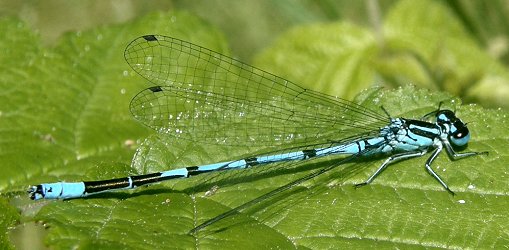
Watching azure damsels


It’s the time of year in the UK when dragonflies and damselflies are emerging. The margins of ponds, streams and lakes start to harbour blue, red or other coloured damselflies, while their larger and variously coloured relatives, the dragonflies, fly over the water searching for prey insects. Yesterday, I was visiting ponds in Norfolk and came across many azure damselflies (Coenagrion puella), the bodies of males being a striking combination of blue and black, with the females rather duller (despite their common name, there are male and female damselflies). They were flying around the vegetation and occasionally perching and it was clear that some were newly emerged from the ponds where they had been living as larvae since last summer, as their colours had not developed fully. One adult, just minutes after emerging, became the victim of a spider, which grabbed the damselfly resting on a plant stem and took it to the base of the plant to be devoured later. A piece of “raw” Nature and one that reminded me that my love of watching damselflies and dragonflies is based on my very partial knowledge of how Nature really is, as well my aesthetic appreciation of the insects.


Dragonflies and damselflies (I’ll call them Odonata, as that is the name for the Order) are beautiful to look at, and are very well engineered, but that is not for my benefit. They have existed in much the same form as we see them today for well over 100 million years. We cannot comprehend such a period of time, but we are fairly sure that there were no humans for 99.8% of the time that the contemporary Odonata have been in existence. It is quite extraordinary to know that all the stages of their evolution, from a single cell to the complex insects we know today, occurred way before 100 million years ago: the development through larval stages, with moults to increase size; the ability to fly and change direction rapidly; the development of excellent vision; the different catching devices of larvae and adults. I could go on and on in making a list of features and they were all in place so very long ago, with the successful pattern being repeated through more than 100 million generations. Of course, there are some who cannot accept this view and among the more famous of these was Philip Henry Gosse, the excellent Victorian Natural Historian and author of Omphalos, 1 in which he explained that Creation occurred as described literally in the Holy Bible, over a period of days. To him, fossils (including those of the Odonata, some of which are of much larger forms than are found today) were part of that Creation and it is a view which is still held by some. 

The folklore surrounding damselflies and dragonflies is even more odd than the explanations provided by Creationists like Gosse. As their common name might suggest, it is the dragonflies, rather than their smaller and more delicate relatives, the damselflies, which feature in most folklore.  A review is given in Spinning Jenny and Devil’s Darning Needle by M. Jill Lucas 2 and the title of her book gives us a clue of what is to come. She has researched information from around the World and found that dragonflies may be associated with death (by them breathing on us, or by their sting - although the insects do not exhale and cannot sting) and they might be used by the Devil to “weigh people’s souls”. For those who enjoy fishing, the insects are a sign of good luck or bad luck depending on one’s country and, despite their negative religious associations, are regarded generally as being tokens of good luck, whether one is fishing or not.  In contrast, these “Devil’s Darning Needles” may stitch up the mouths of children who tell lies, the mouths of noisy persons, or the toes of those who sleep with their feet uncovered. It's all very confusing and there is much more on folklore in Jill Lucas’ book, which also covers the position accorded to dragonflies and damselflies in the Arts and as illustrations on stamps. It is well worth reading and shows us both the way in which the insects are appreciated and how extraordinary are our imaginations in making interpretations of the unknown.

I have always spent time watching damselflies and dragonflies. From childhood, it was something that I loved doing and, together with looking at wild flowers and collecting animals and plants from rock pools and streams, was part of my early interest in Natural History. As I describe in Walking with Gosse: Natural History, Creation and Religious Conflicts,3 the Odonata even became the subject of my undergraduate research project. Is it possible to have a favourite species? Probably not, as they are all beautiful and one cannot separate the insects from their location, which might be magical in the scented evening of a balmy summer’s day. However, if I had to make a choice, it would be the Blue-tailed Damselfly (Ischnura elegans) flitting over reeds. If I didn’t know better, I could believe that it was created just to give me pleasure and a sense of wonder.


1 Philip Henry Gosse (1857) Omphalos: an attempt to untie the geological knot. London, John Van Voorst.

2 M. Jill Lucas (2002) Spinning Jenny and Devil’s Darning Needle. Bradford, Wheelden Print.

3 Roger S. Wotton (2012) Walking with Gosse: Natural History, Creation and Religious Conflicts. Southampton, Clio Publishing.


Tuesday, 28 May 2013

Coming Up for Air


I first read George Orwell’s Coming Up for Air when still at school in Torquay and the book made a strong impression on me. It was the effect of the vivid and gritty description of George Bowling’s life and times just before the Second World War, his feeling of being trapped and needing to escape, and Orwell’s fascination for Nature that impressed me. I could certainly identify with the latter, if not the other two aspects, and this section in Coming Up for Air must have had a special appeal:


 “...Why don’t people, instead of the idiocies they do spend their time on, just walk around looking at things? That pool, for instance - all the stuff that’s in it. Newts, water-snails, water-beetles, caddis-flies, leeches, and God know how many other things that you can only see with a microscope. The mystery of their lives, down there under water. You could spend a lifetime watching them, ten lifetimes, and still you wouldn’t have got to the end of that pool. And all the while the sort of feeling of wonder, the peculiar flame inside you. It’s the only thing worth having, but we don’t want it.”


I was always fascinated with looking at marine and freshwater creatures - in their natural habitat, in aquarium tanks, and under the microscope - the same fascinations that had inspired the wonderful Philip Henry Gosse, also a resident of Torbay, a hundred years before. However, it was much later that the work of Gosse was to play a role in my life.


Dominic Cavendish describes Orwell’s attitude to Nature, as expressed in Coming Up for Air, in an essay published by Orwell Society [1]:


“There should be no disbelieving the rapture that Bowling feels in the presence of nature – rapture recalled as a child, and rapture re-experienced as an adult. It’s a rapture we know Orwell experienced in his own childhood, and the book is imbued with the writer’s fondness for flora and fauna – and fishing. “


When George Bowling “escaped” from his day-to-day life to visit his old home town of Lower Binfield after twenty years, it was the changes in buildings, landscape and people that fuelled his disappointment. That, and the recognition that the carp pond that he had discovered as a boy, but never fished, and which he was so keen to fish now, had been transformed into a rubbish dump. The whole experience was disillusioning and yet:


 “The beech trees seemed just the same. Lord, how they were the same! I backed the car onto a bit of grass beside the road, under a fall of chalk, and got out and walked. Just the same. The same stillness, the same great beds of rustling leaves that seem to go on from year to year without rotting. Not a creature stirring except the small birds in the tree tops which you couldn’t see. It wasn’t easy to believe that that great noisy mess of a town was barely three miles away.”


A few years ago, I felt a need to go back to Torbay and my first reactions on visiting after two decades were superficially similar to those of George Bowling on returning to Lower Binfield. There were indeed many changes to the towns in the Bay and these were not for the better. Everything seemed much tackier than I remembered it, although my memories must be coloured by both time and nostalgia. However, a walk along the coast, using the same footpaths I had used as a boy, brought me to an unchanged landscape of coves, headlands and woods. There was Saltern Cove (see below), where I spent several days in the 1960s revising inorganic chemistry, while sitting in the warm sun. I was only kidding myself that I was revising, for my mind was always venturing off into some dream, and the biology of the rock pools, and the interesting geology of the Cove, were much too great a diversion. Now, there is no chemistry to revise, no examinations to pass, and certainly no need for any escape. My Coming Up for Air is a wonderfully positive experience and one which I look forward to each year, if at all possible. It gives me a sense of the continuity of the coastal landscape and of the plants and animals which are found there. A feeling that the Nature of my childhood, so important to me then, is alive and well, despite all the adverse changes nearby. Unfortunately, I don’t have Orwell’s writing skills, so I cannot put it better than that.


[1] http://www.orwellsociety.com/2011/11/06/coming-up-for-air-revisited/